201610
-
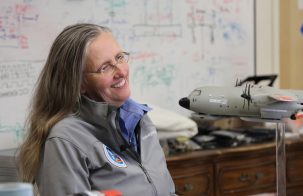
Lamont’s Robin Bell Chosen as AGU President-Elect
The American Geophysical Union election results are in, and three Lamont-Doherty Earth Observatory scientists will be taking key leadership roles in the internationally influential Earth and space sciences organization.
-

What Happens to Ecosystems When Antarctica’s Ice Melts?
A special section in the October issue of BioScience featuring research by Lamont-Doherty Earth Observatory scientists examines the effects of intense melting on two Antarctic ecosystems, tracking impacts all the way from microbial food webs to shifting penguin populations.
-

Stranding Equitably in the Current Market and Geopolitical Context
The Columbia Center on Sustainable Investment’s conference of early November will consider, notably, how world production of oil and gas could be significantly reduced in manners protecting the interests of lower-income producing countries, given that staying on carbon budget will require leaving two thirds of our fossil fuel reserves unburnt.
-
At the Jersey Shore, Signs of a Comet, and a Climate Crisis
Do 55-Million-Year-Old Deposits Hint at Cause of an Abrupt Change?
-

Dammed Funding for U.S. Dams
Across the nation, large-scale water infrastructure such as dams have provided a multitude of services, from electric power and water reservoirs to flood control and containment of pollution. But federal investments in large water infrastructure projects have largely been curtailed over the past few decades.
-

Shareholders Turn Up the Heat on Climate Change
2016 was a hot year for climate change shareholder resolutions hitting the boardrooms of oil and gas companies. Although more familiar climate news headlines have carried calls to “keep it in the ground” and divest investment portfolios from fossil fuels, a patient strategy has been quietly gaining momentum: shareholder engagement on climate change.
-

Ancient Leaves Link Loss of Antarctic Ice to a CO2 Spike
Twenty-three million years ago, the Antarctic Ice Sheet began to shrink, going from an expanse larger than today’s to one about half its modern size. Ancient fossilized leaves retrieved from a lake bed in New Zealand now show for the first time that carbon dioxide levels increased dramatically over a relatively short period of time…
-

Tunisia Says Yes to Resource Contract Transparency
Tunisia’s commitment to disclose extractive industry contracts was a critical step in promoting improved governance in Tunisia’s natural resources sector, as well as an important move toward improving trust between the government, investors and extractive project-affected communities.
-

Protecting Indigenous Land Rights Makes Good Economic Sense
Indigenous peoples and other communities hold and manage 50 to 65 percent of the world’s land, yet governments recognize only 10 percent as legally belonging to these groups, with another 8 percent designated by governments for communities. That’s bad economic policy.


AGU25, the premier Earth and space science conference, takes place December 15-19, 2025 in New Orleans, Louisiana. This year’s theme—Where Science Connects Us—puts in focus how science depends on connection, from the lab to the field to the ballot box. Once again, Lamont-Doherty Earth Observatory and Columbia Climate School scientists, experts, students, and educators are playing an active role, sharing our research and helping shape the future of our planet. #AGU25 Learn More
