State of the Planet

News from the Columbia Climate School

201121

  • Wondrous Wildlife of The Week – The Pebble Toad

    Wondrous Wildlife of The Week – The Pebble Toad

    Organisms in the natural world are constantly striving to avoid predation. Some prey depend on morphological characters to outsmart a worthy predator, utilizing camouflage or mimicry to avoid detection; others must engage in battle, relying on agility or strength. The Venezuela pebble toad, however, has an extremely peculiar defense mechanism: it rolls itself into the…

  • Crossing Sectors, Growing Economies

    Crossing Sectors, Growing Economies

    Coordinating the resources of academia, government, non-profits and the private sector can promote industrial innovation and create jobs; it also can improve education, limit the spread of diseases and increase access to food.

  • Critter Corner: News Roundup on Biodiversity – Week of 9/5

    Critter Corner: News Roundup on Biodiversity – Week of 9/5

    Read more about White Nose Syndrome Bats, Hen Sex Strategy, Circadian Clocks in Blind Fish, The Discovery of an Ancient Woolly Rhino, a New Shark Species in this week’s edition of The Critter Corner.

  • Apply for *NEW* Executive Course in Energy and Sustainability

    Apply for *NEW* Executive Course in Energy and Sustainability

    Learn more about CERC’s new course, Energy and Sustainability, which examines the evolution of issues, attitudes, and policies surrounding energy production and use through time, and its relationship to sustainable living.

  • Western Water Woes – Is Big Infrastructure the Way to Go?

    Western Water Woes – Is Big Infrastructure the Way to Go?

    Guest Blog by Michael Clark Pat Mulroy, the general manager of the Southern Nevada Water Authority, spoke on July 20 at a US Chamber of Commerce conference, as part of its Invest in Water Initiative, and proposed a bold idea: build a pipeline to divert Mississippi River flood waters to the West. This, she said,…

  • Population Map Shows How Close Irene Came to Being Even Bigger Disaster

    Population Map Shows How Close Irene Came to Being Even Bigger Disaster

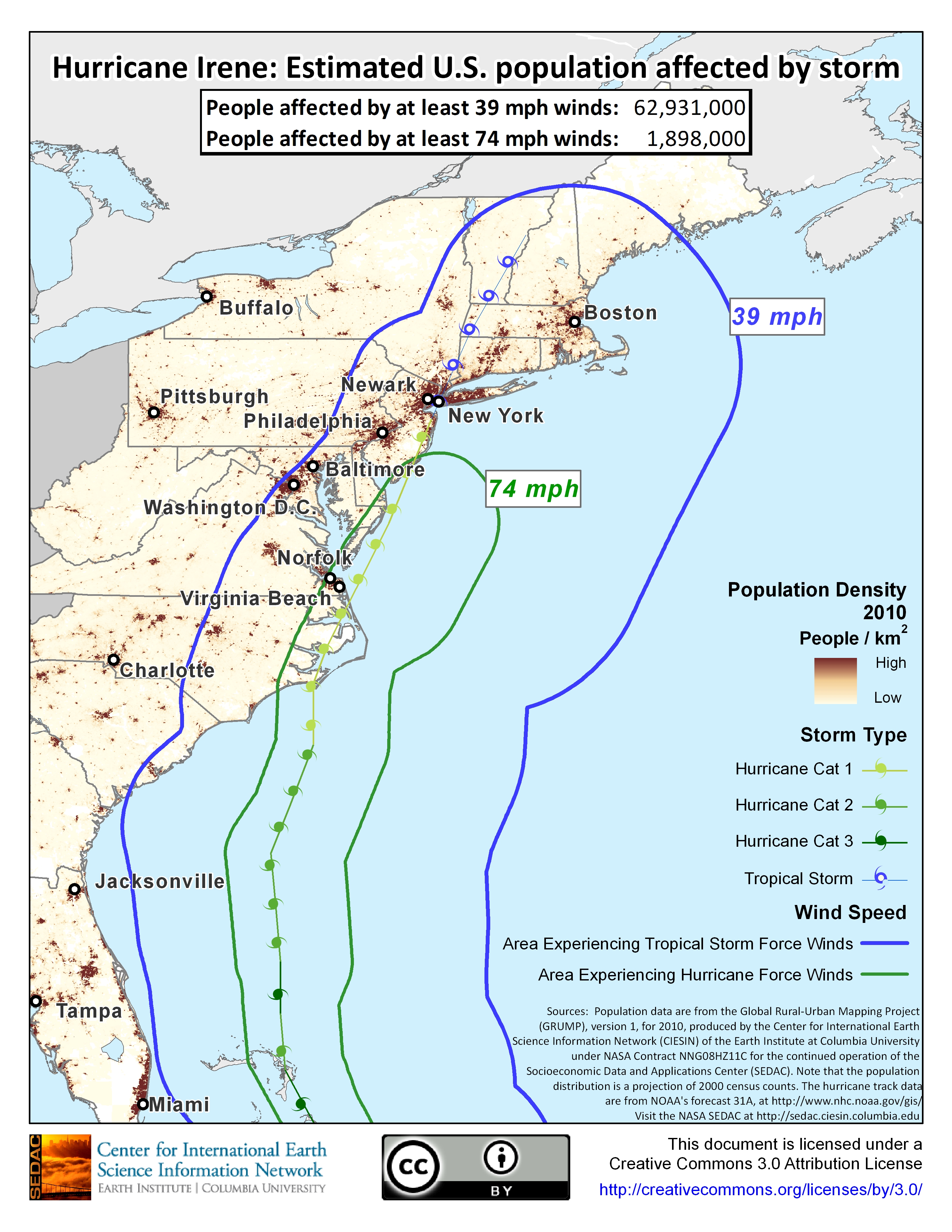
    A stark picture of how close Hurricane Irene came to being an even more serious disaster than it was emerges by overlaying a map of the storm track with a population distribution map.  What made the storm as bad as it was had a lot to do with the fact that its trajectory took it…

  • Climate News Roundup: Week of 8/28

    Climate News Roundup: Week of 8/28

    Seeing Irene as Harbinger of Change in Climate, New York Times, Aug. 27 As the East Coast recovers from the impacts of Hurricane Irene, the storm has revived a debate on the impacts of human-induced climate change on the strength and frequency of hurricanes. While there is widespread consensus that a warmer world will lead…

  • Insuring Against Drought

    Insuring Against Drought

    Research economist Dan Osgood discusses index insurance and how it is helping some poor rural communities reduce hardships caused by drought in East Africa.

  • Humans Shaped Stone Axes 1.8 Million Years Ago, Study Says

    Evidence Pushes Advanced Tool-Making Methods Back in Time

Columbia Climate School Giving Day on October 28, 2026, featuring students and renewable energy imagery

October 28, 2026 is Columbia Giving Day! Your gift to Columbia Climate School helps advance interdisciplinary research, educate the next generation of leaders, and transform bold ideas into real-world solutions for climate, Earth, and society.

  • Wondrous Wildlife of The Week – The Pebble Toad

    Wondrous Wildlife of The Week – The Pebble Toad

    Organisms in the natural world are constantly striving to avoid predation. Some prey depend on morphological characters to outsmart a worthy predator, utilizing camouflage or mimicry to avoid detection; others must engage in battle, relying on agility or strength. The Venezuela pebble toad, however, has an extremely peculiar defense mechanism: it rolls itself into the…

  • Crossing Sectors, Growing Economies

    Crossing Sectors, Growing Economies

    Coordinating the resources of academia, government, non-profits and the private sector can promote industrial innovation and create jobs; it also can improve education, limit the spread of diseases and increase access to food.

  • Critter Corner: News Roundup on Biodiversity – Week of 9/5

    Critter Corner: News Roundup on Biodiversity – Week of 9/5

    Read more about White Nose Syndrome Bats, Hen Sex Strategy, Circadian Clocks in Blind Fish, The Discovery of an Ancient Woolly Rhino, a New Shark Species in this week’s edition of The Critter Corner.

  • Apply for *NEW* Executive Course in Energy and Sustainability

    Apply for *NEW* Executive Course in Energy and Sustainability

    Learn more about CERC’s new course, Energy and Sustainability, which examines the evolution of issues, attitudes, and policies surrounding energy production and use through time, and its relationship to sustainable living.

  • Western Water Woes – Is Big Infrastructure the Way to Go?

    Western Water Woes – Is Big Infrastructure the Way to Go?

    Guest Blog by Michael Clark Pat Mulroy, the general manager of the Southern Nevada Water Authority, spoke on July 20 at a US Chamber of Commerce conference, as part of its Invest in Water Initiative, and proposed a bold idea: build a pipeline to divert Mississippi River flood waters to the West. This, she said,…

  • Population Map Shows How Close Irene Came to Being Even Bigger Disaster

    Population Map Shows How Close Irene Came to Being Even Bigger Disaster

    A stark picture of how close Hurricane Irene came to being an even more serious disaster than it was emerges by overlaying a map of the storm track with a population distribution map.  What made the storm as bad as it was had a lot to do with the fact that its trajectory took it…

  • Climate News Roundup: Week of 8/28

    Climate News Roundup: Week of 8/28

    Seeing Irene as Harbinger of Change in Climate, New York Times, Aug. 27 As the East Coast recovers from the impacts of Hurricane Irene, the storm has revived a debate on the impacts of human-induced climate change on the strength and frequency of hurricanes. While there is widespread consensus that a warmer world will lead…

  • Insuring Against Drought

    Insuring Against Drought

    Research economist Dan Osgood discusses index insurance and how it is helping some poor rural communities reduce hardships caused by drought in East Africa.

  • Humans Shaped Stone Axes 1.8 Million Years Ago, Study Says

    Evidence Pushes Advanced Tool-Making Methods Back in Time