Posts
-

Giant Canyon on Mars Is Still Tectonically Active Today
Scientists at Columbia University and Imperial College London have found that the largest canyon system in the solar system is still active and shaping Mars today, billions of years after it first formed.
-

Finding My Wild: A Summit for Pride and the Planet
Inspired by the freedom found in the mountains, this M.S. in Sustainability Management alum calls for restoring ecosystems and building communities where every living being can flourish authentically.
-

Microplastics Are Chemically Active, and Could Cause Biological Harm
A new study found that when microplastics contact water, their surfaces can become chemically reactive. This could be how they get us sick.
-
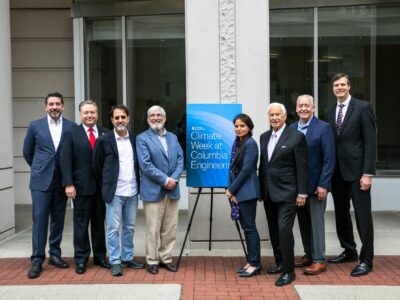
Critical Minerals, New Energy Sources and the Race for Resilience
At a Climate Week symposium, Columbia Engineering convened members of government, industry and academia to examine critical mineral supply chains and emerging energy sources.
-
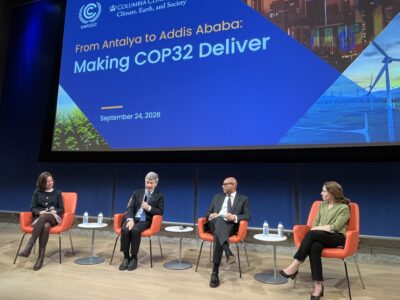
How Do We Make COP32 Deliver on Climate Goals?
As COP31 and COP32 approach, a Climate Week panel brought together climate leaders to discuss how the world can turn Paris promises into action.
-
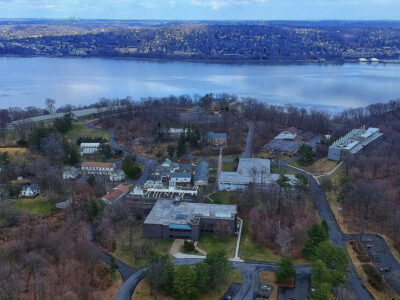
Lamont Researchers Receive Major Earth Science Honors from the American Geophysical Union
Five Lamont scientists received major 2026 honors recognizing research on sea-level change, ocean carbon uptake, seafloor mapping and Earth’s deep interior. William B. F. Ryan receives the Maurice Ewing Medal; Jacqueline Austermann, Gisela Winckler and Galen McKinley receive AGU distinctions, while Renata Wentzcovitch is named a Distinguished Lecturer.
-

Study Links NYC Congestion Pricing Policy to Cleaner Air In Lower Manhattan
One year after NYC launched its congestion pricing policy, fine particulate pollution inside Manhattan’s congestion relief zone was 13 percent lower, according to a new analysis.
-
September Research Roundup: Select Papers
In this month’s edition of our research roundup, we look at the impact of suspending U.S. embassy reporting on air quality; why two extreme heatwaves had different impacts; and how to make vulnerable populations in smaller cities more visible.
-
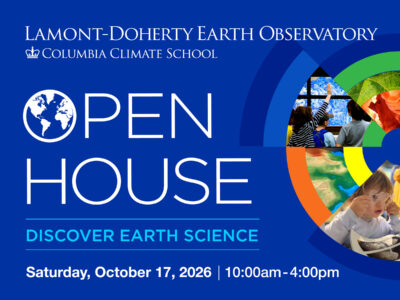
Come Visit Us at Lamont Open House
Join Lamont-Doherty Earth Observatory in Palisades, NY, on Saturday, Oct. 17, for a free, family-friendly event. Explore research facilities through lab tours, exhibits, hands-on activities and talks.


