State of the Planet

News from the Columbia Climate School

201223

  • Is Green Travel Possible?

    Is Green Travel Possible?

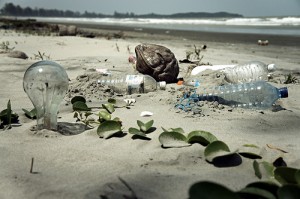
    Imagine if each of the 4.3 million daily commuters on the New York City subway took an international flight. Now think of each of those people on flights spewing jet fuel emissions, guzzling canned soda from plastic airline cups and water from plastic bottles, tossing hotel toiletries into non-recycling bins, blasting hotel air conditioners, and…

  • Chasing Ghengis Khan

    Chasing Ghengis Khan

    Once you, as an outsider, spend considerable time in Mongolia, especially during Naadam and especially in the open Gobi steppe with people who still live as their ancestors did centuries ago, you will also begin to chase Chinggis Khaan.

  • The COAST cruise:  Cascadia Open-Access Seismic Transects

    The COAST cruise: Cascadia Open-Access Seismic Transects

    We are a scientific team of 20 scientists currently aboard the R/V Langseth, acquiring seismic images of the Cascadia subduction zone. Through our work we hope to provide new insights on the position and structure of the plate boundary between the downgoing Juan de Fuca plate and the overlying North American plate.

  • MPA Students Tour Gowanus Canal Superfund Site

    MPA Students Tour Gowanus Canal Superfund Site

    On Thursday, June 28, the students in the Master of Public Administration in Environmental Science and Policy (MPA-ESP) program took a field trip to the Gowanus Canal in Brooklyn, NY. The trip was organized and led by Lamont Associate Research Professor Juerg Matter and Adjunct Professor of Environmental Health Sciences at Columbia’s Mailman School of…

  • In the Woods Listening for the Langseth

    In the Woods Listening for the Langseth

    Our sensors record the same seismic signals as the ocean bottom seismometers the R/V Oceanus deployed, and we will combine the data later. They can detect R/V Langseth signals up to 100 miles inland! This is something extraordinary, and difficult to believe until seen.

  • Investigating the World’s Oceans, Pole to Pole and Deep Below the Bottom

    Investigating the World’s Oceans, Pole to Pole and Deep Below the Bottom

    Watch a slide show featuring ongoing research by scientists at Columbia University’s Lamont-Doherty Earth Observatory, whose work around the globe is key to understanding past changes in the oceans and what is going on today.

  • Water Samples and Wildlife

    Water Samples and Wildlife

    After a day of coring on Tuesday, we decided to give our arms and backs a rest and collect water and plant samples. We take these samples so that we can characterize the chemical signatures of each plant type, and water from different parts of the system. Then, we can recognize those same signatures in…

  • Taking Steps (Together) in the Right Direction

    Taking Steps (Together) in the Right Direction

    The latest 2012 Climate Change Policy Tracker report released by Deutsche Bank Climate Change Advisors in partnership with the Columbia Climate Center shows that while current policies lead to emissions reductions, there is significant distance to go to reach “safe” levels of atmospheric greenhouse gases by 2020.

  • Passing Ships in the Night

    Passing Ships in the Night

    By Helene Carton As part of our study of the Juan de Fuca plate from its birth at the mid-ocean ridge to its recycling at the Cascadia subduction zone, the R/V Oceanus has the task of conducting Ocean Bottom Seismometer (OBS) operations and oceanographic measurements: this is done in close coordination with the R/V Langseth,…

Photo of the Earth from space with the text "Lamont at AGU25" on top.

AGU25, the premier Earth and space science conference, takes place December 15-19, 2025 in New Orleans, Louisiana. This year’s theme—Where Science Connects Us—puts in focus how science depends on connection, from the lab to the field to the ballot box. Once again, Lamont-Doherty Earth Observatory and Columbia Climate School scientists, experts, students, and educators are playing an active role, sharing our research and helping shape the future of our planet. #AGU25 Learn More

  • Is Green Travel Possible?

    Is Green Travel Possible?

    Imagine if each of the 4.3 million daily commuters on the New York City subway took an international flight. Now think of each of those people on flights spewing jet fuel emissions, guzzling canned soda from plastic airline cups and water from plastic bottles, tossing hotel toiletries into non-recycling bins, blasting hotel air conditioners, and…

  • Chasing Ghengis Khan

    Chasing Ghengis Khan

    Once you, as an outsider, spend considerable time in Mongolia, especially during Naadam and especially in the open Gobi steppe with people who still live as their ancestors did centuries ago, you will also begin to chase Chinggis Khaan.

  • The COAST cruise:  Cascadia Open-Access Seismic Transects

    The COAST cruise: Cascadia Open-Access Seismic Transects

    We are a scientific team of 20 scientists currently aboard the R/V Langseth, acquiring seismic images of the Cascadia subduction zone. Through our work we hope to provide new insights on the position and structure of the plate boundary between the downgoing Juan de Fuca plate and the overlying North American plate.

  • MPA Students Tour Gowanus Canal Superfund Site

    MPA Students Tour Gowanus Canal Superfund Site

    On Thursday, June 28, the students in the Master of Public Administration in Environmental Science and Policy (MPA-ESP) program took a field trip to the Gowanus Canal in Brooklyn, NY. The trip was organized and led by Lamont Associate Research Professor Juerg Matter and Adjunct Professor of Environmental Health Sciences at Columbia’s Mailman School of…

  • In the Woods Listening for the Langseth

    In the Woods Listening for the Langseth

    Our sensors record the same seismic signals as the ocean bottom seismometers the R/V Oceanus deployed, and we will combine the data later. They can detect R/V Langseth signals up to 100 miles inland! This is something extraordinary, and difficult to believe until seen.

  • Investigating the World’s Oceans, Pole to Pole and Deep Below the Bottom

    Investigating the World’s Oceans, Pole to Pole and Deep Below the Bottom

    Watch a slide show featuring ongoing research by scientists at Columbia University’s Lamont-Doherty Earth Observatory, whose work around the globe is key to understanding past changes in the oceans and what is going on today.

  • Water Samples and Wildlife

    Water Samples and Wildlife

    After a day of coring on Tuesday, we decided to give our arms and backs a rest and collect water and plant samples. We take these samples so that we can characterize the chemical signatures of each plant type, and water from different parts of the system. Then, we can recognize those same signatures in…

  • Taking Steps (Together) in the Right Direction

    Taking Steps (Together) in the Right Direction

    The latest 2012 Climate Change Policy Tracker report released by Deutsche Bank Climate Change Advisors in partnership with the Columbia Climate Center shows that while current policies lead to emissions reductions, there is significant distance to go to reach “safe” levels of atmospheric greenhouse gases by 2020.

  • Passing Ships in the Night

    Passing Ships in the Night

    By Helene Carton As part of our study of the Juan de Fuca plate from its birth at the mid-ocean ridge to its recycling at the Cascadia subduction zone, the R/V Oceanus has the task of conducting Ocean Bottom Seismometer (OBS) operations and oceanographic measurements: this is done in close coordination with the R/V Langseth,…