State of the Planet

News from the Columbia Climate School

201522

  • Tracing the Arctic

    Tracing the Arctic

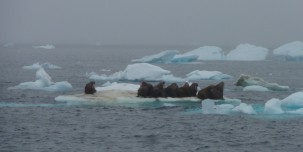
    The land surrounding the Arctic Ocean is like a set of cradling arms, holding the ocean and the sea ice in a circular grasp. Within that cradle is a unique mix of waters, including freshwater from melting glacial ice and large rivers, and a salty mix of relatively warm Atlantic water and the cooler Pacific…

  • The Downs and Ups of Mountain Building

    The Downs and Ups of Mountain Building

    In the islands off Papua New Guinea, the rocks are giving rise to new ideas about the ways mountain chains form. A new scientific model shows how two seemingly opposite processes can take place in the same region.

  • Teen Scientists Team Up with Lamont to Restore an Invaded Marsh

    Teen Scientists Team Up with Lamont to Restore an Invaded Marsh

    “My experience at Lamont has been great and it’s something like no other. Here I was basically being trained to be like a scientist with exposure to lab work, fieldwork and presentation skills.”

  • EPA Spilled, but Didn’t Dump, the Toxics That Ended up in Colorado’s River

    The short-term, expedient result of ignoring environmental impacts may be greater immediate profit for some, but the long-term impact is higher costs and lower profit, and many of those higher costs must be borne by all of us. Many of the companies that made the mess will be long gone before many of the bills…

  • Learning from a River’s History to Prepare for the Future

    Learning from a River’s History to Prepare for the Future

    Researchers from eight universities, including Columbia University, are using tree ring and glacier analysis to reconstruct the climate history of the Missouri River Basin in order to give policymakers and water managers better decision-making tools to manage the river.

  • Can We Save Coral Reefs?

    Can We Save Coral Reefs?

    We are losing coral reefs at an alarming rate and scientists believe that with business as usual they will likely be gone by the end of the century. However, better local management, coupled with new research on coral reef resilience and adaptability, may help buy some time for these indispensable ecosystems.

  • Sustainability Management Student Streamlines National Recycling Programs

    Sustainability Management Student Streamlines National Recycling Programs

    Current Master of Science in Sustainability Management student Jeremy Simpson joined the program because it allowed him to examine his interests in economics, business, and operations research through the lens of sustainability. Jeremy was inspired to work in sustainability because he believes that it is the best way to make a positive impact globally. Now…

  • Officials Launch ‘School as a Way of Life’ in Assam, India

    Officials Launch ‘School as a Way of Life’ in Assam, India

    The initiative will work to improve teaching and learning outcomes in public primary schools in rural Assam through changes in the classroom and improvements in infrastructure.

  • The Big City, Subdivided for Sustainability

    The Big City, Subdivided for Sustainability

    Two-thirds of people on the planet will live in cities by 2050. But few cities are prepared for this population boom. An upcoming research project will explore new, localized models for urban infrastructure to make cities cleaner, healthier and more enjoyable places to live.

Photo of the Earth from space with the text "Lamont at AGU25" on top.

AGU25, the premier Earth and space science conference, takes place December 15-19, 2025 in New Orleans, Louisiana. This year’s theme—Where Science Connects Us—puts in focus how science depends on connection, from the lab to the field to the ballot box. Once again, Lamont-Doherty Earth Observatory and Columbia Climate School scientists, experts, students, and educators are playing an active role, sharing our research and helping shape the future of our planet. #AGU25 Learn More

  • Tracing the Arctic

    Tracing the Arctic

    The land surrounding the Arctic Ocean is like a set of cradling arms, holding the ocean and the sea ice in a circular grasp. Within that cradle is a unique mix of waters, including freshwater from melting glacial ice and large rivers, and a salty mix of relatively warm Atlantic water and the cooler Pacific…

  • The Downs and Ups of Mountain Building

    The Downs and Ups of Mountain Building

    In the islands off Papua New Guinea, the rocks are giving rise to new ideas about the ways mountain chains form. A new scientific model shows how two seemingly opposite processes can take place in the same region.

  • Teen Scientists Team Up with Lamont to Restore an Invaded Marsh

    Teen Scientists Team Up with Lamont to Restore an Invaded Marsh

    “My experience at Lamont has been great and it’s something like no other. Here I was basically being trained to be like a scientist with exposure to lab work, fieldwork and presentation skills.”

  • EPA Spilled, but Didn’t Dump, the Toxics That Ended up in Colorado’s River

    The short-term, expedient result of ignoring environmental impacts may be greater immediate profit for some, but the long-term impact is higher costs and lower profit, and many of those higher costs must be borne by all of us. Many of the companies that made the mess will be long gone before many of the bills…

  • Learning from a River’s History to Prepare for the Future

    Learning from a River’s History to Prepare for the Future

    Researchers from eight universities, including Columbia University, are using tree ring and glacier analysis to reconstruct the climate history of the Missouri River Basin in order to give policymakers and water managers better decision-making tools to manage the river.

  • Can We Save Coral Reefs?

    Can We Save Coral Reefs?

    We are losing coral reefs at an alarming rate and scientists believe that with business as usual they will likely be gone by the end of the century. However, better local management, coupled with new research on coral reef resilience and adaptability, may help buy some time for these indispensable ecosystems.

  • Sustainability Management Student Streamlines National Recycling Programs

    Sustainability Management Student Streamlines National Recycling Programs

    Current Master of Science in Sustainability Management student Jeremy Simpson joined the program because it allowed him to examine his interests in economics, business, and operations research through the lens of sustainability. Jeremy was inspired to work in sustainability because he believes that it is the best way to make a positive impact globally. Now…

  • Officials Launch ‘School as a Way of Life’ in Assam, India

    Officials Launch ‘School as a Way of Life’ in Assam, India

    The initiative will work to improve teaching and learning outcomes in public primary schools in rural Assam through changes in the classroom and improvements in infrastructure.

  • The Big City, Subdivided for Sustainability

    The Big City, Subdivided for Sustainability

    Two-thirds of people on the planet will live in cities by 2050. But few cities are prepared for this population boom. An upcoming research project will explore new, localized models for urban infrastructure to make cities cleaner, healthier and more enjoyable places to live.