State of the Planet

News from the Columbia Climate School

201537

  • Earth Day’s Importance and Evolution Since 1970

    The issue for Earth Day, 2015, is how we marshal the forces of technology toward the goal of creating a sustainable, high-throughput economy. Some of these new technologies will damage our environment. Some, like solar power, can help protect the environment.

  • Mapping the Seafloor

    Mapping the Seafloor

    One of the goals of this expedition is to investigate if water from the Southern Ocean with temperatures above the melting point of glaciers could reach the glaciers in East Antarctica, and if there are any obstacles on the seafloor of the shelf that impact the ability of such water to reach the glaciers and…

  • Lamont-Doherty Strategic Plan

    Lamont-Doherty Strategic Plan

    Lamont-Doherty Earth Observatory has been a leader in the study of our planet since its founding 65 years ago. Today, Observatory scientists continue the institution’s long tradition of addressing important questions in the Earth and planetary sciences. 

  • Scientists’ Conference to Address Global Food Security

    Scientists’ Conference to Address Global Food Security

    Columbia University is teaming up with Cornell University to co-host the second International Global Food Security Conference to bring together 500-plus scientists to investigate the behavioral, biophysical, economic, institutional, political, social and technological drivers of current and future global food security.

  • Overuse of Water by Indian Farmers Threatens Supply

    Overuse of Water by Indian Farmers Threatens Supply

    Convincing farmers that it’s worth it to reduce their water consumption will rest on our ability to help develop local groups to manage aquifers at the community-level.

  • In a Melting Iceland, Drilling Deep to Stem Climate Change

    In a Melting Iceland, Drilling Deep to Stem Climate Change

    Iceland is pioneering a new technology to deal with climate change. Its Hellisheidi geothermal power plant, the world’s largest, hosts arguably the world’s most advanced program to capture and lock away globe-warming carbon dioxide.

  • Photo Essay: Iceland at the Cutting Edge of Climate Change

    Photo Essay: Iceland at the Cutting Edge of Climate Change

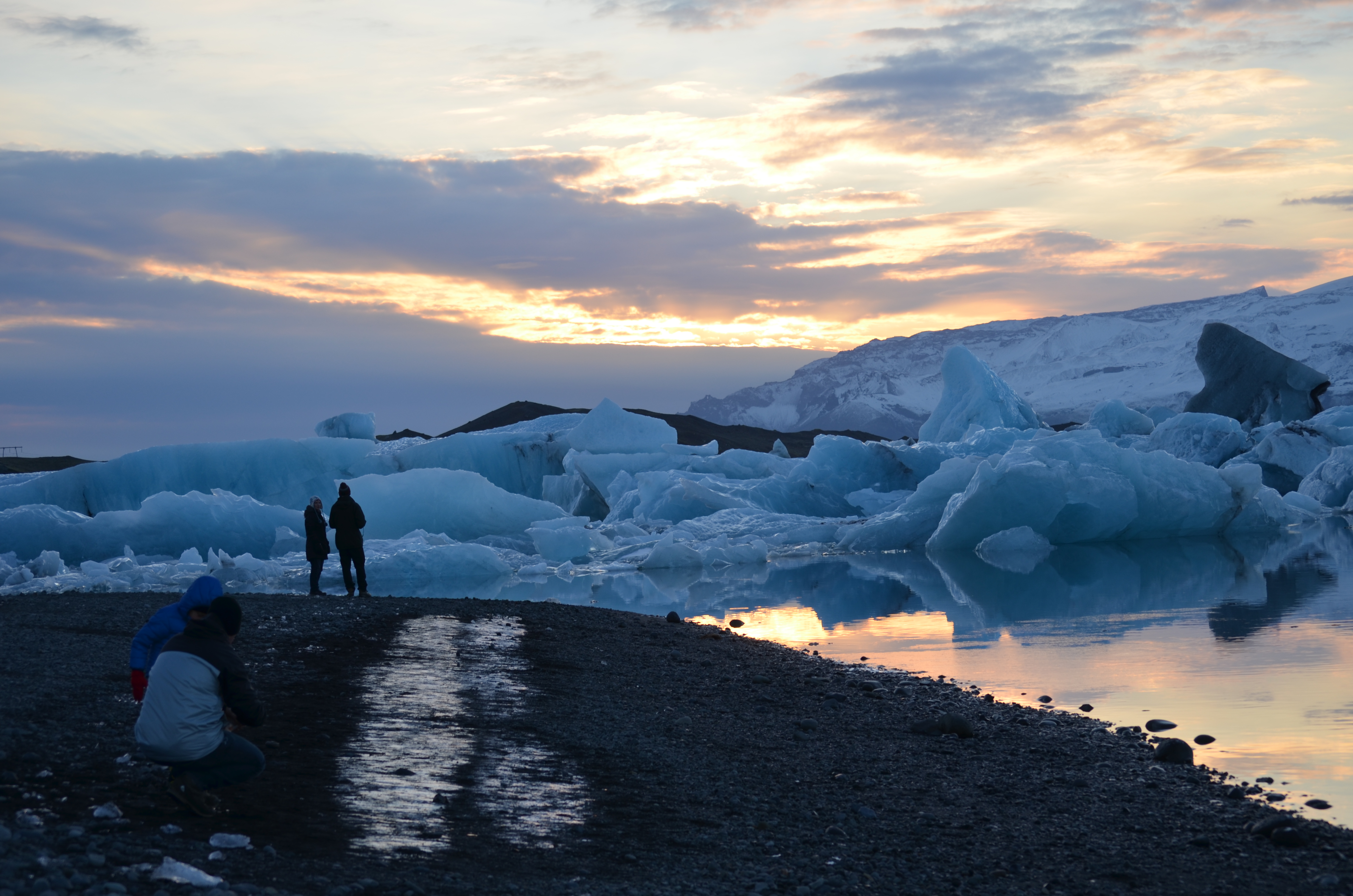
    Iceland has a complicated relationship with climate change. As in much of the far north, global warming is already exerting many effects here–arguably both good and bad. Yet the country contributes relatively little to the warming, since most of its energy comes from geothermal and hydro plants, which produce little carbon dioxide. Now, it is…

  • Ceres President Mindy Lubber to Talk on Sustainable Finance

    Ceres President Mindy Lubber to Talk on Sustainable Finance

    Sustainable investment leader Mindy S. Lubber, president of the Boston-based Ceres, will speak on “Using the Tools of the System to Sustain the Planet” at a special Earth Day class session on April 22.

  • Deep Sea Drilling Rules and the Transition from Fossil Fuels

    The now reorganized Minerals Management Service (MMS) was responsible for generating revenues by leasing federal lands for mining, or drilling, and then regulating the same mining operations it sold leases to. That is an inherent conflict of interest, but it gets worse: The MMS was a revolving door for fossil fuel companies.

Photo of the Earth from space with the text "Lamont at AGU25" on top.

AGU25, the premier Earth and space science conference, takes place December 15-19, 2025 in New Orleans, Louisiana. This year’s theme—Where Science Connects Us—puts in focus how science depends on connection, from the lab to the field to the ballot box. Once again, Lamont-Doherty Earth Observatory and Columbia Climate School scientists, experts, students, and educators are playing an active role, sharing our research and helping shape the future of our planet. #AGU25 Learn More

  • Earth Day’s Importance and Evolution Since 1970

    The issue for Earth Day, 2015, is how we marshal the forces of technology toward the goal of creating a sustainable, high-throughput economy. Some of these new technologies will damage our environment. Some, like solar power, can help protect the environment.

  • Mapping the Seafloor

    Mapping the Seafloor

    One of the goals of this expedition is to investigate if water from the Southern Ocean with temperatures above the melting point of glaciers could reach the glaciers in East Antarctica, and if there are any obstacles on the seafloor of the shelf that impact the ability of such water to reach the glaciers and…

  • Lamont-Doherty Strategic Plan

    Lamont-Doherty Strategic Plan

    Lamont-Doherty Earth Observatory has been a leader in the study of our planet since its founding 65 years ago. Today, Observatory scientists continue the institution’s long tradition of addressing important questions in the Earth and planetary sciences. 

  • Scientists’ Conference to Address Global Food Security

    Scientists’ Conference to Address Global Food Security

    Columbia University is teaming up with Cornell University to co-host the second International Global Food Security Conference to bring together 500-plus scientists to investigate the behavioral, biophysical, economic, institutional, political, social and technological drivers of current and future global food security.

  • Overuse of Water by Indian Farmers Threatens Supply

    Overuse of Water by Indian Farmers Threatens Supply

    Convincing farmers that it’s worth it to reduce their water consumption will rest on our ability to help develop local groups to manage aquifers at the community-level.

  • In a Melting Iceland, Drilling Deep to Stem Climate Change

    In a Melting Iceland, Drilling Deep to Stem Climate Change

    Iceland is pioneering a new technology to deal with climate change. Its Hellisheidi geothermal power plant, the world’s largest, hosts arguably the world’s most advanced program to capture and lock away globe-warming carbon dioxide.

  • Photo Essay: Iceland at the Cutting Edge of Climate Change

    Photo Essay: Iceland at the Cutting Edge of Climate Change

    Iceland has a complicated relationship with climate change. As in much of the far north, global warming is already exerting many effects here–arguably both good and bad. Yet the country contributes relatively little to the warming, since most of its energy comes from geothermal and hydro plants, which produce little carbon dioxide. Now, it is…

  • Ceres President Mindy Lubber to Talk on Sustainable Finance

    Ceres President Mindy Lubber to Talk on Sustainable Finance

    Sustainable investment leader Mindy S. Lubber, president of the Boston-based Ceres, will speak on “Using the Tools of the System to Sustain the Planet” at a special Earth Day class session on April 22.

  • Deep Sea Drilling Rules and the Transition from Fossil Fuels

    The now reorganized Minerals Management Service (MMS) was responsible for generating revenues by leasing federal lands for mining, or drilling, and then regulating the same mining operations it sold leases to. That is an inherent conflict of interest, but it gets worse: The MMS was a revolving door for fossil fuel companies.