20158
-
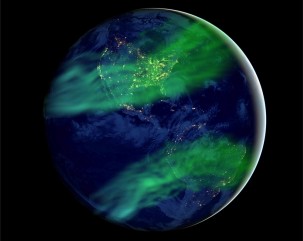
Earth’s Magnetic Field: Just Returning to Normal?
Earth’s magnetic field is getting weaker, but it may simply be coming down from an abnormally high intensity rather than being a sign of an impending geomagnetic reversal.
-

U.S. Could Cut Per Capita Greenhouse Emissions 90% by 2050, Says Report
The report says it is possible to revamp the energy system in a way that reduces per capita carbon dioxide emissions from 17 tons per person currently to 1.7 tons in 2050, while still providing all the services people expect, from driving to air conditioning.
-
The Small Steps That Will Lead to a Low-Carbon Economy
The renewable energy tax credit, now in place, has been dramatically successful in seeding the solar energy industry. Currently 30% of the cost of the new technology is provided as a tax credit.
-

From Copenhagen to Paris: Low Expectations
As we head to Paris, the expectations are profoundly lower. The national commitments that countries are putting on the table do not add up to nearly enough to keep us within 2 degrees; instead the plan is to come back every five years and hopefully do better. … It is still mathematically possible to stay…
-

How Bad Will this El Niño Be? Worse Than You May Think
Today’s El Niño is unfolding over a world that is in many ways more vulnerable than the world of 1997-1998. Just as today’s climate continues to generate extremes without historical precedent, we are starting to see elements of social vulnerability also without historical precedent. That is an alarming combination.
-

Student Profile: Stav Gilutz
For Stav Gilutz, the MPA in Environmental Science and Policy program offered the perfect mix of hard sciences and networking opportunities to complement her legal background and interest in environmental activism. She hopes to apply her skills to management of an environmental non-profit.
-

Climate Is Changing Fast in West Antarctica
Fast-rising temperatures on the Antarctic Peninsula are having an impact on the ice and marine life, and providing clues about future ecosystem changes elsewhere.
-
From Copenhagen to Paris: Likely to Fail Again?
All of the pledges made in Paris will be voluntary. However, countries have not always fulfilled their pledges in the past, and it isn’t obvious that this agreement is going to cause countries to behave very differently in the future.
-

In One Simple Line of Data You Can Read a Full Story
The lines of data are slowly creeping across our Ross Ice Shelf GIS map and with each new line comes an improved understanding of Ross Ice Shelf. What can you learn from a ‘snapshot’ of data? A radar contains a nice story.


AGU25, the premier Earth and space science conference, takes place December 15-19, 2025 in New Orleans, Louisiana. This year’s theme—Where Science Connects Us—puts in focus how science depends on connection, from the lab to the field to the ballot box. Once again, Lamont-Doherty Earth Observatory and Columbia Climate School scientists, experts, students, and educators are playing an active role, sharing our research and helping shape the future of our planet. #AGU25 Learn More
