Earth Sciences106
-
Volcano Expert Wins MacArthur ‘Genius Grant’
A geochemist who studies the workings of the deep earth and their influence on some of the world’s most explosive volcanoes has been awarded a $500,000 MacArthur Fellowship. Terry Plank, a researcher at Columbia University’s Lamont-Doherty Earth Observatory, joins novelist Junot Diaz, war correspondent David Finkel and filmmaker Natalia Almada in this year’s batch of…
-

Biotherapy: Technology Assisted Wetland Revival
Coastal Wetlands provide homes for migrating and native birds, protected areas for hatcheries, flood mitigation and an unrivaled biodiversity of microorganisims that serves as the basis of the marine food chain. Nature here works hard to compensate for an increasingly heavy human footprint.
-

A Talk with Sean Solomon, Lamont-Doherty’s New Director
“The Observatory has remained a powerhouse in Earth science research and a very special place. The scientists here are true explorers—creative and fiercely independent.”
-

Rare Earth Metals: Will We Have Enough?
Cell phones, iPads, laptops, televisions, hybrid cars, wind turbines, solar cells and many more products depend on rare earth metals to function. Will there be enough for us to continue our high-tech lifestyle and transition to a renewable energy economy?
-

Newtown Creek Clean-Up Polluting the Air, Researchers Say
A city effort to clean-up polluted Newtown Creek by aerating the water to boost oxygen levels is having an unintended effect: it is releasing sewage bacteria and other particles into the air above the site, researchers say in a new study in the journal Environmental Science and Technology. The researchers found bacteria types in the…
-

Epic Wetness in Greater NYC, and What Broadleaf Trees Have to Say About It
2012 is turning out to be an exceptional year in the eastern US. Starting out with what was essentially a #YearWithoutaWinter, followed by a heat wave in March, a hot summer, Macoun and Cortland apples coming in 2-3 weeks early, and the continuation of a severe drought in the Southern US that expanded into the Midwest…
-
Practicum Introduces Students to Earth Institute Research
Each fall the Earth Institute offers a unique insight into the cutting-edge research of institute centers and units and the policy implications of that research in the Earth Institute Practicum. The practicum provides an opportunity to learn about issues in sustainable development, sustainability management and environmental science from faculty and researchers in these areas.
-

Master of It All: One Woman Scientist Pays Tribute to Another
Lamont-Doherty geophysicist Robin Bell pays tribute to colleague Kim Kastens who is retiring from Lamont after 31 years. Kastens was the first woman co-chief scientist on the JOIDES Resolution, first woman faculty member to join Columbia’s geology department, founder of Columbia’s joint journalism and environmental science master’s program and a pioneer in the field of…
-

Courses in Conservation & Sustainability
Are you interested in cultivating the skills necessary to implement environmental change? Do you want to learn more about conservation and environmental sustainability, including ecosystem services and function?


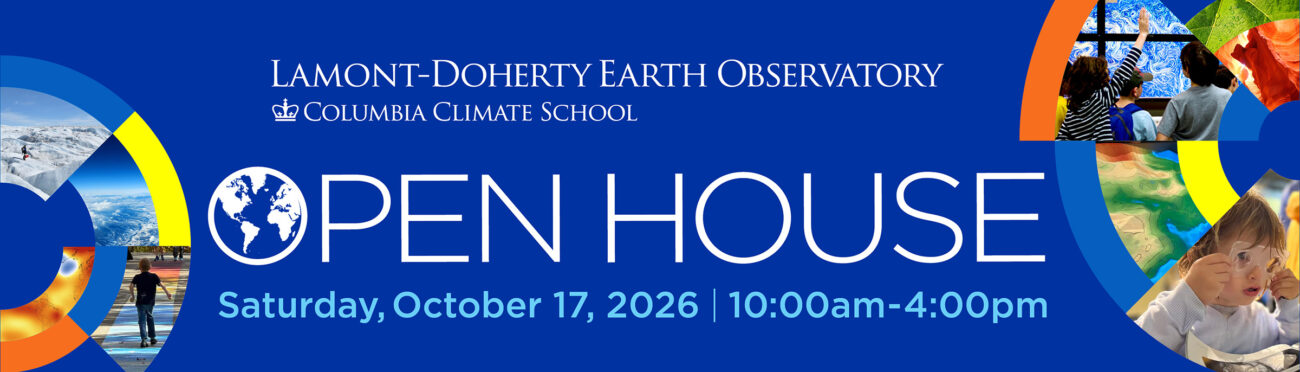
On Saturday, October 17, 2026 from 10am to 4pm, Lamont-Doherty Earth Observatory Open House—our biggest, best science fun and discovery event of the year—will take place on our beautiful campus in Palisades, NY. Mark your calendar and join us for this free, family-friendly celebration of science! RSVP Today!