Earth Sciences115
-

What Darwin Saw
Sir Charles Darwin realized that humanity is interwoven with nature, that all of life is in a state of constant flux. The empowerment of nature, made possible by Darwin’s integration of human life into the whole, and grounded in his lived experience and profound humility, is the foundation of modern ecology.
-

Scientists Drill 2 Miles Down to Ancient Lake Vostok
Russian scientists this week finished penetrating more than two miles through the Antarctic ice sheet to Lake Vostok, a huge freshwater lake that has been buried under the ice for millions of years. But they won’t know what they’ve found until next year.
-

Biodiversity in the Shawangunk Mountains
Recently ranked highest in biological diversity and as one of the “last great places on Earth”, the Shawangunk Mountains are being actively reintroduced to forest fires in an attempt to preserve biodiversity.
-

Seeking the Signal in the Noise of Environmental Performance Metrics
The 2012 Environmental Performance Index is a powerful tool for diagnosing trends not just across countries but over time, too. Consider what we can learn about overfishing, for example.
-

Ecological Succession: Forest Fires to the Ocean Floor
A new study reveals that new microbes supplant the active hydrothermal vent’s microbes after the site ceases to produce thermal energy. Though more research is necessary to fully understand the regeneration process in the dormant hydrothermal vents, the study provides an additional platform for ecologists to explore how ecosystems recover from natural unbalances and how…
-
Putting the ‘Death’ Back Into Death Valley?
Popular Tourist Stop May Have More Potential to Explode Than Thought
-

Ohio Quakes Probably Triggered by Disposal Well, Say Seismologists
Earthquakes that have shaken an area just outside Youngstown, Ohio, in the last nine months are likely linked to a disposal well for injecting wastewater used in the hydraulic fracturing process, say LDEO seismologists.
-
Finding the Right Graduate Program
“It is important to be present, interested and passionate in a Master’s program.” Taking time off to travel and work helped Meg Sutton to realize that the M.A. Climate and Society program has what she was looking for in a graduate program.
-

Holidays on the High Seas
With round-the-clock shifts, there are precious opportunities for Santa to slip onto a research ship unseen. But slip in he did, leaving treats and gifts around the R.V. Langseth to brighten our day.


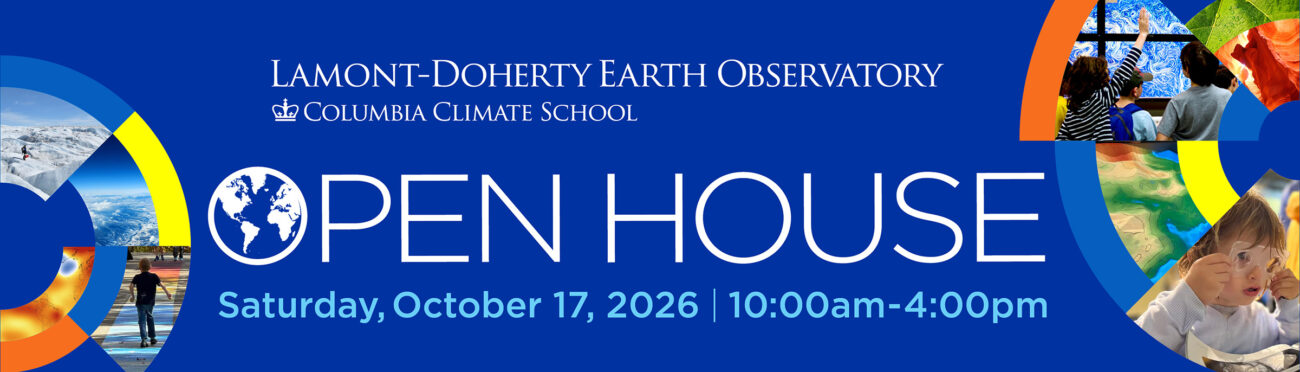
On Saturday, October 17, 2026 from 10am to 4pm, Lamont-Doherty Earth Observatory Open House—our biggest, best science fun and discovery event of the year—will take place on our beautiful campus in Palisades, NY. Mark your calendar and join us for this free, family-friendly celebration of science! RSVP Today!
