State of the Planet

News from the Columbia Climate School

Ecology41

  • Losing Leaf Peepers: the Effect of Climate Change on Fall Color

    Losing Leaf Peepers: the Effect of Climate Change on Fall Color

    The spectacular colors of fall foliage draw throngs of tourists to the Eastern U.S. each year. However, new research from The Chinese Academy of Sciences suggests that climate change may shift the timing of this seasonal event to the detriment of travelers and locals alike.

  • When the Sahara Turned to Sand

    When the Sahara Turned to Sand

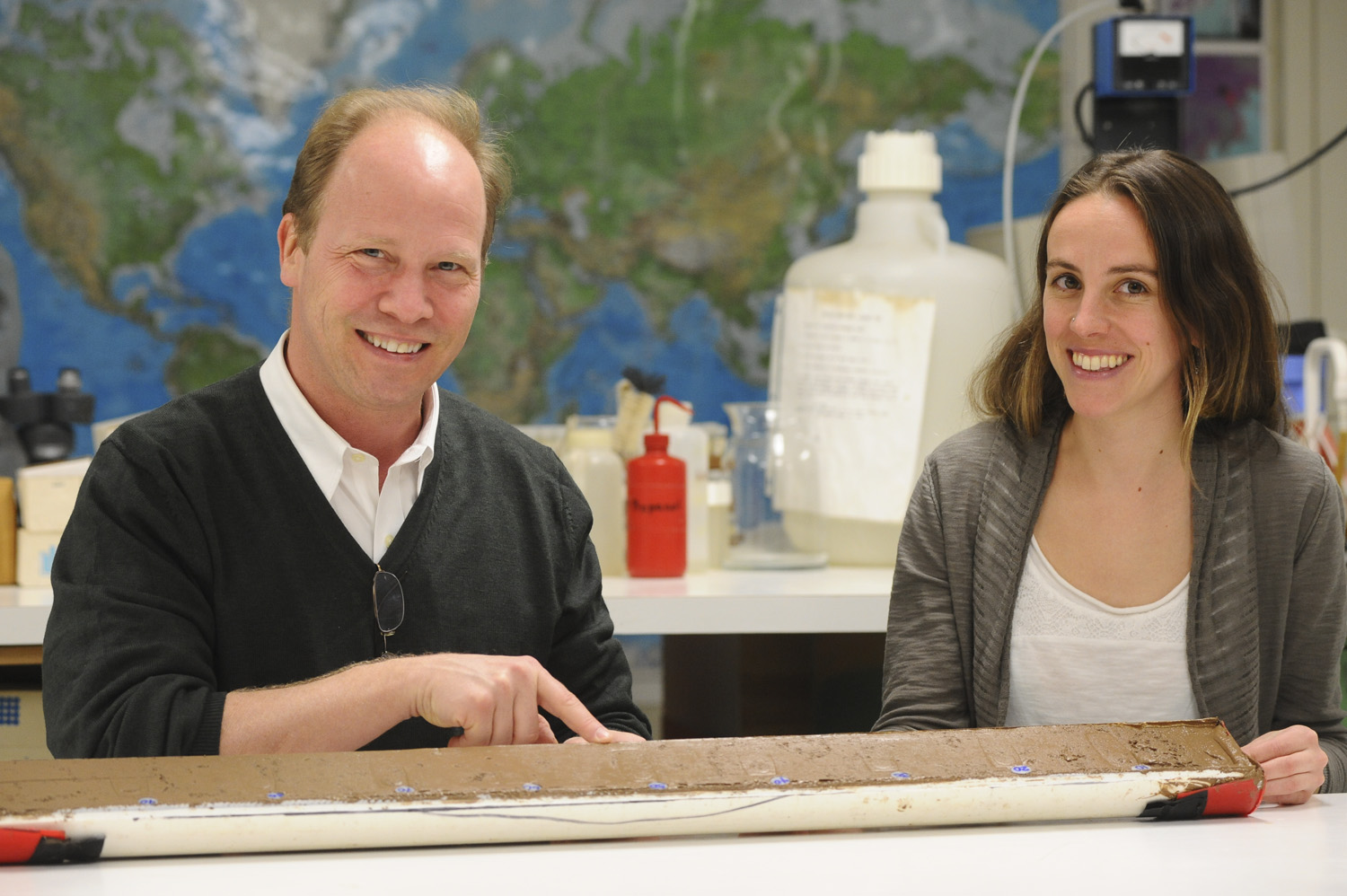
    The Sahara wasn’t always a desert. Trees and grasslands dominated the landscape from roughly 10,000 to 5,000 years ago. Then, abruptly, the climate changed. A study by Lamont-Doherty’s Peter deMenocal says it took just a few hundred years to happen.

  • CUriosity3: Intersection Between Arts and Sciences

    CUriosity3: Intersection Between Arts and Sciences

    Join instructors from our Executive Education Certificate Program in Conservation and Environmental Sustainability including Dr. Shahid Naeem, Dr. Matt Palmer, and Dr. Eric Sanderson. for a FREE public seminar program addressing the intersection between Arts and Science with the goal of initiating discussions and debate around the common ground of creative practice and scientific discovery.

  • Visit Ecosystems in Brazil, India, or Jordan This Summer

    Visit Ecosystems in Brazil, India, or Jordan This Summer

    Are you curious about environmental sustainability in a global context? Want to earn course credit while traveling the world this summer? Take advantage of The Summer Ecosystem Experiences for Undergraduates program (SEE-U) offered through The Earth Institute Center for Environmental Sustainability! Through summer field courses in Brazil, India, or Jordan, you will have the unique…

  • Nature-Inspired Robots

    Nature-Inspired Robots

    Scientists at the École Polytechnique Fédérale de Lausanne in Switzerland created a new breed of robots to advance their research in robotic movements. But the cheetah-cub robot is not the first animal to bound across laboratory floors. Scientists have produced a “mechanical menagerie” of robots that mimic four legged mammals, compact insects, and everything in…

  • The Arctic’s Secret Garden

    The Arctic’s Secret Garden

    Lamont-Doherty Earth Observatory marine biologists Craig Aumack and Andy Juhl spend a month each spring in Barrow studying the algae dwelling in and under the sea ice. Their goal is to learn more about the different species of algae that compose these communities and their role in the Arctic marine food web.

  • Finding Threatened Animals New Homes

    Finding Threatened Animals New Homes

    Translocation in wildlife conservation is the capture, transport and release or introduction of species, habitats or other ecological material from one location to another. The authors argue that many species will need to move to a different location in order to survive. For species that are unable to relocate naturally, the only chance of survival…

  • A Fellow’s Story: Crossing Oceans, Breaking Boundaries

    A Fellow’s Story: Crossing Oceans, Breaking Boundaries

    After working in tropical forests and coastal areas throughout college and graduate school, Manhattan did not seem like a natural place to migrate after completing my PhD. But pursuing an Earth Institute Postdoctoral Fellowship was was one of the best decisions I have ever made.

  • Students Travel to Belize through Earth Institute Course Support Funding

    Fieldwork is an important component of environmental education and research. Every year, the Earth Institute’s Office of Academic and Research Programs provides funding to help underwrite faculty-organized field trieps that augment undergraduate and graduate classroom learning experiences. With assistance from the Earth Institute Course Support Program, 10 students with Dr. Josh Drew and Dr. Elisa…

Photo of the Earth from space with the text "Lamont at AGU25" on top.

AGU25, the premier Earth and space science conference, takes place December 15-19, 2025 in New Orleans, Louisiana. This year’s theme—Where Science Connects Us—puts in focus how science depends on connection, from the lab to the field to the ballot box. Once again, Lamont-Doherty Earth Observatory and Columbia Climate School scientists, experts, students, and educators are playing an active role, sharing our research and helping shape the future of our planet. #AGU25 Learn More

  • Losing Leaf Peepers: the Effect of Climate Change on Fall Color

    Losing Leaf Peepers: the Effect of Climate Change on Fall Color

    The spectacular colors of fall foliage draw throngs of tourists to the Eastern U.S. each year. However, new research from The Chinese Academy of Sciences suggests that climate change may shift the timing of this seasonal event to the detriment of travelers and locals alike.

  • When the Sahara Turned to Sand

    When the Sahara Turned to Sand

    The Sahara wasn’t always a desert. Trees and grasslands dominated the landscape from roughly 10,000 to 5,000 years ago. Then, abruptly, the climate changed. A study by Lamont-Doherty’s Peter deMenocal says it took just a few hundred years to happen.

  • CUriosity3: Intersection Between Arts and Sciences

    CUriosity3: Intersection Between Arts and Sciences

    Join instructors from our Executive Education Certificate Program in Conservation and Environmental Sustainability including Dr. Shahid Naeem, Dr. Matt Palmer, and Dr. Eric Sanderson. for a FREE public seminar program addressing the intersection between Arts and Science with the goal of initiating discussions and debate around the common ground of creative practice and scientific discovery.

  • Visit Ecosystems in Brazil, India, or Jordan This Summer

    Visit Ecosystems in Brazil, India, or Jordan This Summer

    Are you curious about environmental sustainability in a global context? Want to earn course credit while traveling the world this summer? Take advantage of The Summer Ecosystem Experiences for Undergraduates program (SEE-U) offered through The Earth Institute Center for Environmental Sustainability! Through summer field courses in Brazil, India, or Jordan, you will have the unique…

  • Nature-Inspired Robots

    Nature-Inspired Robots

    Scientists at the École Polytechnique Fédérale de Lausanne in Switzerland created a new breed of robots to advance their research in robotic movements. But the cheetah-cub robot is not the first animal to bound across laboratory floors. Scientists have produced a “mechanical menagerie” of robots that mimic four legged mammals, compact insects, and everything in…

  • The Arctic’s Secret Garden

    The Arctic’s Secret Garden

    Lamont-Doherty Earth Observatory marine biologists Craig Aumack and Andy Juhl spend a month each spring in Barrow studying the algae dwelling in and under the sea ice. Their goal is to learn more about the different species of algae that compose these communities and their role in the Arctic marine food web.

  • Finding Threatened Animals New Homes

    Finding Threatened Animals New Homes

    Translocation in wildlife conservation is the capture, transport and release or introduction of species, habitats or other ecological material from one location to another. The authors argue that many species will need to move to a different location in order to survive. For species that are unable to relocate naturally, the only chance of survival…

  • A Fellow’s Story: Crossing Oceans, Breaking Boundaries

    A Fellow’s Story: Crossing Oceans, Breaking Boundaries

    After working in tropical forests and coastal areas throughout college and graduate school, Manhattan did not seem like a natural place to migrate after completing my PhD. But pursuing an Earth Institute Postdoctoral Fellowship was was one of the best decisions I have ever made.

  • Students Travel to Belize through Earth Institute Course Support Funding

    Fieldwork is an important component of environmental education and research. Every year, the Earth Institute’s Office of Academic and Research Programs provides funding to help underwrite faculty-organized field trieps that augment undergraduate and graduate classroom learning experiences. With assistance from the Earth Institute Course Support Program, 10 students with Dr. Josh Drew and Dr. Elisa…