Ecology54
-

Photo Essay: India, Water, Culture
Take a photographic journey from the crowded streets of Delhi, through the parched state of Rajasthan, and into the farmlands of north Gujarat to get a closer look at some of the many ways water affects the lives of millions of Indians every day.
-

Experience Ecosystems of the Dominican Republic
SEE-U Dominican Republic provides students with many enriching opportunities to engage in fieldwork and study biodiversity and ecosystems in their natural environments.
-

Do It Yourself Biology – Need for Panic?
Disagreements have arisen within the science community about whether or not it is safe and ethical to publish results concerning two new mutant strains of the H5N1 bird flu virus. The controversy is part of an ongoing debate about the safety and practice of unregulated biotechnology and the role of censorship in science.
-

Charismatic Megaflora: What do Old Trees Look Like?
Charismatic megaflora? What kind of a tree might that be? As with many things, one person’s charismatic megaflora is another person’s tree. For myself, a tree that would draw and hold my attention as a younger person/student is very different than my current definition of a charismatic tree.
-

The Sundarbans
After finally reaching the Mongla and our boat, we settled into our new home. It is a similar design, but much larger than the one we used in September. As we ate dinner and explored the ship, it started the overnight journey to the southeastern part of the Sundarbans where the wildlife is most plentiful.…
-

Study Ecosystems Abroad in Brazil This Summer
CERC is now accepting applications for the Summer Ecosystem Experiences for Undergraduates (SEE-U) field site program at Brazil. This five-week-long, 6-credit program runs from May 26 to June 30, 2012. No pre-requisite coursework is necessary and students of all majors can apply.
-

A Documentary: CERC Students Explore E-Waste Warehouse
CERC students visit and document their experiences on video at the Lower East Side Ecology Center’s new permanent e-waste warehouse located in Gowanus, Brooklyn.
-

Study Rainforest Ecology in Puerto Rico with SEE-U
The SEE-U Puerto Rico course provides students with a total immersion experience into the ecology and dynamics of a fragile and threatened environmental system.
-

At the Bottom of the Bottom of the World
As we in North America emerge from a remarkably mild winter, the brief and sunny summer in the world’s deep south is drawing to a rapid close. Antarctica’s days are becoming shorter, and come the vernal equinox the South Pole will enter into its yearly hibernation—six months of dusk and night. Researchers from Columbia University…


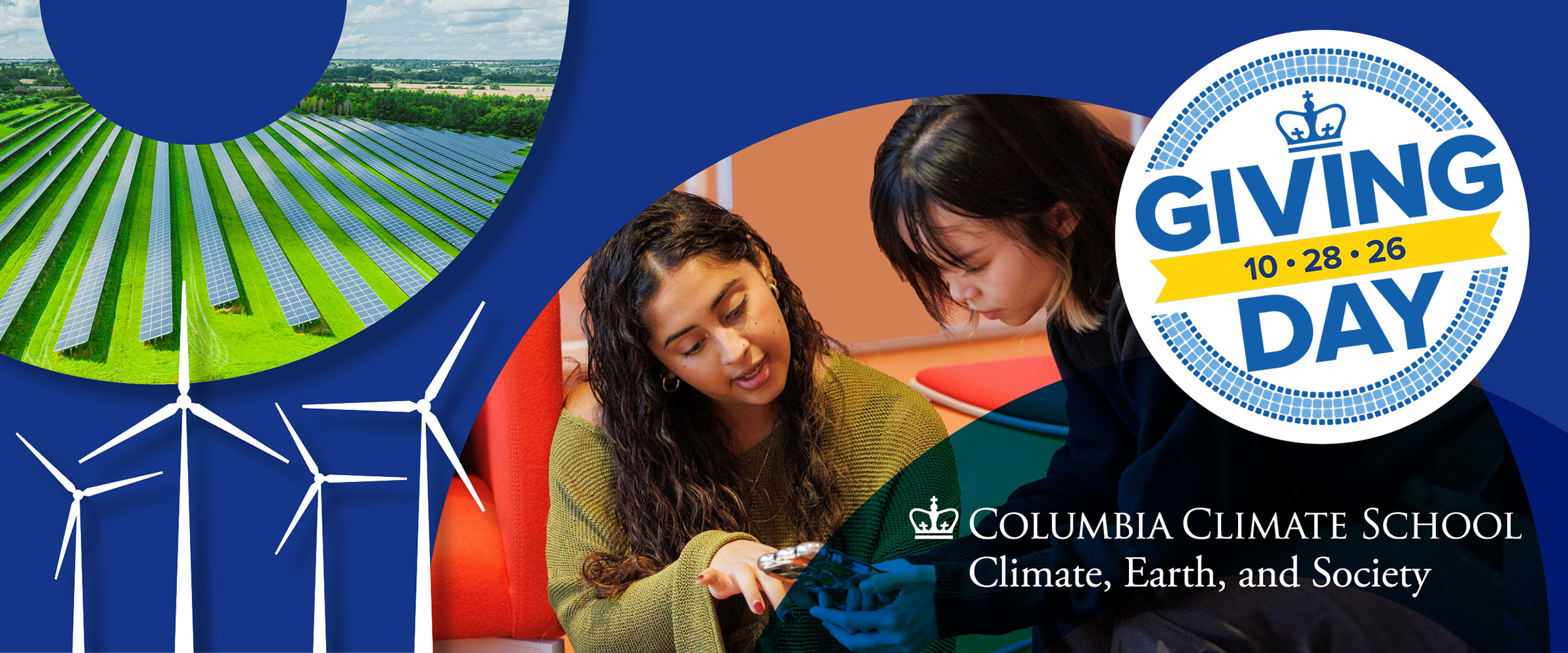
October 28, 2026 is Columbia Giving Day! Your gift to Columbia Climate School helps advance interdisciplinary research, educate the next generation of leaders, and transform bold ideas into real-world solutions for climate, Earth, and society.
