Energy37
-

Obama’s Climate Legacy Depends on EPA’s Gina McCarthy
Due to Congressional gridlock over greenhouse gas regulations, Obama will need the help of new EPA Administrator Gina McCarthy to pass crucial carbon emission standards.
-

Conservation & Environmental Sustainability – Fall 2013 Courses
The Earth Institute Center for Environmental Sustainability (EICES) at Columbia University provides executive training in environmental sustainability through courses in science, economics and policy. We invite you to join our leading experts and practitioners, strengthen your understanding of human-ecosystem interactions, and become an effective environmental leader and decision-maker.
-

Photo Essay: High Desert, Deep Earth
In the Arabian peninsula nation of Oman, geologists are studying the Hajar mountains–a range containing rocks that have been thrust up from the deep earth. Accessible to humans in only a few places on earth, these kinds of rocks offer clues to the planet’s deep history–and possible ways that natural processes may be harnessed to…
-

What’s the Real Story With Clean Coal?
The Obama administration will propose new rules to limit carbon emissions from coal-fired power plants. But is “clean coal” technology up to the job?
-

The Boom of Hydraulic Fracturing
Experts discuss the rise and boom of unconventional hydrocarbon extraction in the final Sustainable Development Seminar Series of the 2012-2013 academic year.
-

National Grid Joins the Corporate Circle
The Earth Institute is pleased to welcome National Grid into the Corporate Circle, a collective partnership of leading corporations from across the globe committed to pursuing sustainable development objectives. Through a generous gift, National Grid will support sustainable energy research at the Earth Institute.
-
Students Work on Net Zero Energy to Adaptation Planning Projects
By Noah Morgenstein This past May, seniors in the Capstone Workshop in Sustainable Development delivered their final presentations to fellow students and faculty at Columbia University. The workshop is a required course for students in the Sustainable Development major or special concentration. Unlike traditional courses, the workshop requires students to work collaboratively on a client project…
-

The Microgrid Solution
Last October, Superstorm Sandy provoked widespread frustration and fear after it left more than 7.5 million people in the New York Metro area without power. In the hardest hit areas, outages lasted two weeks or more. These failures led many observers to wonder if America’s aging electrical grid was up to dealing with emerging climate…
-

Of Cow Dung, Cook Stoves and Sustainability in Practice
When the Environmental Defense Fund asked me to measure how biogas cook stoves were changing the lives of farmers in rural India, there wasn’t a word in that question with which I was comfortable. Having just graduated from the Undergraduate Program in Sustainable Development, I had never done fieldwork; and the concept of a biogas…


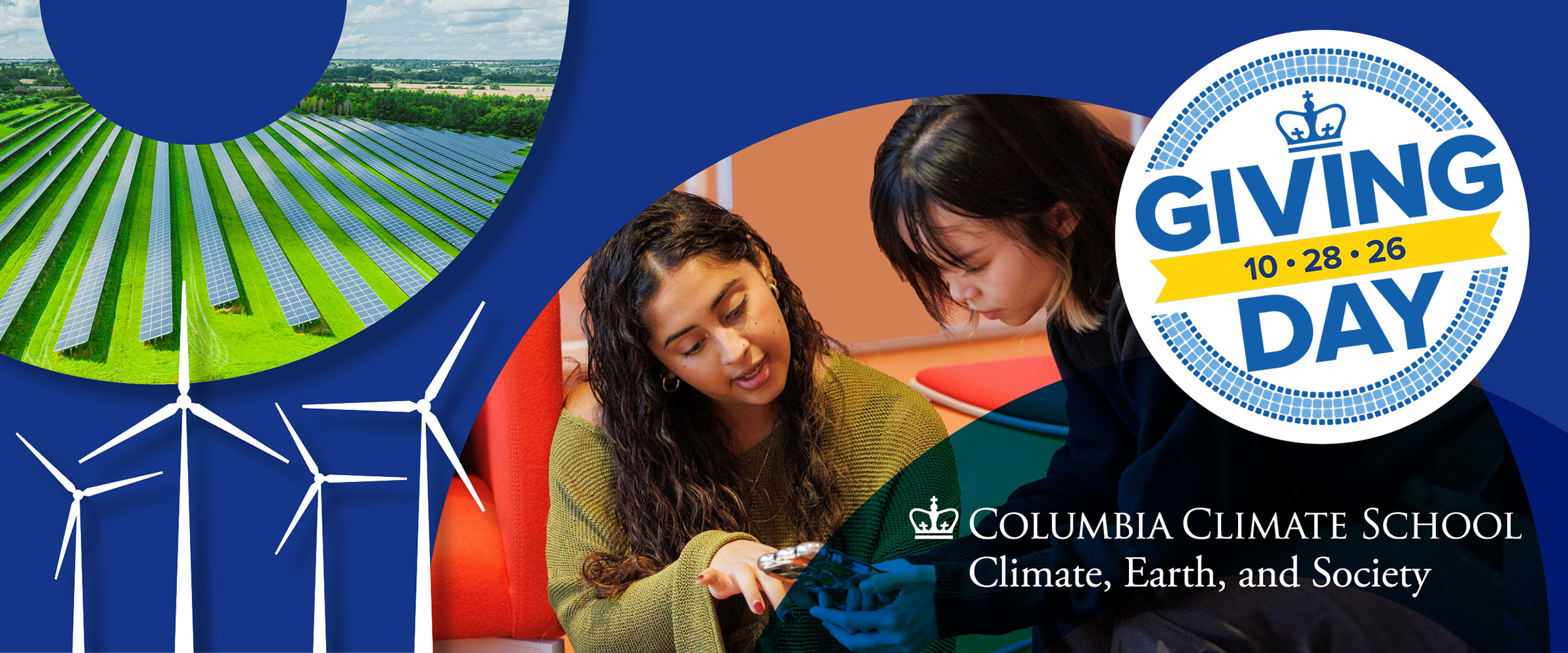
October 28, 2026 is Columbia Giving Day! Your gift to Columbia Climate School helps advance interdisciplinary research, educate the next generation of leaders, and transform bold ideas into real-world solutions for climate, Earth, and society.
