General127
-
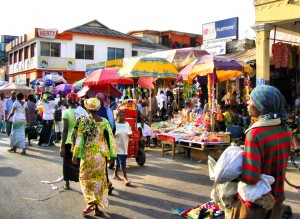
World Population Projected to Cross 11 Billion Threshold in 2100
In 2011, the U.N. announced that the world population had reached 7 billion. This year’s new projections for future population growth are higher than previously expected. Projects like Millennium Cities hope to alleviate many of the pressures that crowded cities place on infrastructure, public services, and the environment.
-

Urban Trees Fight CO2 Emissions
Trees play a vital role in cleaning air and absorbing carbon dioxide.
-

MPA Students Tour Gowanus Canal
Students and faculty from the Master of Public Administration in Environmental Science and Policy program toured the Gowanus Canal in Brooklyn, N.Y., recently to see how environmental science, policy and public activism come together in an urban setting.
-

Birds, Ballasts, and the Fate of the Biosphere
The Biosphere really needs its own newspaper. Yes, there are lots of newspapers out there, but when it comes to the Biosphere, important stories just don’t get the top billing they deserve. Take discoveries of new species, for example. Just in the last month, a new spoon worm, white toothed shrew, corpse flower, and tailorbird…
-

MPA Students Present Mid-Semester Briefings
On Wednesday, June 26, the MPA in Environmental Science and Policy students presented their Midterm Briefings for their class: Workshop in Applied Earth Systems Policy Analysis. A continental breakfast was provided before the presentations began and the students and faculty had a chance to mingle and discuss informally what they had been working on for…
-

Faculty Profile: Benjamín Bostick
MPA in Environmental Science and Policy (MPA-ESP) professor Benjamín Bostick began his Columbia career as a researcher at the Lamont-Doherty Earth Observatory, specializing in geochemistry. His research centers on the coupled biogeochemical cycling of carbon, iron, and sulfur. He now teaches the Environmental Chemistry course in the ESP program, where he examines the delicate balance…
-

Science in the Streets
What motivates artists may be different than what motivates scientists, but they can investigate similar ideas. Artists interested in sustainability issues might team up with scientists to make sure their work is accurate. Scientists benefit from art projects that communicate their research to a broader audience than would normally read a journal article. However, the…
-

Designing the Future at the Brooklyn Navy Yard Industrial Park
Two Sustainability Management projects offer solutions that reinforce the business and development goals of the yard’s Development Corporation while also creating positive interactions with the environment and neighboring community.
-

Finding Solutions to Environmental Conflict: Q&A With Josh Fisher
In a rapidly warming world, conflicts inevitably arise between those affected by dwindling resources and changing climate conditions. Josh Fisher’s work centers on trying to avert conflict and provide opportunities for cooperation through understanding the relationships between conflict, environment and development.



COP31, the 2026 United Nations Climate Change Conference, aims to advance dialogue, strengthen consensus, and accelerate climate action on a global scale. From November 9–20, 2026 in Antalya, Türkiye, heads of state, ministers, scientists, business leaders, and civil society will gather to advance efforts in emission targets, climate finance, and adaptation and resilience. Once again, our experts, students, and global thought leaders from Columbia Climate School and across Columbia University are contributing to key events, sharing insights, and helping shape the dialogue toward ambitious, science-based solutions. Learn More
