General198
-
Climate and Meningitis in Africa
The International Research Institute for Climate and Society and Google are offering a guided tour of Africa to teach you about the relationship between climate and deadly meningitis outbreaks there. No need to pack your bags, though: it’s a virtual tour, one you can run on Google Earth from your living room. The climate and…
-

Past Lecturer Now Director of NIH
Last February Francis Collins enchanted the CSSR with his lecture, “The Language of God: A Believer Looks at the Human Genome”. Collins was the leader of the Human Genome Project, the revolutionary program which undertook the task of reading out all of the letters of the human DNA instruction book, and has recently become the director…
-
Shipboard Researchers Image Haiti Earthquake Fault
Scientists are sailing off the coast of Haiti to assess the recent earthquake there, and the potential for more. This is the latest update, emailed by chief scientist Cecilia McHugh from the research vessel Endeavor. (Read the full story of the project, involving the Earth Institute and other major institutions.) Today we surveyed the Baie de Grand Goave, west of…
-
Urban Design Lab: Plastic TrashPatch
How much is your trash worth? Using various visualization instruments, design ideas, engineering, and environmental science research, a team of designers, engineers, and scientists at the Urban Design Lab (UDL) are trying to find out. A new initiative for 2010, Plastic TrashPatch, seeks to raise awareness of ”trashpatches,” thick areas of concentrated marine debris that…
-
The Oden and the Polarstern Cross Paths
We successfully finished our scientific work in the Amundsen Sea and are now heading back to Punta Arenas, at the tip of South America. It will take eight to nine days to get there depending on the weather and winds. Just before we left the Amundsen Sea we passed the German ice-breaker ship, the Polarstern.…
-
Researchers Probe Bottom Off Port-au-Prince
Scientists are now sailing off the coast of Haiti to assess the recent earthquake there, and the potential for more. This is the latest update, emailed by chief scientist Cecilia McHugh from the research vessel Endeavor. (Read the full story of the project, involving the Earth Institute and other major institutions.) The first part of the science program focused…
-
Earthquake Research Vessel Reaches Haiti Coast
Scientists aboard the U.S. research vessel Endeavor and collaborators ashore have just arrived on the coast of Haiti to start a 20-day survey of that will assess the history and potential continued threat of earthquakes there. (Read the full story of the project, involving the Earth Institute and other major institutions.) Chief scientist Cecilia McHugh of Lamont-Doherty Earth Observatory…
-
Looking at Mud to Learn About Ice Sheets
The bottom of the seafloor shows us where ice used to flow. To pinpoint when the ice retreated, the geologists on board take samples of mud and sand from the seafloor. Using a weighted steel barrel lowered to the seafloor they bore their way through sand and mud. A catcher at the bottom of the…
-
A “Legally Binding” Climate Agreement: What Does it Mean? Why Does it Matter?
The term “legally binding” has become a touchstone of sorts in international climate policy. The Copenhagen Accord taken note of by the fifteenth Conference of Parties (COP) under the United National Framework Convention on Climate Change in December 2009 is not legally binding. Heads of state and activists alike call for a legally binding agreement…

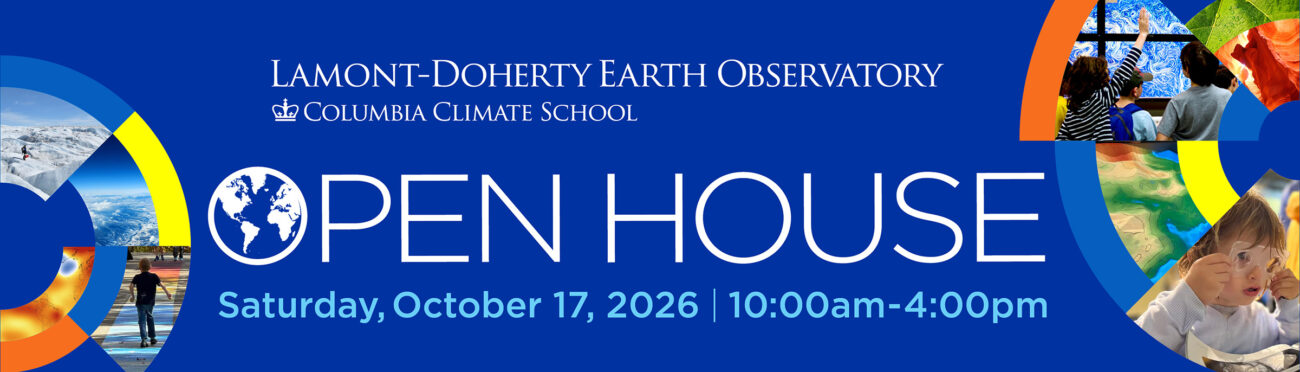
On Saturday, October 17, 2026 from 10am to 4pm, Lamont-Doherty Earth Observatory Open House—our biggest, best science fun and discovery event of the year—will take place on our beautiful campus in Palisades, NY. Mark your calendar and join us for this free, family-friendly celebration of science! RSVP Today!