General70
-

Student Profile: Denis Tan
For Denis Tan, the MPA in Environmental Science and Policy program has exposed him to a wide variety of real world sustainability issues while training him to be a better team member and manager. Denis hopes to bring his newly acquired training back to his native Singapore to effect change through the creation and development…
-

The Greening of China
China became the world’s largest carbon polluter in 2006, surpassing the U.S. But it is also rapidly going green through cutting coal use, investing heavily in renewable energy and launching the world’s largest carbon trading system.
-

MS Alums Identify Ways to Improve Sustainability Data Management
Over the past few months, three 2014 graduates of the Master of Science in Sustainability Management program Kristina Alnes, Charlotte Peyraud, and Christopher Economides along with current MSSM student Angeline Kong have been studying the U.S. market for sustainability and CSR data management solutions. The team—dubbed the ReScore Project Group— published their finding this week…
-

Money, Power and the Media in the Ebola Crisis
The Ebola crisis has serious implications for governments, the private sector, and public messengers. To address these issues, and to assess the state of the science behind the Ebola crisis, The Earth Institute has sponsored two discussions recently.
-
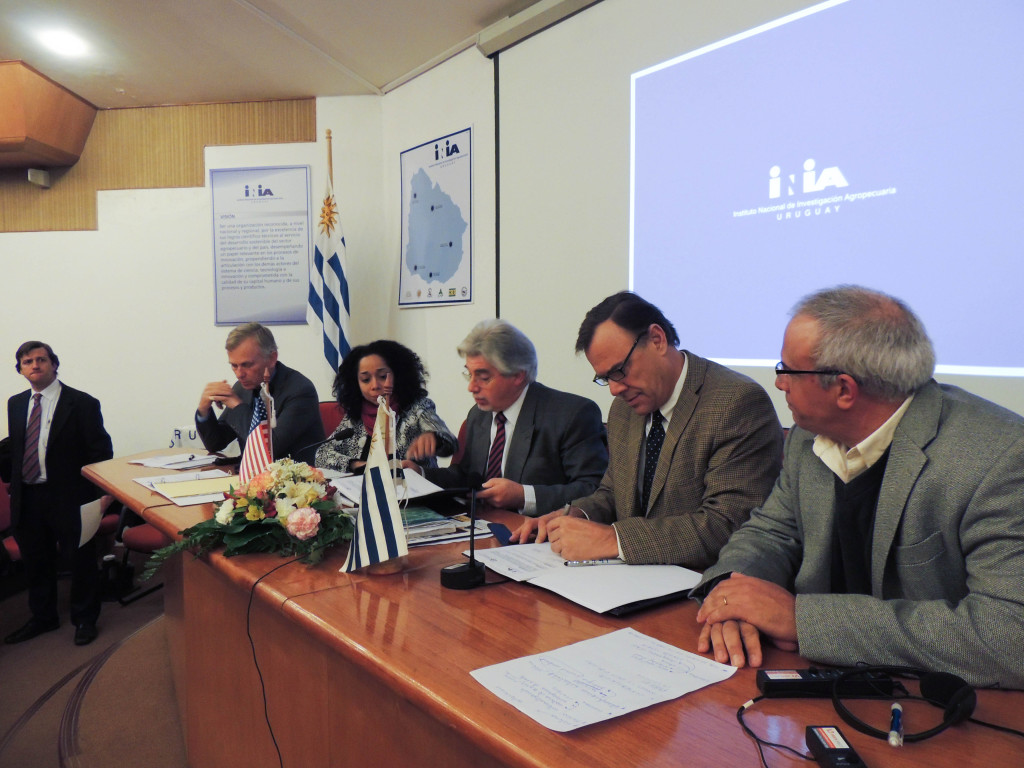
Climate & Society Institute Opens 1st International Office in Uruguay
The International Research Institute for Climate and Society has signed an agreement with Uruguay’s Instituto Nacional de Investigación Agropecuaria to open an IRI office outside of Montevideo and to expand ongoing scientific collaboration between Uruguay and Columbia University.
-

NYC, Gulf Coast Teens Talk About Life After Disaster
At the two-year anniversary of Superstorm Sandy, high school students in New York City posed questions about life during and after a catastrophe to a very particular group of experts – high school students in the Gulf Coast who had experienced the BP oil spill and had lived through as many as six hurricanes in…
-

Ancestors
We are high mountain people, hunters and artists, Our view from this base camp is brilliant and clear. Cold, thin air sweeps the rocky plateau; You need a strong heart to live here.
-

Lessons From Germany: Can the US Succeed With Its Own Energiewende?
Last month, M.S. in Sustainability Management alum Katrina Prutzman (’14) was selected to be a part of the Transatlantic Program for Young Technology Leaders organized by the German American Chamber of Commerce. As a member of this group, Katrina took part in a delegation trip to Germany in which attendees focused on the theme of…
-

Copy Cat!: Fighting the Global Water Scarcity Issue
According to the World Water Management Institute, over one-third of the human population is affected by water scarcity. Advances in physical understanding, its applications, and the study of our environment and bio-mimicry help us develop more effective ways to fight freshwater scarcity around the world.


By studying thousands of buildings and analyzing their electricity use, Columbia Climate School Dean Alexis Abramson has been able to uncover ways to significantly cut energy consumption and emissions. Watch the Video: “Engineering a Cooler Future Through Smarter Buildings“
