Health50
-
Arsenic in Bangladesh Water, Then and Now
Back in the summer of 1997 while working for a small newspaper focusing on UN development issues, I traveled to Bangladesh to see how far this often overlooked country tucked away in a corner between India and China had fared since its independence 25 years ago. At the time the only stories which came out…
-
Everywhere a Hammer on a Nail
When holding a hammer in your hand, every problem can look like a nail. Dambisa Moyo’s book Dead Aid gives fresh meaning to this old adage, applying the perspective of a top-tier investment banker to the plight of the poorest people in Sub-Saharan Africa. The Economist recently panned the book by likening it to caricature.…
-
Scientists Make First Map Of Emerging Disease Hotspots
Growing Threat Seen In Human-Wildlife Conflict, Drug Resistance
-
Despite Complexities, Test for TB Could Increase Rapid Diagnoses in Sub-Saharan Africa
Sub-Saharan Africa shoulders 27 percent of the 8 million new annual tuberculosis cases. The current diagnostic for TB (Acid-fast Smear) used in much of Africa only works in half of all cases, leaving millions of people without treatment and many more susceptible to infection. Yanis Ben Amor, an Earth Institute Fellow, is hoping to reverse…
-
Breaking the Bottlenecks to Fighting Malaria in Africa
Imagine drawing up the blueprints to save millions of lives, yet without the means or the currency to make those plans a reality. This is a fundamental problem faced by many countries ravaged by malaria, which kills an estimated 3 million annually. Countries are formulating robust and achievable plans to effectively prevent and treat malaria,…
-
Mapping Socioeconomic Data Reveals Trends
Humans have provoked a lot of wobbling in the global food web, and one result is the explosion of infectious diseases. “All of our infectious diseases are other species making a living off of us,” says Joel Cohen, a populations expert at both Columbia and Rockefeller Universities. “Think of the thousands of bacteria in our…
-
Wealth & Giving Forum Inspires Spirit of Giving to Fight Malaria in Africa
A myriad of messages compete for attention in today’s world. Filtering reliable facts from all the noise can be a time-consuming challenge for philanthropists interested in taking concrete steps to create lasting, positive change. Organizations like the Wealth & Giving Forum are helping families and individuals of means to distill competing demands on philanthropy into…
-
Landfill Disposal May Pose Greater Health Risks Than WTE Treatment, Student Research Shows
Disposing of waste via landfills increases health risks 30-fold, compared with using waste-to-energy treatment — which generates electricity by burning waste — for disposal. This is according to a study conducted by a student in the Masters in Public Health (MPH) program at the Mailman School at Columbia University. The study, carried out by Pearl…
-
In Rwanda, Clever Use of Technology Helps a Little Go a Long Way, and Faster
In a country that made headlines for a brutal genocide that left an estimated 800,000 dead, Rwanda now counts itself among several African nations battling with another devastating enemy: AIDS. According to government estimates, about 4 percent of adults living in rural areas and as many as 13 percent in Kigali, the country’s capital, are…
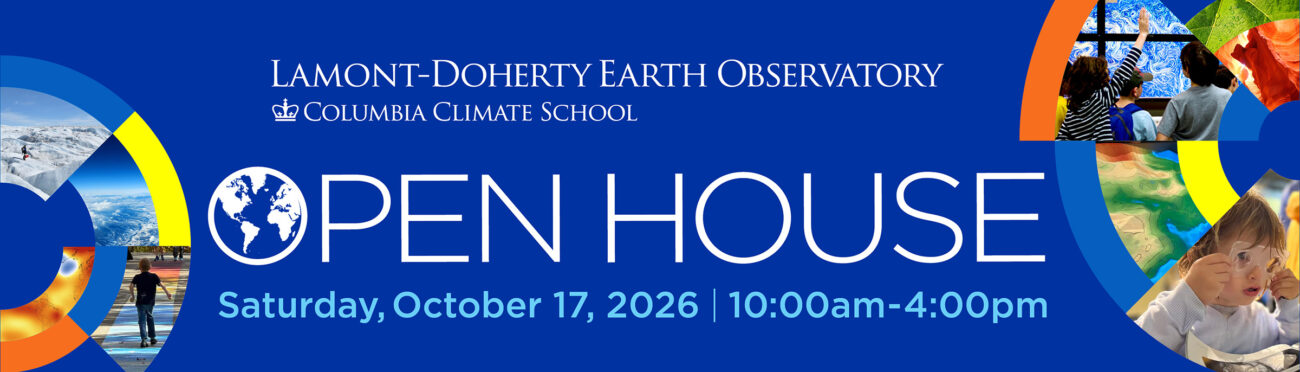
On Saturday, October 17, 2026 from 10am to 4pm, Lamont-Doherty Earth Observatory Open House—our biggest, best science fun and discovery event of the year—will take place on our beautiful campus in Palisades, NY. Mark your calendar and join us for this free, family-friendly celebration of science! RSVP Today!