Press Release22
-

Rain, More Than Wind, Led to Massive Toppling of Trees in Hurricane Maria, Says Study
The surprising finding suggests that future hurricanes stoked by warming climate may be even more destructive to forests than scientists have already projected.
-

Wine Regions Could Shrink Dramatically With Climate Change Unless Growers Swap Varieties
Diversity is key to resilience, says new study.
-

Pioneer in Charting Modern Sea Level Rise to Receive 2020 Vetlesen Prize
A scientist who has played a key role in documenting modern sea level rise and its causes is to receive the 2020 Vetlesen Prize for achievement in the earth sciences.
-

Ozone-Depleting Substances Caused Half of Late 20th-Century Arctic Warming, Says Study
A study finds that ozone-depleting substances caused about a third of all global warming from 1955 to 2005, and half of Arctic warming and sea ice loss during that period.
-

Rising Temperatures Will Mean More Fatal Injuries in the U.S., Says Study
Thousands more people could die from injuries each year as rising temperatures in the United States affect people’s behavior, says a new study.
-

Evolving Landscape Added Fuel to Gobi Desert’s High-Speed Winds
A new study uncovers a previously undocumented relationship between erosion and wind speed.
-

Biodiverse Forests Better at Storing Carbon for Long Periods, Says Study
Supports policies that protect and regenerate natural forests instead of planting new ones.
-

Undersea Volcanism May Help Explain Medieval Year of Darkness
Tropical fossils found in a Greenland ice core hint at volcanic eruptions that threw the world into darkness from 536 to 537 A.D.
-

In Ancient Scottish Tree Rings, a Cautionary Tale on Climate, Politics and Survival
Using old tree rings and archival documents, historians and climate scientists have detailed an extreme cold period in Scotland in the 1690s that caused immense suffering. It may have lessons for Brexit-era politics.


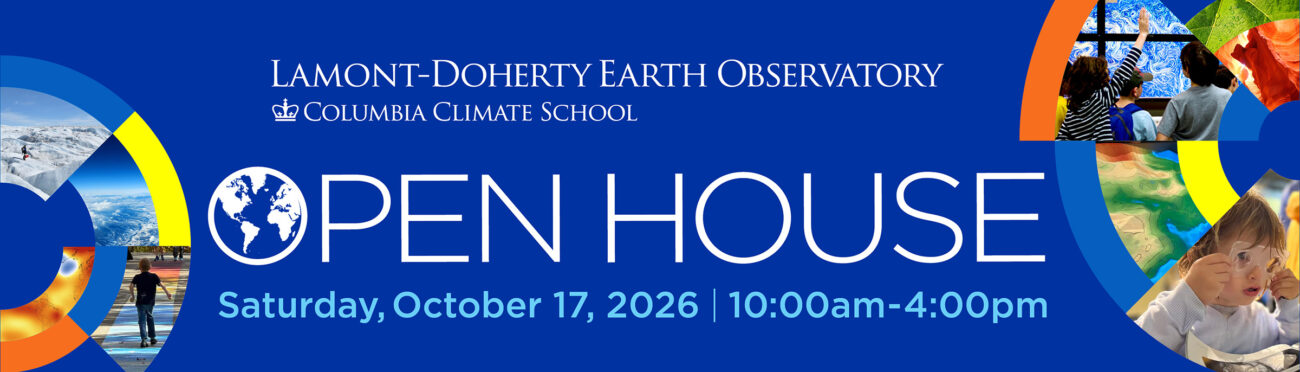
On Saturday, October 17, 2026 from 10am to 4pm, Lamont-Doherty Earth Observatory Open House—our biggest, best science fun and discovery event of the year—will take place on our beautiful campus in Palisades, NY. Mark your calendar and join us for this free, family-friendly celebration of science! RSVP Today!
