Water26
-
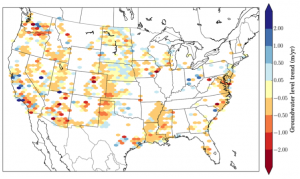
US Groundwater Declines More Widespread Than Commonly Thought
Groundwater levels are dropping across a much wider swath of the United States than is generally discussed, according to a new report, suggesting that the nation’s long-term pattern of groundwater use is broadly unsustainable.
-

Deep Sea Mining: Out of Sight, Out of Mind?
Are we willing to compromise deep sea ecosystems and biodiversity for prodigious amounts of mineral materials? Will deep sea mining have the largest footprint of any single human activity on the planet? The race is on to create more progressive, environmental regulations concerning deep sea mining, but much more scientific research is still necessary to…
-

Field School: The Brahmaputra River
The first day was very light for the jet-lagged students, just a short introduction to the field school and some background, and then introductions all around as we started to get to know each other. The final group of nine students finally arrived around 9 p.m. They were the most worn-out, bedraggled bunch of travelers…
-

GPS in Khulna and the Hidden Temple
Rushing around SW Bangladesh by boat and car, we managed to install or repair four GPS sites in record time. We caught up our lost day and managed to get to the ruins of the Shakher Temple in the Sundarban mangrove forest.
-

Back to Bangladesh, changing plans as we go
Back to Bangladesh for some fieldwork and then a two-week Field School. However, this time we had problems starting before we even left NY. Working in Bangladesh you have to be flexible. Nothing goes as planned, but usually everything works out in the end.
-

Science and Solutions for Sustainable Development: 2013 Annual Report
The Earth Institute is grateful to its many partners for their important role in the effort to develop the science and solutions necessary for sustainable development. Please visit the interactive digital 2013 Annual Report to read more about how we are forging partnerships across disciplines and sectors to advance the global effort to guide our…
-

Keeping our Freshwater Fresh: Ecosystem Management Tools
We have been harming our hard-earned water resources; is it too late to clean up our act? With the help of the nine principles of ecology we can work towards effectively and sustainably managing these ecosystems, which will help us preserve the quality of New York’s freshwater resources and maintain our high quality drinking water.
-

Coastal Erosion and Adaptation to Climate Change
Increasing understanding of the extent of coastal erosion and its interaction with other naturally existing geographical features such as mangrove vegetation is one of the areas of research that may help reduce vulnerability of small-island developing states to climate hazards.
-

New Predictions of Climate Change’s Impact on Agriculture
Developing countries are more likely to see a drop in agricultural productivity and increased food prices due to climate change, particularly in tropical regions, according to a set of new studies out this week.


The first Earth Day in 1970 ignited a movement to stop polluting our planet. Today, our scientists and experts are tackling the most pressing challenges to achieve real-world impact. This Earth Day, join us in our commitment to realizing a just and sustainable future for our planet. Visit our Earth Day website for ideas, resources, and inspiration.
