State of the Planet

News from the Columbia Climate School

Water28

  • Conservation & Environmental Sustainability – Fall 2013 Courses

    Conservation & Environmental Sustainability – Fall 2013 Courses

    The Earth Institute Center for Environmental Sustainability (EICES) at Columbia University provides executive training in environmental sustainability through courses in science, economics and policy. We invite you to join our leading experts and practitioners, strengthen your understanding of human-ecosystem interactions, and become an effective environmental leader and decision-maker.

  • Antibiotic-Resistant Bacteria Widespread in Hudson River, Study Finds

    Ongoing Risks Come From Sewage

  • Climate in the Peruvian Andes:  From Early Humans to Modern Challenges

    Climate in the Peruvian Andes: From Early Humans to Modern Challenges

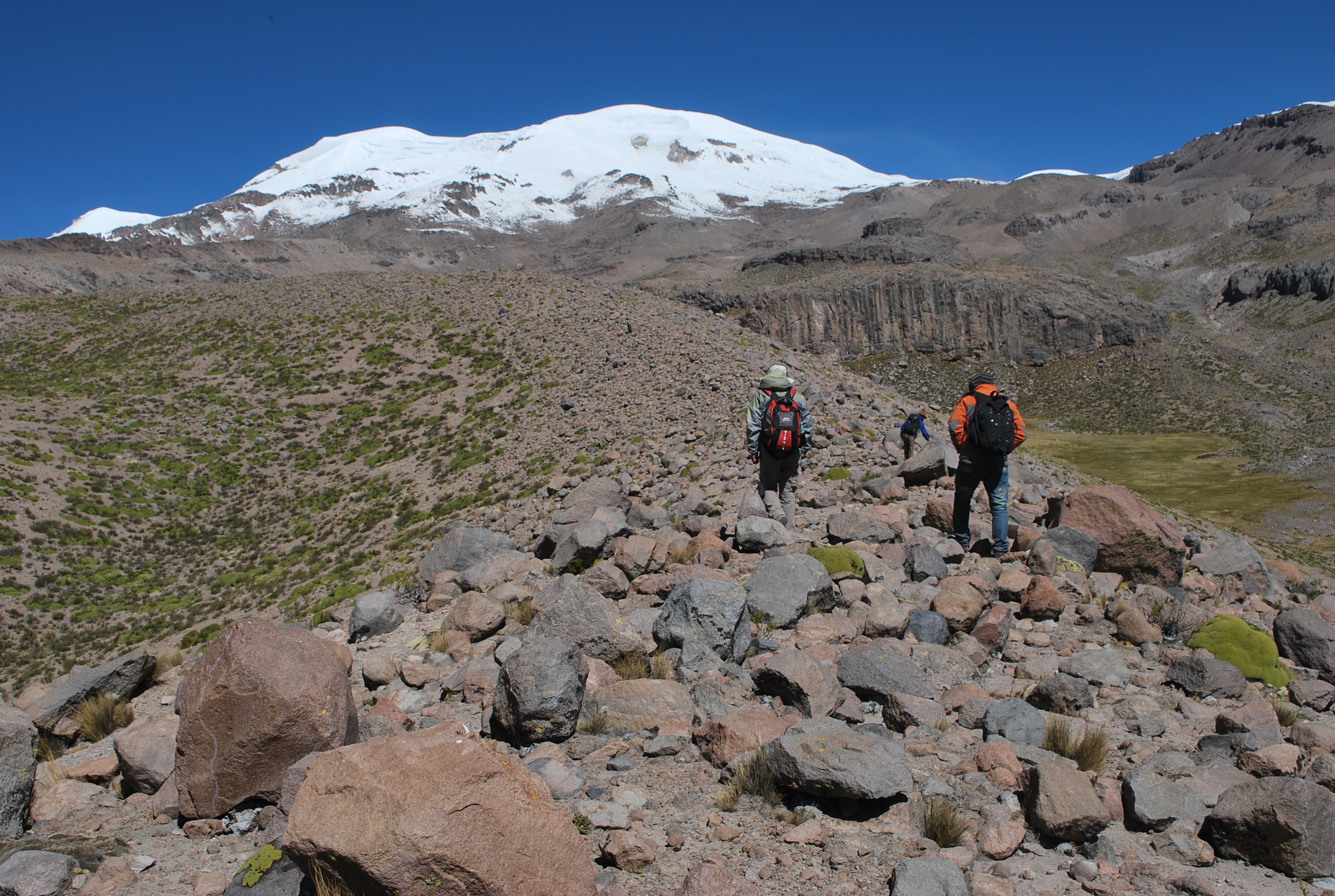
    Twice humans have witnessed the wasting of snow and ice from Peru’s tallest volcano, Nevado Coropuna—In the waning of the last ice age, some 12,000 years ago, and today, as industrial carbon dioxide in the air raises temperatures again. As in the past, Coropuna’s retreating glaciers figure prominently in the lives of people below. In…

  • The Environment as a Tool for Peace in the Middle East

    The Environment as a Tool for Peace in the Middle East

    Understanding the Middle East conflict is not an easy task, and adding an environmental component to the puzzle doesn’t make it any easier. Students in the Regional Environmental Sustainability in the Middle East program, having gone through 16 days of an 18-day trip to the region, now see clearly how complex the issues actually are.…

  • Lamont Scientist Featured in Antarctic Climate Change Documentary

    Lamont Scientist Featured in Antarctic Climate Change Documentary

    Lamont-Doherty scientist Hugh Ducklow is featured in a documentary due out next summer on climate change and the West Antarctic Peninsula. Catch a preview in this newly-released trailer.

  • Red to Dead: Not As Simple As It Seems

    Red to Dead: Not As Simple As It Seems

    The Dead Sea is shrinking as a result of mining for raw materials and the loss of fresh water inflow from the diversion of the Jordan River for drinking water by Syria, Israel and Jordan. This shrinkage is problematic for economic, environmental and cultural reasons for both Jordan and Israel, the two countries which share…

  • Students Travel to Jordan and Israel to Learn About Environmental Issues

    Students Travel to Jordan and Israel to Learn About Environmental Issues

    Nine Columbia students traveled to the Middle East last weekend to learn about how two countries in the region, Jordan and Israel, are cooperating on environmental issues and managing shared natural resources such as water. The students, led by Beth Fisher Yoshida, academic director of the Negotiation and Conflict Resolution program, and Shahar Sadeh, academic…

  • Water Risk in Unexpected Places

    Water Risk in Unexpected Places

    A new report by the Columbia Water Center, produced with Veolia Water and Growing Blue, could help expose the real nature of water risk–even in places that most people think of as having plenty of water.

  • Gone to Sea No More

    Gone to Sea No More

    After John Diebold, an enormously popular and influential marine scientist, died suddenly in summer 2010, friends and family erected a memorial to him: a carved red oak bench they installed on a causeway along the Hudson River, inscribed with “GONE TO SEA.” Then along came Hurricane Sandy.

Photo of the Earth from space with the text "Lamont at AGU25" on top.

AGU25, the premier Earth and space science conference, takes place December 15-19, 2025 in New Orleans, Louisiana. This year’s theme—Where Science Connects Us—puts in focus how science depends on connection, from the lab to the field to the ballot box. Once again, Lamont-Doherty Earth Observatory and Columbia Climate School scientists, experts, students, and educators are playing an active role, sharing our research and helping shape the future of our planet. #AGU25 Learn More

  • Conservation & Environmental Sustainability – Fall 2013 Courses

    Conservation & Environmental Sustainability – Fall 2013 Courses

    The Earth Institute Center for Environmental Sustainability (EICES) at Columbia University provides executive training in environmental sustainability through courses in science, economics and policy. We invite you to join our leading experts and practitioners, strengthen your understanding of human-ecosystem interactions, and become an effective environmental leader and decision-maker.

  • Antibiotic-Resistant Bacteria Widespread in Hudson River, Study Finds

    Ongoing Risks Come From Sewage

  • Climate in the Peruvian Andes:  From Early Humans to Modern Challenges

    Climate in the Peruvian Andes: From Early Humans to Modern Challenges

    Twice humans have witnessed the wasting of snow and ice from Peru’s tallest volcano, Nevado Coropuna—In the waning of the last ice age, some 12,000 years ago, and today, as industrial carbon dioxide in the air raises temperatures again. As in the past, Coropuna’s retreating glaciers figure prominently in the lives of people below. In…

  • The Environment as a Tool for Peace in the Middle East

    The Environment as a Tool for Peace in the Middle East

    Understanding the Middle East conflict is not an easy task, and adding an environmental component to the puzzle doesn’t make it any easier. Students in the Regional Environmental Sustainability in the Middle East program, having gone through 16 days of an 18-day trip to the region, now see clearly how complex the issues actually are.…

  • Lamont Scientist Featured in Antarctic Climate Change Documentary

    Lamont Scientist Featured in Antarctic Climate Change Documentary

    Lamont-Doherty scientist Hugh Ducklow is featured in a documentary due out next summer on climate change and the West Antarctic Peninsula. Catch a preview in this newly-released trailer.

  • Red to Dead: Not As Simple As It Seems

    Red to Dead: Not As Simple As It Seems

    The Dead Sea is shrinking as a result of mining for raw materials and the loss of fresh water inflow from the diversion of the Jordan River for drinking water by Syria, Israel and Jordan. This shrinkage is problematic for economic, environmental and cultural reasons for both Jordan and Israel, the two countries which share…

  • Students Travel to Jordan and Israel to Learn About Environmental Issues

    Students Travel to Jordan and Israel to Learn About Environmental Issues

    Nine Columbia students traveled to the Middle East last weekend to learn about how two countries in the region, Jordan and Israel, are cooperating on environmental issues and managing shared natural resources such as water. The students, led by Beth Fisher Yoshida, academic director of the Negotiation and Conflict Resolution program, and Shahar Sadeh, academic…

  • Water Risk in Unexpected Places

    Water Risk in Unexpected Places

    A new report by the Columbia Water Center, produced with Veolia Water and Growing Blue, could help expose the real nature of water risk–even in places that most people think of as having plenty of water.

  • Gone to Sea No More

    Gone to Sea No More

    After John Diebold, an enormously popular and influential marine scientist, died suddenly in summer 2010, friends and family erected a memorial to him: a carved red oak bench they installed on a causeway along the Hudson River, inscribed with “GONE TO SEA.” Then along came Hurricane Sandy.