State of the Planet

News from the Columbia Climate School

Water42

  • The 7 Billion Challenge

    The 7 Billion Challenge

    The rapid rise in the world’s population to 7 billion — from 6 billion a dozen years ago — poses enormous challenges. In this video, Earth Institute Director Jeffrey D. Sachs talks about the stresses our population already puts on the planet, and the mission of the institute to promote sustainable development.

  • Join a Conversation About 7 Billion People

    Join a Conversation About 7 Billion People

    The world’s population will reach 7 billion this year, and the UN estimates continued growth, primarily in less-developed regions. What will this steep population growth mean for our environmental, economic and social systems? Join the conversation on Oct. 17.

  • What are the Keystone XL Pipeline Risks to Water Resources?

    What are the Keystone XL Pipeline Risks to Water Resources?

    One of the issues most passionately discussed now in the media and blogosphere is the KeystoneXL Pipeline proposal, to allow Canadian oil and gas company TransCanada to build a pipeline to transfer tar sands oil from Alberta to Texas. So what are the arguments?

  • Natural Processes Can Limit Spread of Arsenic in Water, Says Study

    Wells From Asia to North America Vulnerable

  • Imagining the Hudson before Humans

    Imagining the Hudson before Humans

    Pollution is just one way that humans have transformed the Hudson River. A small way, it turns out. We have altered the Hudson’s shape, the speed of its flow and the mix of plants and trees along its banks. In a new book, Environmental History of the Hudson River, two Lamont-Doherty scientists who contributed chapters—Frank…

  • Using Tree Rings to Understand and Protect New York’s Water

    Using Tree Rings to Understand and Protect New York’s Water

    The upper Delaware River Basin System is one of the largest water supply systems for the city of New York. Today our understanding and management of these reservoir systems is based on the short historical records of data, which are limited. Scientists need to find a way to look further into the past. One of…

  • Pharmaceuticals in the Water Supply: Is this a threat?

    Pharmaceuticals in the Water Supply: Is this a threat?

    According to the GAO, a “study focused on untreated source water used by public drinking water systems” found that 53 of 74 sites tested had at least one pharmaceutical present, and in 2010 the EPA showed that 54 active pharmaceutical ingredients and 10 metabolites, the product of biological changes to a chemical, had been found…

  • In Dry Texas, Recycled Water Looks Better and Better

    In Dry Texas, Recycled Water Looks Better and Better

    As the drought in Texas continues with no end in sight, some cities are turning to innovative water alternatives in an attempt to maintain quality of life as they know it. The new mindset includes viewing waste water as an asset.

  • Mosquito Traps for the Future

    Mosquito Traps for the Future

    The New York Times reported yesterday on a new, simple approach to mosquito control that—if accurate–could be a game changer in the world’s efforts to eradicate mosquito-borne diseases.

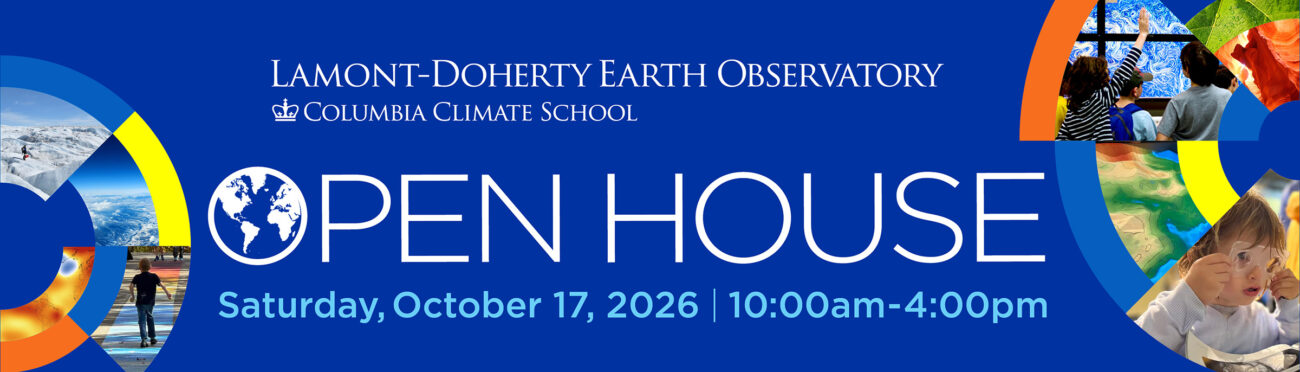
Blue banner with kids and Earth photos. Text: "Lamont-Doherty Earth Observatory Open House, Saturday, October 17, 2026, 10am-4pm.

On Saturday, October 17, 2026 from 10am to 4pm, Lamont-Doherty Earth Observatory Open House—our biggest, best science fun and discovery event of the year—will take place on our beautiful campus in Palisades, NY. Mark your calendar and join us for this free, family-friendly celebration of science! RSVP Today!

  • The 7 Billion Challenge

    The 7 Billion Challenge

    The rapid rise in the world’s population to 7 billion — from 6 billion a dozen years ago — poses enormous challenges. In this video, Earth Institute Director Jeffrey D. Sachs talks about the stresses our population already puts on the planet, and the mission of the institute to promote sustainable development.

  • Join a Conversation About 7 Billion People

    Join a Conversation About 7 Billion People

    The world’s population will reach 7 billion this year, and the UN estimates continued growth, primarily in less-developed regions. What will this steep population growth mean for our environmental, economic and social systems? Join the conversation on Oct. 17.

  • What are the Keystone XL Pipeline Risks to Water Resources?

    What are the Keystone XL Pipeline Risks to Water Resources?

    One of the issues most passionately discussed now in the media and blogosphere is the KeystoneXL Pipeline proposal, to allow Canadian oil and gas company TransCanada to build a pipeline to transfer tar sands oil from Alberta to Texas. So what are the arguments?

  • Natural Processes Can Limit Spread of Arsenic in Water, Says Study

    Wells From Asia to North America Vulnerable

  • Imagining the Hudson before Humans

    Imagining the Hudson before Humans

    Pollution is just one way that humans have transformed the Hudson River. A small way, it turns out. We have altered the Hudson’s shape, the speed of its flow and the mix of plants and trees along its banks. In a new book, Environmental History of the Hudson River, two Lamont-Doherty scientists who contributed chapters—Frank…

  • Using Tree Rings to Understand and Protect New York’s Water

    Using Tree Rings to Understand and Protect New York’s Water

    The upper Delaware River Basin System is one of the largest water supply systems for the city of New York. Today our understanding and management of these reservoir systems is based on the short historical records of data, which are limited. Scientists need to find a way to look further into the past. One of…

  • Pharmaceuticals in the Water Supply: Is this a threat?

    Pharmaceuticals in the Water Supply: Is this a threat?

    According to the GAO, a “study focused on untreated source water used by public drinking water systems” found that 53 of 74 sites tested had at least one pharmaceutical present, and in 2010 the EPA showed that 54 active pharmaceutical ingredients and 10 metabolites, the product of biological changes to a chemical, had been found…

  • In Dry Texas, Recycled Water Looks Better and Better

    In Dry Texas, Recycled Water Looks Better and Better

    As the drought in Texas continues with no end in sight, some cities are turning to innovative water alternatives in an attempt to maintain quality of life as they know it. The new mindset includes viewing waste water as an asset.

  • Mosquito Traps for the Future

    Mosquito Traps for the Future

    The New York Times reported yesterday on a new, simple approach to mosquito control that—if accurate–could be a game changer in the world’s efforts to eradicate mosquito-borne diseases.