Posts
-

Faculty Profile: Jason Smerdon
“Much of sustainable development is about where the world is headed in the future, anticipating the changes that are to come and evaluating the choices that we have available to address them. But understanding how natural and socioeconomic systems will change in the future, including the climate system, often requires that we look to the…
-
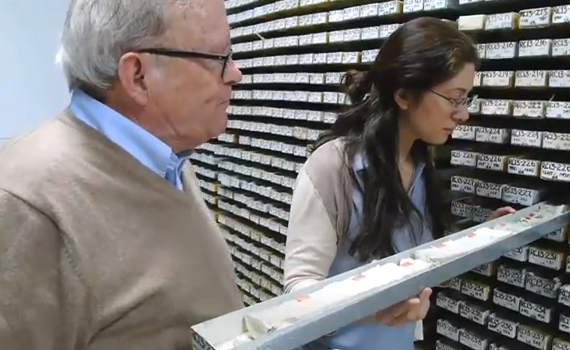
Plumbing the Deep Ocean Floor
A video profile of the Lamont-Doherty Core Repository—the world’s largest collection of deep sea sediments, some as old as 100 million years. The 19,000 cores, largely collected by Lamont’s own research vessels, are a central resource for the global scientific community, which uses them for studies of earth’s past and current environment, especially in regard…
-

Sustainability Management Student Enhances Energy Efficiency Work
As a “career-changer,” M.S. in Sustainability Management (MSSM) student Laura Humphrey felt that she could not consider herself successful until her daily work reflected her core values. Currently, Laura works as a Senior Associate at ICF International in the Energy Efficiency division. Laura believes that her graduate studies have informed her work at ICF because…
-

Singing the Blues About Water Scarcity
Otis Redding sang “you don’t miss your water ’til your well runs dry” in 1965 about pining for a lost love. Last week, Climate and Society founder and Lamont-Doherty Earth Observatory scientist Mark Cane reprised it with a much different, more literal focus: water scarcity in the 21st century.
-
NASA’s Jim Hansen to Retire
James E. Hansen, director of NASA’s Goddard Institute for Space Studies (GISS) and an adjunct professor at Columbia University’s Earth Institute, has announced he will retire as director of GISS this week to devote more time to his campaign to cut global carbon emissions. “Jim Hansen is a one of the true giants of climate…
-

Greenhouse Gases Like Steroids for Extreme Weather
The fourth seminar in the Earth Institute’s Sustainable Development Seminar Series, “Ch Ch Ch Changes – recent trends in temperature extremes and hydroclimate,” brought together experts in the fields of climate change and hydrology to discuss emerging trends in global weather events.
-

Phosphorus: Essential to Life—Are We Running Out?
Phosphorus is essential to human health and vital for food production. But are we using up phosphorus faster than we can economically extract it?
-

A Library of Giant Landslides
A new method for detecting big landslides is allowing scientists to understand the dynamics of these elusive events almost instantly, without traipsing to remote mountains or scrambling up rugged peaks months, or even years, later. In a recent study in the journal Science, Göran Ekström and Colin Stark, geophysicists at Columbia University’s Lamont-Doherty Earth Observatory,…
-

Where’s My Seasonal Tornado Forecast?
Tornadoes, derechos and other violent storms can kill hundreds each year and cause billions in damages. How well can we predict them? How will climate change influence their occurrence? Experts from around the country discussed these issues at a recent workshop.


