Posts
-
El Niño: The Basics
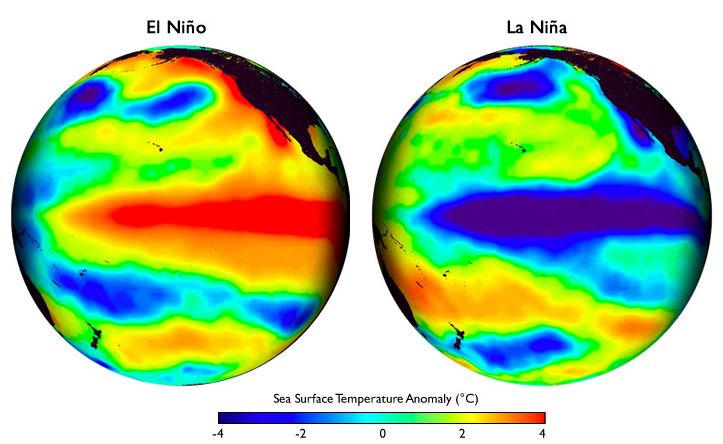
Forecasts suggest we’re looking ahead to an El Niño event this year—a warming of the eastern and central Pacific Ocean around the equator that can affect weather patterns around the globe. But what exactly is an El Niño event, how strong do forecasters think it’s likely to be, and just how will it affect our…
-

On the Road with Kate & Maddy: America Talks about Water
Both of us are interested in the intersection of the environment and public health, and we wanted to explore a public health issue about which we felt ignorant. Water kept coming up in our conversations, because we felt that while water is a global issue, it often gets overlooked domestically among our peers. As such,…
-

Australopithecene Dental Calculus
Across a mixed landscape, Au. sediba plods Sometimes on two feet, and sometimes on four, Munching on fruits and leguminous pods, Nuts and some seeds … C3 foods galore!
-

For a Wind-Powered City, Heat Pumps Are Key
Replacing conventional building boilers with electric heat pumps in New York City buildings could substantially increase the viability of renewable energy use in the city, according to a recent study from researchers from the Earth Institute’s Sustainable Engineering Lab.
-

Our Fiscal Year Ends June 30: Donate Now to Help Us Finish Strong!
The end of our fiscal year is just one week away and we need your support more than ever. This year, the generosity of Earth Institute supporters allowed our award-winning scientists and researchers to pursue groundbreaking initiatives in the fields of earth and environmental sciences, ecology, engineering and architecture, law, medicine and public health, economics,…
-

MPA in Environmental Science and Policy Welcomes Class of 2015
The newest of class of students in the Master of Public Administration in Environmental Science and Policy program have arrived on the Columbia campus. Following their orientation on May 27, the students began their summer schedule full of science courses.
-
Ancient Ocean Currents May Have Changed Pacing and Intensity of Ice Ages
Slowing of Currents May Have Flipped Switch, Says Study
-

An Overview of President Obama’s Climate Proposal
On June 2, President Obama announced the most significant climate plan in history. The plan, if enacted as stands, seeks to cut carbon emissions on a state-by-state basis, while giving the states almost limitless freedom on how to do so, as long as they adhere to EPA guidelines. Historic it may be, but is it…
-

Making Progress on Deforestation
In 2005, Brazil was losing more forest each year than any other country. Today, Brazil has reduced deforestation in the Amazon by 70 percent. Seventeen countries across four continents have also shown progress in reducing tropical deforestation. But there is still a long way to go.


