Posts
-

A Struggle to Coexist with Nature – Dr. Shahid Naeem
Dr. Shahid Naeem, CERC’s Director of Science, examines humanity’s struggle to coexist with the natural environment.
-

MS Student Seeks to Make Sustainability an Indispensable Business Practice
Current President of the Sustainability Management Student Association, former officer in the United States Air Force and consultant, Jonathan Cain discusses his experience in the MS in Sustainability Management program. Now equipped with a variety of skills and tools, Cain is posed to develop clear, coordinated strategies to address challenging sustainability issues.
-

One Billion Gallons a Day, Naturally
If not for the amazing feats of planning and engineering that provide access to clean water, New York City would never have become the essential node in the many meshworks of the world that it is today.
-
Putting the ‘Death’ Back Into Death Valley?
Popular Tourist Stop May Have More Potential to Explode Than Thought
-

Climate News Roundup: Week of 1/17
Rejecting Pipeline Proposal, Obama Blames Congress; Five Myths About the Keystone Pipeline; GM microbe breakthrough paves way for large-scale seaweed farming for biofuels; Clean Energy Investment Rises to $260 Billion, Boosted by Solar.
-

Road to Rio Event Engages Columbia Community and Local High School Students
In anticipation of Rio+20, two Columbia University master’s programs, MPA in Environmental Science and Policy and MA in Climate and Society, collaborated on an event to discuss how climate change impacts human rights. Global Kids, a local high school group, participated in preparation for attending Rio+20 in June 2012.
-

LEED Green Building Skills Give Graduate Students an Edge
“LEED GA exam seems like the logical next stop to getting my sustainability career off the ground,” said a master’s student that recently benefitted from a LEED training sponsored by Columbia. The Earth Institute and Columbia University provides graduate students with top notch instruction in the classroom and practical sustainability training for their careers.
-

African Forests, Threatened, but Resilient
Forests and climate change are fundamentally interrelated. Forests play a role in mitigating climate change by trapping and storing carbon in their trees. Currently, the world’s forests and forest soils store more than one trillion tons of carbon – twice the amount in the atmosphere. The African continent is home to 30% of the world’s…
-
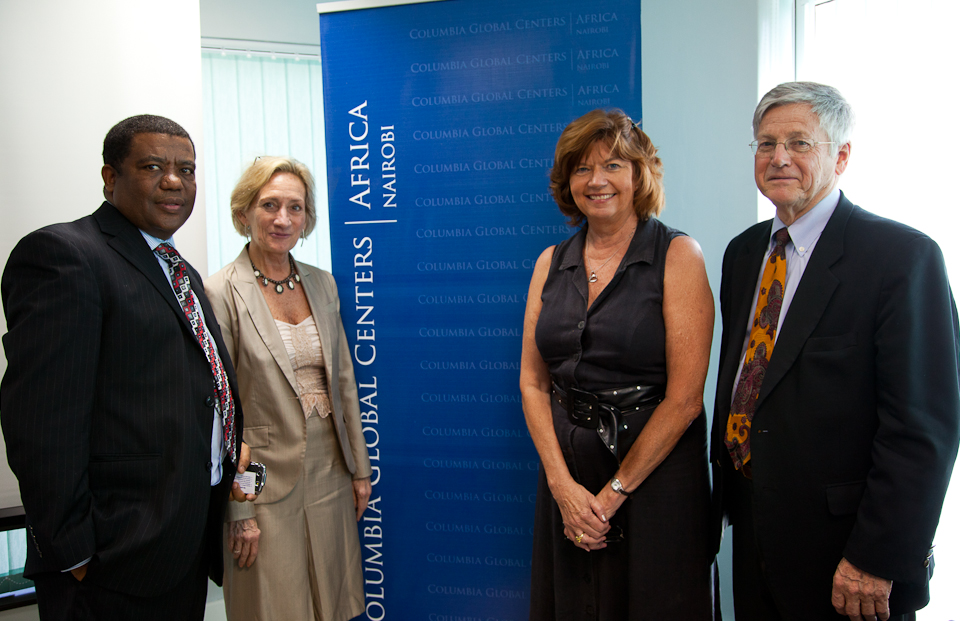
Columbia University opens first center for Africa in Nairobi
On the 13th of January, the latest addition to Columbia University’s network of global centers opened its doors in Nairobi, Kenya. The first institution of its kind on the continent, the new Columbia Global Centers | Africa represents an important milestone in the history of the University.


