
GlacierHub3
Glaciers bring us valuable insights as they sit on the frontlines of climate change. Each week, GlacierHub shares stories about lessons to humanity in the form of changing water supplies, natural resource conflicts, omnipresent natural hazards and threats to biodiversity. It describes the responses of indigenous peoples, scientists, artists, local communities and organizations to the challenges brought by glacier retreat—demonstrating the relevance of the world’s high icy places for all humankind.
-

Securing the Future of Glacier Monitoring in a Warming World
The results of a recent community effort highlight the rapid decline of glaciers worldwide, as well as the importance and challenges of glacier monitoring.
-
Will Glacier Melt Lead to Increased Seismic Activity in Mountain Regions?
In a recent study, scientists determined that climate change-induced glacial melt may cause more earthquakes.
-
Humans Occupied a High-Altitude Site in Australia During the Last Ice Age, New Study Finds
Archaeologists and local First Nations groups have uncovered early evidence that reshapes our historical understanding of high-altitude human occupation and mobility.
-
Exploring Legal Tools for Glacier Protection: Who Speaks for Glaciers?
Can “rights of nature” laws be used to protect both humans and glaciers?
-
As a Glacier Retreats, a Gold Mine Advances. Why Are Some Locals Angry?
A Canadian mining company is seeking approval to renew gold mining operations in northwestern British Columbia, but they face opposition from First Nations, environmental nonprofits and downstream Alaskan communities.
-
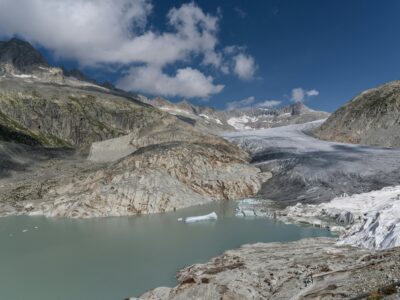
Will New Areas Uncovered by Glacier Melt Boost Swiss Hydropower and Clean Energy Goals?
A Swiss government report reveals that efforts to locate major hydropower resources on land exposed by glacier retreat are entangled with ecological and legal challenges.
-

In Nepal, Scientists and Spiritual Leaders Honor a Dying Glacier
Buddhist monks and scientific researchers came together to commemorate the disappearing Yala Glacier and to raise awareness about glacial loss in the Himalayas.
-

Scientists Respond to the Planned Termination of the Only U.S. Antarctic Research Vessel
In a signed letter, 170 researchers, including 10 from Columbia University, urged Congress and National Science Foundation to continue the operation of the Nathaniel B. Palmer.
-

Study Finds We’ll Lose Almost 40 Percent of Our Glacial Ice
Even if global temperatures plateau, glaciers worldwide will continue to melt.



COP31, the 2026 United Nations Climate Change Conference, aims to advance dialogue, strengthen consensus, and accelerate climate action on a global scale. From November 9–20, 2026 in Antalya, Türkiye, heads of state, ministers, scientists, business leaders, and civil society will gather to advance efforts in emission targets, climate finance, and adaptation and resilience. Once again, our experts, students, and global thought leaders from Columbia Climate School and across Columbia University are contributing to key events, sharing insights, and helping shape the dialogue toward ambitious, science-based solutions. Learn More
