Antarctica8
-
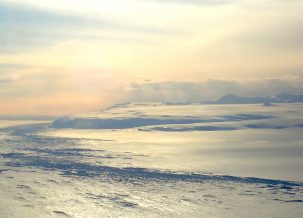
Let’s Talk About Crevasses—Deep Fractures in Antarctica’s Ice
The word “crevasse” sends shivers down the spine of anyone who works on a glacier. Sometimes hundreds of feet deep and hidden beneath a thin layer of snow, these cracks have claimed the lives of many polar explorers and scientists. They also appear quite frequently in our sensors as we fly our survey flights for…
-

Flying is Easy, Just Think Happy Thoughts…
For scientists mapping Antarctica’s Ross Ice Shelf, data collection flights require a demanding schedule: The day starts at 4am and sometimes continues throughout the night.
-

Settling in at McMurdo Station in Antarctica
Even though our tent is within a short drive of McMurdo (a small town with most of the safety and logistical equipment on the entire continent), we still need to prepare ourselves for sudden, extreme weather. Every time we leave the relative safety of McMurdo, we carry our Extreme Cold Weather equipment and our tent…
-

What’s a Few Days’ Delay When Preparing to Visit a 33 Million-Year-Old Ice Sheet?
With the Rosetta-Ice team delayed in New Zealand, let’s take a minute to discuss why Antarctica’s weather is so forbidding.
-

Final Stop: Antarctica’s Ross Ice Shelf
We have embarked! Our third Antarctic field season is underway, putting us only 18 flights away from completing our mission to map the Ross Ice Shelf, the largest ice shelf in Antarctica.
-

East Antarctic Ice Sheet Should Remain Stable Even if the West Melts
A new look inside the ice sheet validates predictions that it probably won’t melt as quickly as its neighbor—good news, since East Antarctica contains enough water to raise sea levels by 200 feet.
-

One of Largest Icebergs Ever Breaks off Antarctica
One of the largest icebergs ever – roughly the size of Delaware – just broke off of Antarctica, according to scientists who have been observing the area for years. While it’s not unusual for ice shelves to calve, many in the climate community fear that the breaking of Larsen C may be a signal of…
-

Meltwater Lakes Existed Under Antarctic Ice in Ancient Times
In recent years, scientists have discovered hundreds of lakes lying hidden deep beneath the Antarctic ice sheet. Now a team of researchers has found the remains of at least one sub-ice lake that existed when the ice was far more extensive, in sediments on the Antarctic continental shelf.
-

Lamont Scientists Are Focus of NY Times Multimedia Series
This past winter, reporters from the New York Times went along for the ride with scientists from the Lamont-Doherty Earth Observatory as they flew their mission of discovery over Antarctica.



COP31, the 2026 United Nations Climate Change Conference, aims to advance dialogue, strengthen consensus, and accelerate climate action on a global scale. From November 9–20, 2026 in Antalya, Türkiye, heads of state, ministers, scientists, business leaders, and civil society will gather to advance efforts in emission targets, climate finance, and adaptation and resilience. Once again, our experts, students, and global thought leaders from Columbia Climate School and across Columbia University are contributing to key events, sharing insights, and helping shape the dialogue toward ambitious, science-based solutions. Learn More
