State of the Planet

News from the Columbia Climate School

Canada2

  • Where Trees Meet Tundra, Decoding Signals of Climate Change

    Where Trees Meet Tundra, Decoding Signals of Climate Change

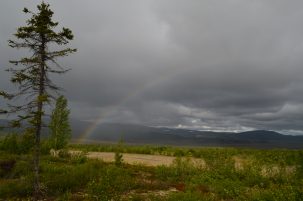
    In northern Alaska’s Brooks Range, the earth as most of us know it comes to an end. The northern tree line-a boundary that circles all of earth’s northern landmasses for more than 8,300 miles, and forms the planet’s biggest ecological transition zone–runs through here. Scientists from Columbia University’s Lamont-Doherty Earth Observatory are studying how climate…

  • New York, New Orleans, Charlottetown and Everywhere Else

    New York, New Orleans, Charlottetown and Everywhere Else

    The disaster in New Orleans was almost uniquely awful in modern American history. But even if Katrina isn’t likely to happen everywhere, something can happen almost anywhere—including, we now know, New York. And further to the north and east.

  • Under Arctic Ice: Watch the Video

    Under Arctic Ice: Watch the Video

    The video depicts the activities of the LDEO Switchyard field team, which deploys annually and uses ski-equipped aircraft to reach a series of sample sites between the North Pole and Ellesmere Island in Canada.

  • Can Canadian Water Slake America’s Need for Power?

    Can Canadian Water Slake America’s Need for Power?

    At a time when the world is abuzz with talk of reducing carbon dioxide emissions to stem the tide of climate change, Canada’s surfeit of hydropower production appears an attractive option to people south of the border who still rely on fossil fuel-generated electricity.

  • Canadian Boreal: Protecting Today’s Water for Tomorrow

    Canadian Boreal: Protecting Today’s Water for Tomorrow

    Canada’s Boreal forest is far from the public eye, but it contains 25 percent of the world’s wetlands.

Colorful icons representing nature, sustainable living, and renewable energy with text "Earth Day 2026"

The first Earth Day in 1970 ignited a movement to stop polluting our planet. Today, our scientists and experts are tackling the most pressing challenges to achieve real-world impact. This Earth Day, join us in our commitment to realizing a just and sustainable future for our planet. Visit our Earth Day website for ideas, resources, and inspiration.

  • Where Trees Meet Tundra, Decoding Signals of Climate Change

    Where Trees Meet Tundra, Decoding Signals of Climate Change

    In northern Alaska’s Brooks Range, the earth as most of us know it comes to an end. The northern tree line-a boundary that circles all of earth’s northern landmasses for more than 8,300 miles, and forms the planet’s biggest ecological transition zone–runs through here. Scientists from Columbia University’s Lamont-Doherty Earth Observatory are studying how climate…

  • New York, New Orleans, Charlottetown and Everywhere Else

    New York, New Orleans, Charlottetown and Everywhere Else

    The disaster in New Orleans was almost uniquely awful in modern American history. But even if Katrina isn’t likely to happen everywhere, something can happen almost anywhere—including, we now know, New York. And further to the north and east.

  • Under Arctic Ice: Watch the Video

    Under Arctic Ice: Watch the Video

    The video depicts the activities of the LDEO Switchyard field team, which deploys annually and uses ski-equipped aircraft to reach a series of sample sites between the North Pole and Ellesmere Island in Canada.

  • Can Canadian Water Slake America’s Need for Power?

    Can Canadian Water Slake America’s Need for Power?

    At a time when the world is abuzz with talk of reducing carbon dioxide emissions to stem the tide of climate change, Canada’s surfeit of hydropower production appears an attractive option to people south of the border who still rely on fossil fuel-generated electricity.

  • Canadian Boreal: Protecting Today’s Water for Tomorrow

    Canadian Boreal: Protecting Today’s Water for Tomorrow

    Canada’s Boreal forest is far from the public eye, but it contains 25 percent of the world’s wetlands.