State of the Planet

News from the Columbia Climate School

carbon2

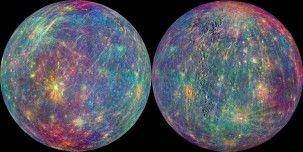
  • MESSENGER Data Reveal Evidence of Ancient Carbon-Rich Crust on Mercury

    MESSENGER Data Reveal Evidence of Ancient Carbon-Rich Crust on Mercury

    Mercury’s dark surface is revealing intriguing new clues about the formation of the solar system, including evidence announced today that the planet closest to the Sun may have formed in part from carbon, a key component of life.

  • From Copenhagen to Paris: Moving From Talk to Action on Climate Change

    Globally, individual nations have volunteered greenhouse gas reduction targets in anticipation of the Paris meetings. Unlike Copenhagen, where calls for mandatory reductions and transfer payments to the developing world caused the collapse of any potential agreements, the world community seems more realistic as it approaches the Paris meetings.

  • Peat Fires Choking Southeast Asia Pose a New Threat to Global Climate

    Peat Fires Choking Southeast Asia Pose a New Threat to Global Climate

    The Indonesian peat fires that have been choking cities across Southeast Asia with a yellow haze are creating more than a local menace—burning peat releases immense stores of CO2, contributing to global warming.

  • Seeing the Amazon’s Future Through the Fog

    Seeing the Amazon’s Future Through the Fog

    Scientists have developed a new approach to modeling the water and carbon cycles in the Amazon that could lead to better climate forecasts and improved water resource management.

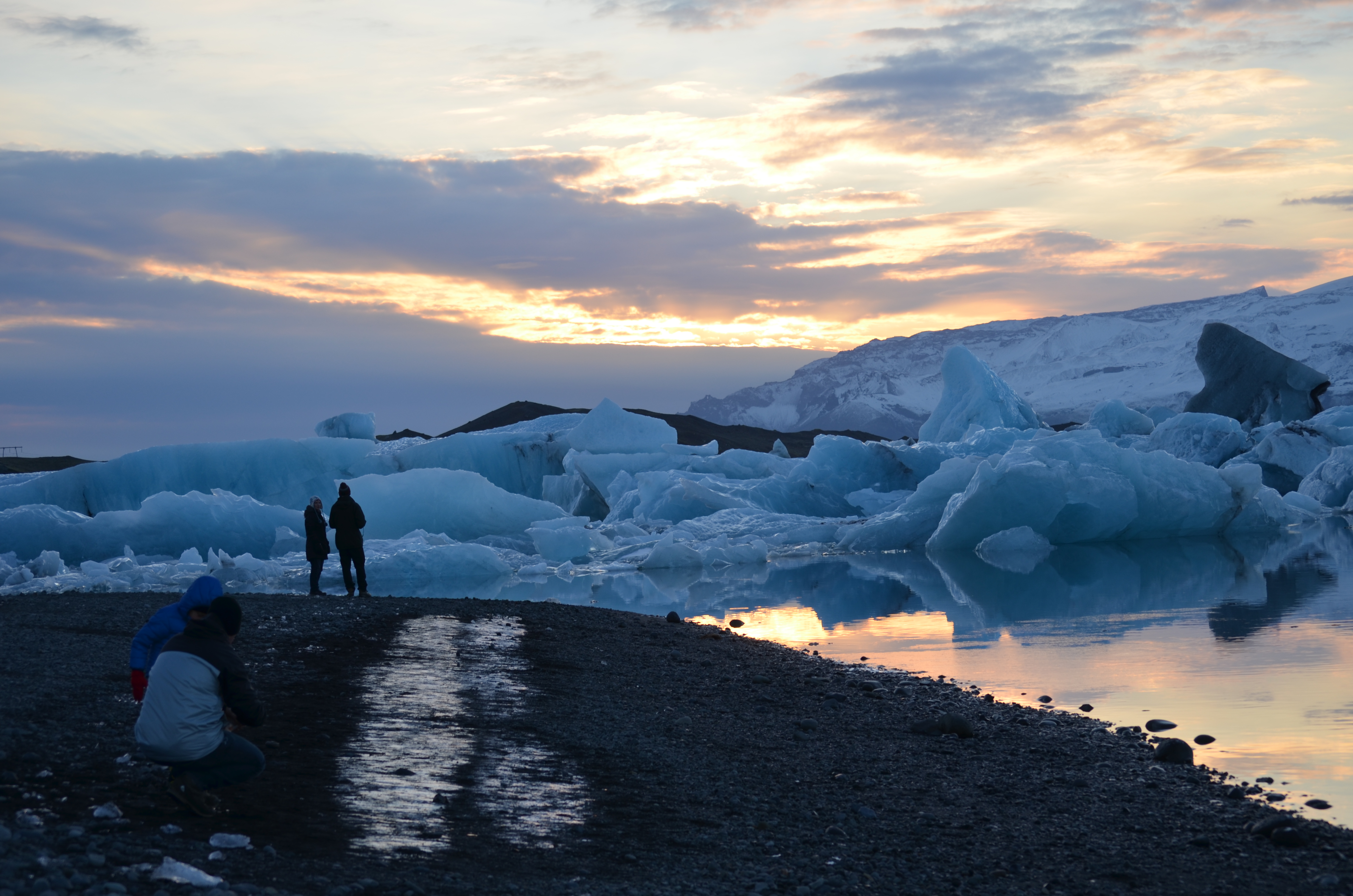
  • Photo Essay: Iceland at the Cutting Edge of Climate Change

    Photo Essay: Iceland at the Cutting Edge of Climate Change

    Iceland has a complicated relationship with climate change. As in much of the far north, global warming is already exerting many effects here–arguably both good and bad. Yet the country contributes relatively little to the warming, since most of its energy comes from geothermal and hydro plants, which produce little carbon dioxide. Now, it is…

  • Columbia-PepsiCo Collaboration Creates Tool for Calculating Carbon Footprints

    Columbia-PepsiCo Collaboration Creates Tool for Calculating Carbon Footprints

    Researchers at the Earth Institute’s Lenfest Center for Sustainable Energy working in collaboration with PepsiCo, Inc. have developed new software that rapidly calculates the carbon footprints of thousands of products simultaneously.

Photo of the Earth from space with the text "Lamont at AGU25" on top.

AGU25, the premier Earth and space science conference, takes place December 15-19, 2025 in New Orleans, Louisiana. This year’s theme—Where Science Connects Us—puts in focus how science depends on connection, from the lab to the field to the ballot box. Once again, Lamont-Doherty Earth Observatory and Columbia Climate School scientists, experts, students, and educators are playing an active role, sharing our research and helping shape the future of our planet. #AGU25 Learn More

  • MESSENGER Data Reveal Evidence of Ancient Carbon-Rich Crust on Mercury

    MESSENGER Data Reveal Evidence of Ancient Carbon-Rich Crust on Mercury

    Mercury’s dark surface is revealing intriguing new clues about the formation of the solar system, including evidence announced today that the planet closest to the Sun may have formed in part from carbon, a key component of life.

  • From Copenhagen to Paris: Moving From Talk to Action on Climate Change

    Globally, individual nations have volunteered greenhouse gas reduction targets in anticipation of the Paris meetings. Unlike Copenhagen, where calls for mandatory reductions and transfer payments to the developing world caused the collapse of any potential agreements, the world community seems more realistic as it approaches the Paris meetings.

  • Peat Fires Choking Southeast Asia Pose a New Threat to Global Climate

    Peat Fires Choking Southeast Asia Pose a New Threat to Global Climate

    The Indonesian peat fires that have been choking cities across Southeast Asia with a yellow haze are creating more than a local menace—burning peat releases immense stores of CO2, contributing to global warming.

  • Seeing the Amazon’s Future Through the Fog

    Seeing the Amazon’s Future Through the Fog

    Scientists have developed a new approach to modeling the water and carbon cycles in the Amazon that could lead to better climate forecasts and improved water resource management.

  • Photo Essay: Iceland at the Cutting Edge of Climate Change

    Photo Essay: Iceland at the Cutting Edge of Climate Change

    Iceland has a complicated relationship with climate change. As in much of the far north, global warming is already exerting many effects here–arguably both good and bad. Yet the country contributes relatively little to the warming, since most of its energy comes from geothermal and hydro plants, which produce little carbon dioxide. Now, it is…

  • Columbia-PepsiCo Collaboration Creates Tool for Calculating Carbon Footprints

    Columbia-PepsiCo Collaboration Creates Tool for Calculating Carbon Footprints

    Researchers at the Earth Institute’s Lenfest Center for Sustainable Energy working in collaboration with PepsiCo, Inc. have developed new software that rapidly calculates the carbon footprints of thousands of products simultaneously.