Cascadia
-

Earth’s Crust Is Tearing Apart off the Pacific Northwest—and That’s Not Necessarily Bad News
Using seismic reflection imaging—essentially an ultrasound of the Earth’s subsurface—and detailed earthquake records, researchers captured a subduction zone in the process of tearing itself apart.
-

The Measure of a Man: Jerome M. Paros ’63GSAS’ Life of Invention and Philanthropy
Jerry Paros’ inventions have improved the measurements of geophysical phenomena such as tsunamis, and enhance our ability to understand the complex earth, air and ocean processes that produce climate change.
-

Cascadia Subduction Zone, One of Earth’s Top Hazards, Comes Into Sharper Focus
Where tectonic plates collide off the coasts of the western United States and Canada, giant earthquakes and tsunamis occur. The last one was 324 years ago. When will be the next?
-

Searching for Faults From Afar
Researchers are using ocean-bottom and land-based seismometers to record the R/V Marcus Langseth’s soundings from afar, to better understand the potential impacts of large earthquakes in the Cascadia region.
-

Seismic Data on Deck: Sounding for the Cascadia Megathrust Fault
Using sound and a 7.5-mile-long streamer towed behind the boat, scientists can collect a tremendous amount of data from under the seafloor.
-

Observations While on Quarantine in Newport, Oregon
Before embarking on a 6-week voyage to scan for Cascadia’s megathrust fault, the research team had to quarantine for two weeks in a hotel.
-

Searching for the Megathrust Fault at Cascadia
Researchers have set sail to find and map a fault that causes giant earthquakes in the Pacific Northwest.
-

Clark Glacier Commemorated at Funeral in Oregon
In mid-October, Oregon’s Clark glacier was honored with a funeral and calls to protect the state’s often overlooked glaciers.


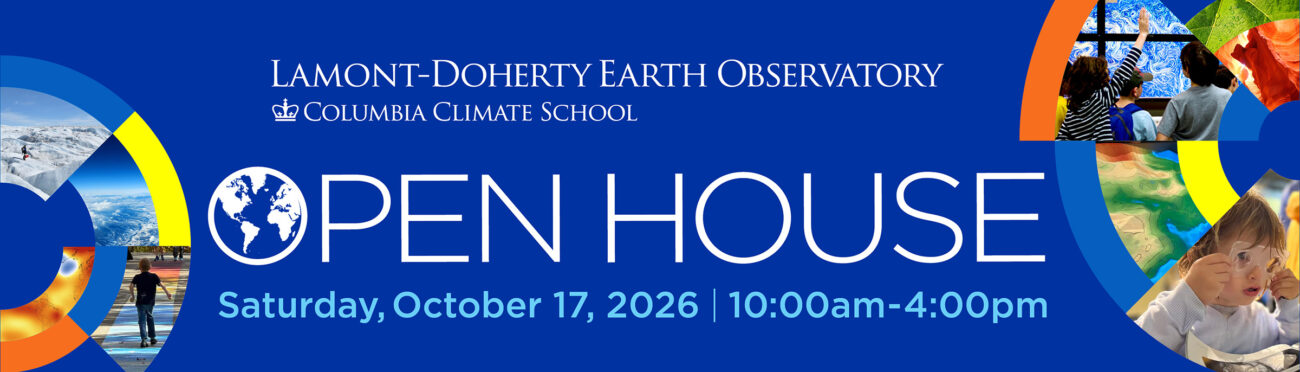
On Saturday, October 17, 2026 from 10am to 4pm, Lamont-Doherty Earth Observatory Open House—our biggest, best science fun and discovery event of the year—will take place on our beautiful campus in Palisades, NY. Mark your calendar and join us for this free, family-friendly celebration of science! RSVP Today!
