climate change152
-
Rocks Could Be Harnessed to Sponge Vast Amounts of Carbon Dioxide from Air, Say Researchers
Proposed Method Would Speed Natural Reactions a Million Times
-
Google Grant to Researchers Aims at Climate-Connected Disease
Work in Ethiopia Will Aid Predictions of Malaria, Meningitis Outbreaks
-
Explorers to Probe Hidden Antarctic Mountains
Under Miles of Ice, Range May Hold Secrets of Geology and Climate
-
New Master’s Programs Will Train Sustainable Development Leaders
NEW YORK, October 10, 2008 – The first global initiative to provide rigorous professional training for future leaders in the field of sustainable development was unveiled today at Columbia University. The program, which was recommended in a newly released report by the International Commission on Education for Sustainable Development Practice, sets a new standard for…
-
Curbing Coal Emissions Alone Might Avert Climate Danger, Say Researchers
Oil and Gas Seen to Have Lesser Effect
-
Top Science Award Goes To Climate Researcher Wallace Broecker
Balzan Prize Honors Key Insights Into Changes in Oceans, Atmosphere
-
Look At Glaciers Past Suggests Greenland Melting Could Rapidly Heighten Sea Level
North American Ice Sheet Dwindled Fast in Conditions Like Today’s
-
Climate Change May Challenge National Security, Classified Report Warns
Sea Level, Water Scarcity, Refugees Might Affect Military, Diplomacy
-
Warming Climate is Changing Life on Global Scale
Wide-Scale Analysis Combines Decades of Data From All Continents
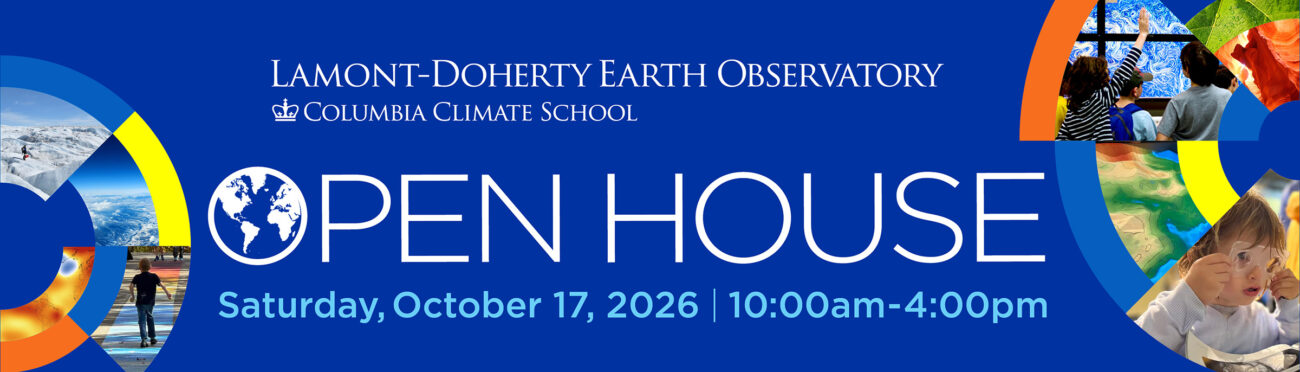
On Saturday, October 17, 2026 from 10am to 4pm, Lamont-Doherty Earth Observatory Open House—our biggest, best science fun and discovery event of the year—will take place on our beautiful campus in Palisades, NY. Mark your calendar and join us for this free, family-friendly celebration of science! RSVP Today!