climate change71
-

Laia Andreu-Hayles Explores Tropical Forests in a Warming World
Research by tree-ring scientist Laia Andreu-Hayles will provide much-needed observational climate data for Bolivia and Peru and insight into the climate sensitivity of tropical tree species in the Andes.
-

Reconvened Scientific Advisory Committee on Climate Change Holds its First Meeting
An advisory committee disbanded by the federal government reunites at Columbia University to begin crafting recommendations for states, cities, and businesses to plan for climate change.
-

To Save Coastal Property from Rising Seas, We Need Collaborative Planning
Climate scientist Radley Horton is bringing the effects of sea level rise to decision-makers, and fostering discussions to help society confront climate change.
-

U.S., UK Scientists Join to Study Possible Collapse of Massive Antarctic Glacier
An international collaboration will study the wasting of the Thwaites glacier, which already accounts for around 4 percent of current global sea-level rise, and could collapse within decades or centuries.
-

The ‘Grandfather of Climate Science’ on Climate Skepticism
Geoscientist Wally Broecker explains the money that’s backing climate denialism, and what it will take to fight it.
-

What We Know (and Don’t Know) About Sea Level Rise
Polar scientists Marco Tedesco and Robin Bell provide a primer on how climate change will impact our coastlines.
-

Earth Institute Celebrates Earth Day 2018 in Herald Square
As part of NYC’s Car-Free Earth Day, we took to the streets to spread the word about climate change.
-

“No Time for Delay” On Climate and Public Health, Doctors Warn
At meeting in mid-March, doctors, climate scientists, and global health specialists discussed how to tackle the health threats that climate change carries with it.
-

How Would a Carbon Tax Impact the Economy?
A recent episode of the Global Energy Exchange podcast, conservative economist Glenn Hubbard explains how “putting a price on carbon” might work.


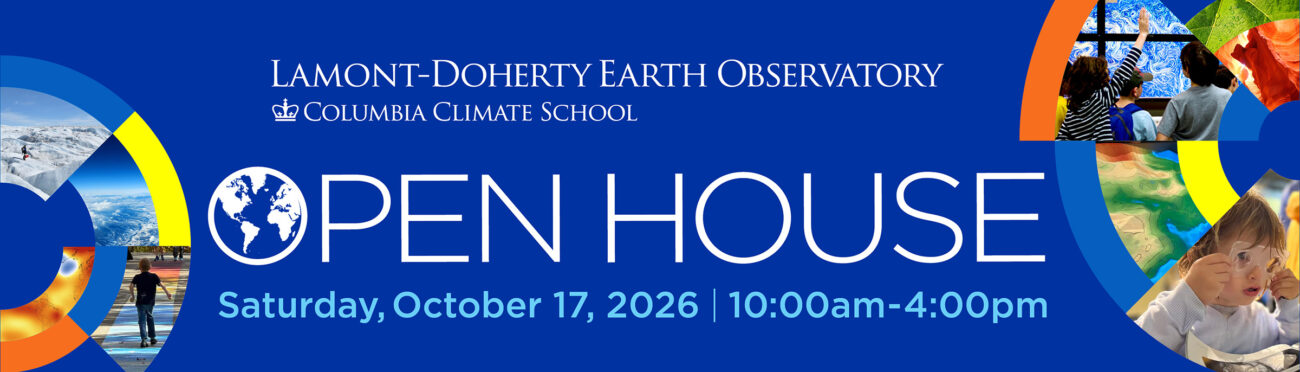
On Saturday, October 17, 2026 from 10am to 4pm, Lamont-Doherty Earth Observatory Open House—our biggest, best science fun and discovery event of the year—will take place on our beautiful campus in Palisades, NY. Mark your calendar and join us for this free, family-friendly celebration of science! RSVP Today!
