climate change97
-
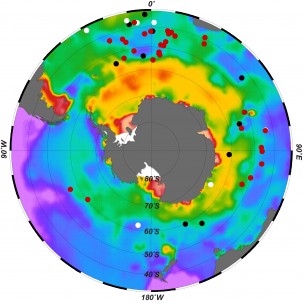
In the Southern Ocean, a Carbon-Dioxide Mystery Comes Clear
Twenty thousand years ago, low concentrations of carbon dioxide in the atmosphere allowed the earth to fall into the grip of an ice age. But despite decades of research, the reasons why levels of the greenhouse gas were so low then have been difficult to piece together. New research, published today in the leading journal…
-

El Niño and Global Warming—What’s the Connection?
The United Nations has declared 2015 the hottest year since record keeping began. It was also a year marked by the occurrence of a “super” El Niño. Are the warming temperatures and El Niño connected?
-

Without the Montreal Protocol, More Intense Tropical Cyclones
Using one of the most advanced atmospheric computer models available, scientists compared our expected future with a scenario in which ozone-depleting substances had never been regulated.
-
With Climate, Fertilizing Oceans Could be Zero-Sum Game
In Pacific, Added Iron May Not Pull Carbon From Air as Thought
-
2015: The Hottest Year
2016 May Be Even Hotter
-

It’s Beginning to Look Not a Lot Like Christmas
Much of the eastern two-thirds of the United States was balmy on Christmas Day, with high temperatures more than 20°F above average from Texas to Maine. According to NOAA, 789 daily high temperature records were tied or broken on Christmas Eve and Christmas Day in the continental United States. What’s behind this unusual weather?
-
New App Explores Ice and Sea Level Change Through Time
Lamont-Doherty Scientists Create ‘Polar Explorer: Sea Level’
-
Electoral Politics and Environmental Sustainability
The political consensus for sustainability that could emerge might be based on increased funding for the science of renewable energy, battery technology, energy efficiency and smart grids. It could also include incentives for private sector investment to commercialize new energy technologies, and tax expenditures that make it easier for consumers to adopt these new technologies.
-

Listen in: Sachs & Cohen on the Paris Agreement
Earth Institute Director Jeffrey Sachs sat down with Brian Lehrer at WNYC on Tuesday to talk about the Paris climate agreement and what happens now.


By studying thousands of buildings and analyzing their electricity use, Columbia Climate School Dean Alexis Abramson has been able to uncover ways to significantly cut energy consumption and emissions. Watch the Video: “Engineering a Cooler Future Through Smarter Buildings“
