State of the Planet

News from the Columbia Climate School

climate change99

  • Shrinking Glaciers: A Chronology of Climate Change

    Shrinking Glaciers: A Chronology of Climate Change

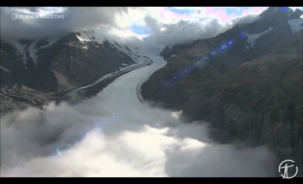
    With new data, scientists can track back what glaciers did in the past, and how it is related to climate change. This provides a link to predict what could be happening in the next 100, 200, 500 years.

  • Why are Past Surface Temperatures and CO2 Concentrations Important?

    Why are Past Surface Temperatures and CO2 Concentrations Important?

    Kelsey Dyez, a geochemist at the Lamont-Doherty Earth Observatory, describes how the carbon dioxide content of the atmosphere influences climate.

  • A Daily Dose, Plus Magnum Mondays

    A Daily Dose, Plus Magnum Mondays

    Leading up to the UN Conference on Climate Change this month in Paris, the Earth Institute is posting daily photos and videos from experts working in the field of climate science.

  • The Compact Efficiency of New Airborne Science

    The Compact Efficiency of New Airborne Science

    The latest team celebration is around the magnetometer data. Magnetics has evolved quite a bit over the years of geophysical sampling. Lamont scientist Robin Bell recalls when in the 1990s working on a project in West Antarctica that the magnetometer was towed on a winch ~100 meters behind the aircraft – now it is nearly…

  • From Copenhagen to Paris: Holding onto Hope

    From Copenhagen to Paris: Holding onto Hope

    I don’t believe for a second that we are on the brink of global destruction. We are on the brink of a global re-distribution and whole scale re-balancing of global goods and bads. But we have been there before and survived.

  • U.S. Could Cut Per Capita Greenhouse Emissions 90% by 2050, Says Report

    U.S. Could Cut Per Capita Greenhouse Emissions 90% by 2050, Says Report

    The report says it is possible to revamp the energy system in a way that reduces per capita carbon dioxide emissions from 17 tons per person currently to 1.7 tons in 2050, while still providing all the services people expect, from driving to air conditioning.

  • From Copenhagen to Paris: Low Expectations

    From Copenhagen to Paris: Low Expectations

    As we head to Paris, the expectations are profoundly lower. The national commitments that countries are putting on the table do not add up to nearly enough to keep us within 2 degrees; instead the plan is to come back every five years and hopefully do better. … It is still mathematically possible to stay…

  • From Copenhagen to Paris: Likely to Fail Again?

    From Copenhagen to Paris: Likely to Fail Again?

    All of the pledges made in Paris will be voluntary. However, countries have not always fulfilled their pledges in the past, and it isn’t obvious that this agreement is going to cause countries to behave very differently in the future.

  • In One Simple Line of Data You Can Read a Full Story

    In One Simple Line of Data You Can Read a Full Story

    The lines of data are slowly creeping across our Ross Ice Shelf GIS map and with each new line comes an improved understanding of Ross Ice Shelf. What can you learn from a ‘snapshot’ of data? A radar contains a nice story.

Photo of the Earth from space with the text "Lamont at AGU25" on top.

AGU25, the premier Earth and space science conference, takes place December 15-19, 2025 in New Orleans, Louisiana. This year’s theme—Where Science Connects Us—puts in focus how science depends on connection, from the lab to the field to the ballot box. Once again, Lamont-Doherty Earth Observatory and Columbia Climate School scientists, experts, students, and educators are playing an active role, sharing our research and helping shape the future of our planet. #AGU25 Learn More

  • Shrinking Glaciers: A Chronology of Climate Change

    Shrinking Glaciers: A Chronology of Climate Change

    With new data, scientists can track back what glaciers did in the past, and how it is related to climate change. This provides a link to predict what could be happening in the next 100, 200, 500 years.

  • Why are Past Surface Temperatures and CO2 Concentrations Important?

    Why are Past Surface Temperatures and CO2 Concentrations Important?

    Kelsey Dyez, a geochemist at the Lamont-Doherty Earth Observatory, describes how the carbon dioxide content of the atmosphere influences climate.

  • A Daily Dose, Plus Magnum Mondays

    A Daily Dose, Plus Magnum Mondays

    Leading up to the UN Conference on Climate Change this month in Paris, the Earth Institute is posting daily photos and videos from experts working in the field of climate science.

  • The Compact Efficiency of New Airborne Science

    The Compact Efficiency of New Airborne Science

    The latest team celebration is around the magnetometer data. Magnetics has evolved quite a bit over the years of geophysical sampling. Lamont scientist Robin Bell recalls when in the 1990s working on a project in West Antarctica that the magnetometer was towed on a winch ~100 meters behind the aircraft – now it is nearly…

  • From Copenhagen to Paris: Holding onto Hope

    From Copenhagen to Paris: Holding onto Hope

    I don’t believe for a second that we are on the brink of global destruction. We are on the brink of a global re-distribution and whole scale re-balancing of global goods and bads. But we have been there before and survived.

  • U.S. Could Cut Per Capita Greenhouse Emissions 90% by 2050, Says Report

    U.S. Could Cut Per Capita Greenhouse Emissions 90% by 2050, Says Report

    The report says it is possible to revamp the energy system in a way that reduces per capita carbon dioxide emissions from 17 tons per person currently to 1.7 tons in 2050, while still providing all the services people expect, from driving to air conditioning.

  • From Copenhagen to Paris: Low Expectations

    From Copenhagen to Paris: Low Expectations

    As we head to Paris, the expectations are profoundly lower. The national commitments that countries are putting on the table do not add up to nearly enough to keep us within 2 degrees; instead the plan is to come back every five years and hopefully do better. … It is still mathematically possible to stay…

  • From Copenhagen to Paris: Likely to Fail Again?

    From Copenhagen to Paris: Likely to Fail Again?

    All of the pledges made in Paris will be voluntary. However, countries have not always fulfilled their pledges in the past, and it isn’t obvious that this agreement is going to cause countries to behave very differently in the future.

  • In One Simple Line of Data You Can Read a Full Story

    In One Simple Line of Data You Can Read a Full Story

    The lines of data are slowly creeping across our Ross Ice Shelf GIS map and with each new line comes an improved understanding of Ross Ice Shelf. What can you learn from a ‘snapshot’ of data? A radar contains a nice story.