climate26
-
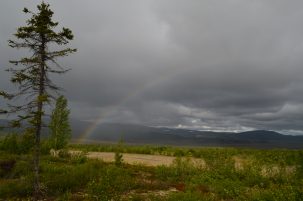
Where Trees Meet Tundra, Decoding Signals of Climate Change
In northern Alaska’s Brooks Range, the earth as most of us know it comes to an end. The northern tree line-a boundary that circles all of earth’s northern landmasses for more than 8,300 miles, and forms the planet’s biggest ecological transition zone–runs through here. Scientists from Columbia University’s Lamont-Doherty Earth Observatory are studying how climate…
-
Building Consensus on Climate and Sustainability Policy
The New York Times reported on a new international agreement that will phase out hydrofluorocarbons, or HFCs, a chemical that is used in refrigerators and air conditioners that is a powerful greenhouse gas. The irony is that HFCs were developed to replace chlorofluorocarbons, or CFCs, chemicals that caused a hole in our atmosphere’s ozone layer…
-

Stranding Equitably in the Current Market and Geopolitical Context
The Columbia Center on Sustainable Investment’s conference of early November will consider, notably, how world production of oil and gas could be significantly reduced in manners protecting the interests of lower-income producing countries, given that staying on carbon budget will require leaving two thirds of our fossil fuel reserves unburnt.
-

Shareholders Turn Up the Heat on Climate Change
2016 was a hot year for climate change shareholder resolutions hitting the boardrooms of oil and gas companies. Although more familiar climate news headlines have carried calls to “keep it in the ground” and divest investment portfolios from fossil fuels, a patient strategy has been quietly gaining momentum: shareholder engagement on climate change.
-

Protecting Indigenous Land Rights Makes Good Economic Sense
Indigenous peoples and other communities hold and manage 50 to 65 percent of the world’s land, yet governments recognize only 10 percent as legally belonging to these groups, with another 8 percent designated by governments for communities. That’s bad economic policy.
-

Trade Deals and the Paris Climate Agreement
With the approval of the Paris Climate Agreement comes a key question: Do our trade and investment agreements—current and proposed—create the space, send the right signals, and clear the path for the U.S. and other countries to meet their Paris commitments?
-

Rising Temperatures Load the Dice for Megadrought Risk
As the American Southwest grows hotter, the risk of severe, long-lasting megadroughts rises, passing 90 percent this century if greenhouse gas emissions continue at their current pace, a new study from scientists at Lamont-Doherty Earth Observatory says. Aggressively reducing emissions can cut that risk.
-

Pressure Mounts for Developing Countries to Leave Fossil Fuels in the Ground
Calls are intensifying to phase out fossil fuels, and that is now beginning to occur in many developed countries. This shift will have profound implications for the developing world, which has vast untapped fossil fuel resources, but may be unable to realize their value.
-

Land, Resource Investments and Climate Change: 3 Key Takeaways
Any discussion on climate change and sustainable investment in natural resources must grapple with land—a complicated yet crucial component of the search for equitable climate change solutions.


The first Earth Day in 1970 ignited a movement to stop polluting our planet. Today, our scientists and experts are tackling the most pressing challenges to achieve real-world impact. This Earth Day, join us in our commitment to realizing a just and sustainable future for our planet. Visit our Earth Day website for ideas, resources, and inspiration.
