Earthquakes
-

Earth’s Crust Is Tearing Apart off the Pacific Northwest—and That’s Not Necessarily Bad News
Using seismic reflection imaging—essentially an ultrasound of the Earth’s subsurface—and detailed earthquake records, researchers captured a subduction zone in the process of tearing itself apart.
-
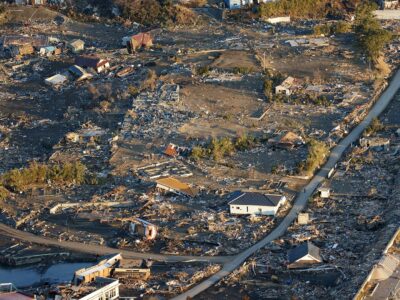
Leveraging Next-Generation Tsunami Early Warning Systems to Save Lives
Tsunami early warning systems save lives not just when they are fast or accurate, but when they are trusted, understood and acted upon.
-

Year in Review: Our Top Stories of 2024
In case you missed it: Check out this past year’s top stories, videos, research highlights and more.
-

Shaking From April’s New Jersey Quake Went Oddly Far, Raising Questions on Regional Hazard
An earthquake on April 5, 2024, was felt at surprisingly long distances. What does it mean for assessing regional hazard?
-

The Measure of a Man: Jerome M. Paros ’63GSAS’ Life of Invention and Philanthropy
Jerry Paros’ inventions have improved the measurements of geophysical phenomena such as tsunamis, and enhance our ability to understand the complex earth, air and ocean processes that produce climate change.
-

Finding an Undocumented Earthquake That Moved a River
Researchers offer a behind-the-scenes look at their recent discovery of an earthquake that shifted the course of the Ganges.
-

An Earthquake Changed the Course of the Ganges. Could It Happen Again?
2,500 years ago, an earthquake changed the course of the mighty Ganges River, a new study shows. The region remains vulnerable to a similar event now.
-

Cascadia Subduction Zone, One of Earth’s Top Hazards, Comes Into Sharper Focus
Where tectonic plates collide off the coasts of the western United States and Canada, giant earthquakes and tsunamis occur. The last one was 324 years ago. When will be the next?
-

In New Jersey’s Ancient Rocks, Hunting for Clues to a 2024 Earthquake
Geologists are combing the New Jersey countryside for signs of earthquakes past and present.


The first Earth Day in 1970 ignited a movement to stop polluting our planet. Today, our scientists and experts are tackling the most pressing challenges to achieve real-world impact. This Earth Day, join us in our commitment to realizing a just and sustainable future for our planet. Visit our Earth Day website for ideas, resources, and inspiration.
