Geology2
-

Chasing Gold, Geysers and Geothermal Power With Carolina Muñoz-Saez
The postdoctoral researcher studies hydrothermal systems and will soon go to the Chilean Andes to explore how geyser activity there may be related to glacier growth and retreat over thousands of years.
-

Geologists Identify Deep-Earth Structures That May Signal Hidden Metal Lodes
Previously unrecognized structural lines deep in the earth appear to signal the locations of giant deposits of copper, lead, zinc and other vital metals near the surface.
-

Drill Cores From Pre-Ancient Greece Open Insights to Climate
Newly analyzed drill cores taken from the bottom of Greece’s Gulf of Corinth show that sediment flow into the basin has varied dramatically over the past 500,000-plus years, as the earth passed in and out of ice ages, and humans later dominated the surrounding landscape.
-

Photo Essay: On an Island, a Lost Part of the World Is Found
On the volcanic Indian Ocean island of Anjouan, scientists are investigating a rock that apparently formed on a far-off continent.
-

On a Remote Island, a Lost Part of the World Is Found
On a small volcanic island in the Indian Ocean lies a geologic enigma—a mass of pure white quartzite sandstone apparently formed on a faraway continent long ago. How did it get there?
-

Congratulations! You’ve Been Chosen To Colonize A New World.
Posing as an interplanetary flight attendant in an upcoming show, researcher Christine McCarthy will lead a geological journey through the solar system.
-

New Round of Funding Supports Earth Institute Research Around the Globe
The President’s Global Innovation Fund will provide grants to four Earth Institute research projects.
-

Exploring Obama’s Seafloor Canyons by Mini Submarine
Only a few people have ever explored deep inside the seafloor canyons that President Obama just designated a national marine monument. Bill Ryan is one of them. In this podcast he describes what his team saw and learned.
-

New Study Upends a Theory of How Earth’s Mantle Flows
A new study carried out on the floor of Pacific Ocean provides the most detailed view yet of how the earth’s mantle flows beneath the ocean’s tectonic plates.


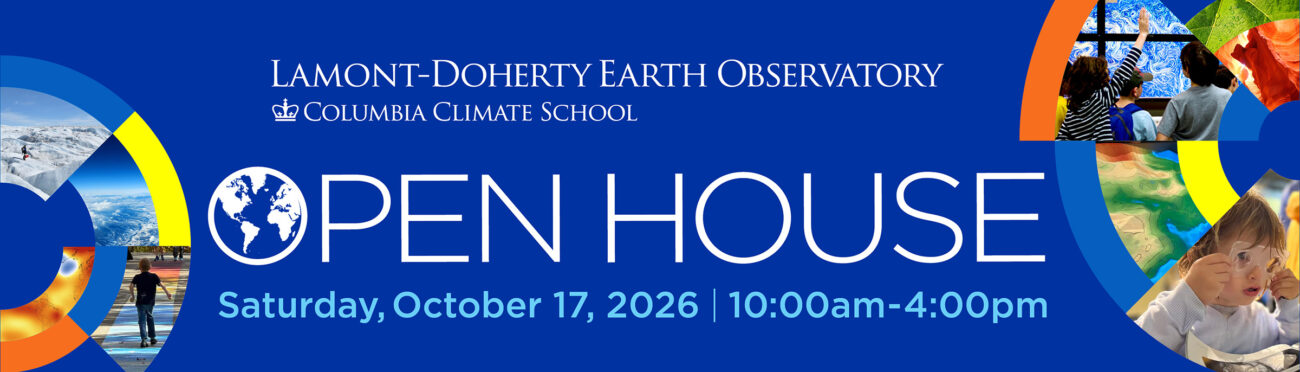
On Saturday, October 17, 2026 from 10am to 4pm, Lamont-Doherty Earth Observatory Open House—our biggest, best science fun and discovery event of the year—will take place on our beautiful campus in Palisades, NY. Mark your calendar and join us for this free, family-friendly celebration of science! RSVP Today!
