Ice Age
-
October Research Roundup: Select Papers
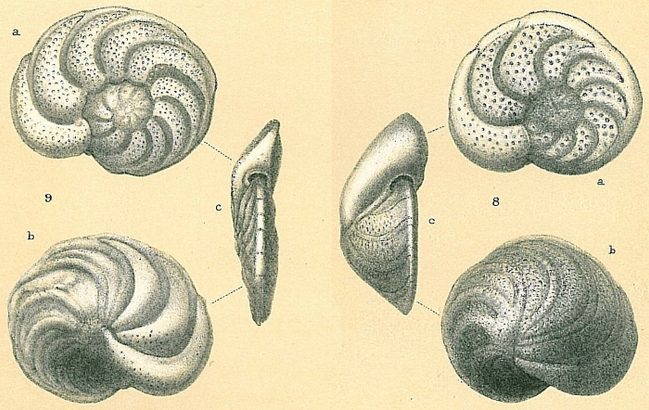
In this month’s research roundup, we explore how delayed climate action could trigger abrupt changes in the Arctic; what ancient ocean sediments reveal about carbon storage during the last ice age; how fiber-optic cables are improving earthquake monitoring at geothermal sites; and a new timeline of Earth’s magnetic reversals.
-
Climate Change Stopped the Next Ice Age
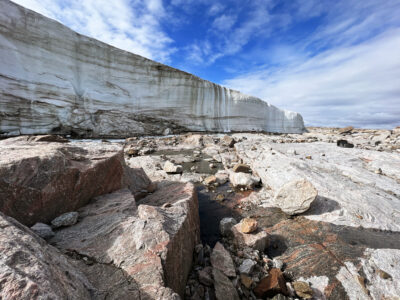
New research shows that 2,000 years ago, remnants of an Arctic ice sheet began growing again, marking the start of a new glacial period—what we commonly call an ice age. But by the 1960s, global warming had raised summer temperatures enough to reverse that growth.
-
Humans Occupied a High-Altitude Site in Australia During the Last Ice Age, New Study Finds
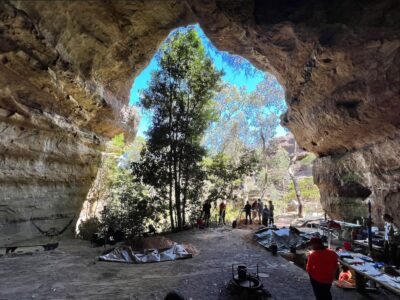
Archaeologists and local First Nations groups have uncovered early evidence that reshapes our historical understanding of high-altitude human occupation and mobility.
-
Ocean Circulation Implicated in Past Abrupt Climate Changes
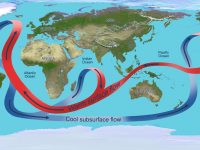
Circulation Slowed with Every Cooling During Last Ice Age
-

What Geology Has to Say About Global Warming
The most important lessons drawn from geology are that the earth’s climate can change radically, and rapidly. We can’t say precisely at what CO2 level we’re in danger of melting Antarctica, but that threshold could be reached in 150-300 years, if CO2 levels keep rising at the current rate.
-
George Kukla, Contrarian Climate Scientist
George Kukla, a climate scientist who was among the first to warn of the power of global climate change and inspire government study, died on May 31 at his home in Suffern, N.Y. The cause was an apparent heart attack; he was 84. In a career spanning more than five decades, much of it spent…
-

The Breathing Ocean
Far south and farther south, where winds are cold and screaming, Waters churn, and deep below, old sediments lie dreaming. A million years’ residuum of life and death and dust, A library of ice ages reposed upon Earth’s crust.
-

Shag, Before It Was Cool
More cuddly than a dino, The Zanda woolly rhino! This pioneer of old Grew shag before the cold. …
-
Study Adds New Clue to How Last Ice Age Ended
New Zealand Glaciers Melted as European Glaciers Briefly Expanded



COP31, the 2026 United Nations Climate Change Conference, aims to advance dialogue, strengthen consensus, and accelerate climate action on a global scale. From November 9–20, 2026 in Antalya, Türkiye, heads of state, ministers, scientists, business leaders, and civil society will gather to advance efforts in emission targets, climate finance, and adaptation and resilience. Once again, our experts, students, and global thought leaders from Columbia Climate School and across Columbia University are contributing to key events, sharing insights, and helping shape the dialogue toward ambitious, science-based solutions. Learn More
