ice sheet
-
How a Massive Ancient Ice Shelf Stabilized Glaciers—and What It Means for Antarctica
New research could lead to more accurate predictions about how quickly Antarctic glaciers might retreat and raise sea levels.
-
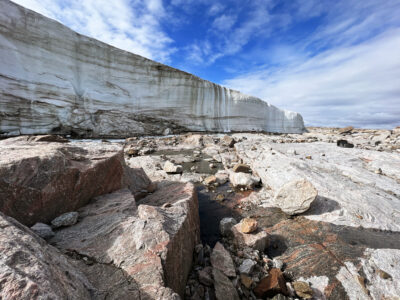
Climate Change Stopped the Next Ice Age
New research shows that 2,000 years ago, remnants of an Arctic ice sheet began growing again, marking the start of a new glacial period—what we commonly call an ice age. But by the 1960s, global warming had raised summer temperatures enough to reverse that growth.
-

Two Longtime Lamont Research Professors Honored With New Appointments
Robin Bell has been named the Marie Tharp Lamont Research Professor and Richard Seager the Ewing Lamont Research Professor.
-

Cordilleran Ice Sheet Retreat Caused Volcanic Eruptions, Deoxygenation Events 10,000 Years Ago
New research shows that retreat of an ice sheet in the Pacific Northwest led to many volcanic explosions and ocean areas with low oxygen that threatened the health of marine ecosystems.
-

Greenland Ice Sheet Reached Tipping Point 20 Years Ago, New Study Finds
The massive ice sheet is now locked into a certain amount of decline. But reducing emissions remains critical to preventing catastrophic loss of the entire ice sheet.
-

Robin Bell Goes to Washington to Testify About Melting Ice Sheets
At a hearing of the House Science Committee on Thursday, she’ll explain her research and why changing polar ice matters to everyone in America and around the world.
-
Fountain of Youth Underlies Antarctic Mountains
New Study Explains Why Peaks Buried in Ice Look So Young
-

Clock Is Ticking in West Antarctic
“The high-resolution records that we’re getting and the high-resolution models we’re able to make now are sort of moving the questions a little bit closer into human, understandable time frames.”
-

Greenland Ice
If you went to Greenland, almost 80 North, And drilled your way down … a mile, then more, You’d find some strange layers, a story’d come forth A record of ice ages locked in a core.



COP31, the 2026 United Nations Climate Change Conference, aims to advance dialogue, strengthen consensus, and accelerate climate action on a global scale. From November 9–20, 2026 in Antalya, Türkiye, heads of state, ministers, scientists, business leaders, and civil society will gather to advance efforts in emission targets, climate finance, and adaptation and resilience. Once again, our experts, students, and global thought leaders from Columbia Climate School and across Columbia University are contributing to key events, sharing insights, and helping shape the dialogue toward ambitious, science-based solutions. Learn More
