Indian agriculture
-
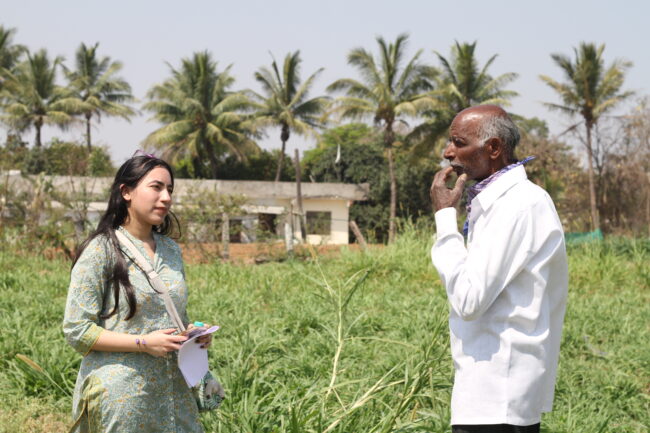
Student Spotlight: A Systems-Level Approach To Help Solve India’s Food Challenges
Stuti Banga’s work emphasizes how systems-level thinking, national contexts and power dynamics matter just as much as technological innovation.
-

Using a People-Centered Approach to Design Restoration Projects
A new study proposes a more holistic approach to planning restoration projects that do not “leave people off the map.”
-

Making Agriculture Sustainable in One of India’s Poorest States
Jharkhand, India is one of the nation’s poorest and most most food-insecure states, with over 45 percent of the population living below the poverty line. Can a research team devise sustainable ways to improve livelihoods, productivity and sustainable water use?
-

Overuse of Water by Indian Farmers Threatens Supply
Convincing farmers that it’s worth it to reduce their water consumption will rest on our ability to help develop local groups to manage aquifers at the community-level.



COP31, the 2026 United Nations Climate Change Conference, aims to advance dialogue, strengthen consensus, and accelerate climate action on a global scale. From November 9–20, 2026 in Antalya, Türkiye, heads of state, ministers, scientists, business leaders, and civil society will gather to advance efforts in emission targets, climate finance, and adaptation and resilience. Once again, our experts, students, and global thought leaders from Columbia Climate School and across Columbia University are contributing to key events, sharing insights, and helping shape the dialogue toward ambitious, science-based solutions. Learn More
