State of the Planet

News from the Columbia Climate School

International Research Institute for Climate and Society24

  • Learning from El Niño as La Niña Odds Rise

    Learning from El Niño as La Niña Odds Rise

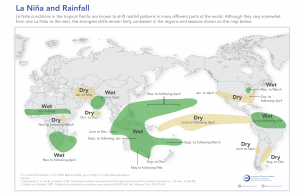
    Although El Niño is weakening, its ramifications continue to be felt around the world. Drought and resulting food insecurity is one of the major implications for southeast Asia, eastern and southern Africa, Central America and the Caribbean. Sixty million are in need of emergency relief today, according to the United Nations.

  • Filling a Climate Gap and Helping Rwandan Farmers

    Filling a Climate Gap and Helping Rwandan Farmers

    Agriculture makes up a major portion of Rwanda’s economy, and employs eight in 10 Rwandans. Of course, farmers are hugely dependent on the climate, and a new project hopes to ensure they get timely information so they can plan for both good times and bad.

  • Scientists Prepare ‘Climate City’ for Take-Off

    Scientists Prepare ‘Climate City’ for Take-Off

    Sometime soon, a flock of “Climate Birds” could be ascending from a former NATO base in northeast France to take the measure of climate change around the world.

  • Are Zika Virus and the Climate Related?

    Are Zika Virus and the Climate Related?

    Madeleine Thomson, a scientist at the International Research Institute for Climate and Society, studies the relationship between diseases like Zika, dengue, malaria and others and changes in climate. She spoke at length recently with the Wellcome Trust, a health-focused charity, about the connection.

  • What Does El Niño Mean, in 3.4 Seconds

    What Does El Niño Mean, in 3.4 Seconds

    Scientists at the International Research Institute for Climate and Society took a moment from their work (a very brief moment) to answer the question, “What does El Niño mean?”

  • Honduran Farmers Help Design Insurance Against Climate Risks

    Honduran Farmers Help Design Insurance Against Climate Risks

    The International Research Institute for Climate and Society and local Honduran partners have been working to identify and implement farmer-driven, development-focused climate risk solutions. Through interactive exercises, grain farmers have worked together with the team of experts since 2014 to design and tailor index insurance in the pilot region of El Paraíso, Honduras. This video…

  • American Geophysical Union 2015: Key Earth Institute Events

    American Geophysical Union 2015: Key Earth Institute Events

    Scientists at Columbia University’s Earth Institute will present important findings at the American Geophysical Union fall 2015 meeting, Dec. 14-18–the world’s largest gathering of earth and space scientists.

  • Historic Hurricane Nears Landfall on Southwest Coast of Mexico

    Historic Hurricane Nears Landfall on Southwest Coast of Mexico

    Hurricane Patricia, the strongest hurricane ever observed in either the Atlantic or eastern Pacific, is expected to make landfall on the Southwest coast of Mexico this afternoon and evening as an extremely dangerous Category 5 hurricane.

  • In 2015: Hot, Wet and Opinionated

    In 2015: Hot, Wet and Opinionated

    This year is shaping up to be the warmest year on record since 1880, according to new data from the National Oceanic and Atmospheric Administration. And, perhaps not so coincidentally, a new poll says more people in the United States are coming around to the view that climate change is happening.

Collage of Turkiye beach scene and Columbia University Campus with text: UN Climate Change Conference COP31, Antalya, Turkiye, Nov 9-20, 2026

COP31, the 2026 United Nations Climate Change Conference, aims to advance dialogue, strengthen consensus, and accelerate climate action on a global scale. From November 9–20, 2026 in Antalya, Türkiye, heads of state, ministers, scientists, business leaders, and civil society will gather to advance efforts in emission targets, climate finance, and adaptation and resilience. Once again, our experts, students, and global thought leaders from Columbia Climate School and across Columbia University are contributing to key events, sharing insights, and helping shape the dialogue toward ambitious, science-based solutions. Learn More

  • Learning from El Niño as La Niña Odds Rise

    Learning from El Niño as La Niña Odds Rise

    Although El Niño is weakening, its ramifications continue to be felt around the world. Drought and resulting food insecurity is one of the major implications for southeast Asia, eastern and southern Africa, Central America and the Caribbean. Sixty million are in need of emergency relief today, according to the United Nations.

  • Filling a Climate Gap and Helping Rwandan Farmers

    Filling a Climate Gap and Helping Rwandan Farmers

    Agriculture makes up a major portion of Rwanda’s economy, and employs eight in 10 Rwandans. Of course, farmers are hugely dependent on the climate, and a new project hopes to ensure they get timely information so they can plan for both good times and bad.

  • Scientists Prepare ‘Climate City’ for Take-Off

    Scientists Prepare ‘Climate City’ for Take-Off

    Sometime soon, a flock of “Climate Birds” could be ascending from a former NATO base in northeast France to take the measure of climate change around the world.

  • Are Zika Virus and the Climate Related?

    Are Zika Virus and the Climate Related?

    Madeleine Thomson, a scientist at the International Research Institute for Climate and Society, studies the relationship between diseases like Zika, dengue, malaria and others and changes in climate. She spoke at length recently with the Wellcome Trust, a health-focused charity, about the connection.

  • What Does El Niño Mean, in 3.4 Seconds

    What Does El Niño Mean, in 3.4 Seconds

    Scientists at the International Research Institute for Climate and Society took a moment from their work (a very brief moment) to answer the question, “What does El Niño mean?”

  • Honduran Farmers Help Design Insurance Against Climate Risks

    Honduran Farmers Help Design Insurance Against Climate Risks

    The International Research Institute for Climate and Society and local Honduran partners have been working to identify and implement farmer-driven, development-focused climate risk solutions. Through interactive exercises, grain farmers have worked together with the team of experts since 2014 to design and tailor index insurance in the pilot region of El Paraíso, Honduras. This video…

  • American Geophysical Union 2015: Key Earth Institute Events

    American Geophysical Union 2015: Key Earth Institute Events

    Scientists at Columbia University’s Earth Institute will present important findings at the American Geophysical Union fall 2015 meeting, Dec. 14-18–the world’s largest gathering of earth and space scientists.

  • Historic Hurricane Nears Landfall on Southwest Coast of Mexico

    Historic Hurricane Nears Landfall on Southwest Coast of Mexico

    Hurricane Patricia, the strongest hurricane ever observed in either the Atlantic or eastern Pacific, is expected to make landfall on the Southwest coast of Mexico this afternoon and evening as an extremely dangerous Category 5 hurricane.

  • In 2015: Hot, Wet and Opinionated

    In 2015: Hot, Wet and Opinionated

    This year is shaping up to be the warmest year on record since 1880, according to new data from the National Oceanic and Atmospheric Administration. And, perhaps not so coincidentally, a new poll says more people in the United States are coming around to the view that climate change is happening.