Jacqueline Austermann
-
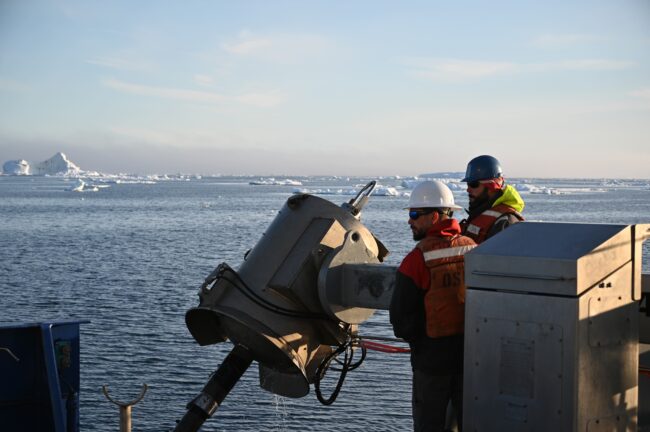
How a Massive Ancient Ice Shelf Stabilized Glaciers—and What It Means for Antarctica
New research could lead to more accurate predictions about how quickly Antarctic glaciers might retreat and raise sea levels.
-
Lamont Researchers Receive Major Earth Science Honors from the American Geophysical Union
Five Lamont scientists received major 2026 honors recognizing research on sea-level change, ocean carbon uptake, seafloor mapping and Earth’s deep interior. William B. F. Ryan receives the Maurice Ewing Medal; Jacqueline Austermann, Gisela Winckler and Galen McKinley receive AGU distinctions, while Renata Wentzcovitch is named a Distinguished Lecturer.
-
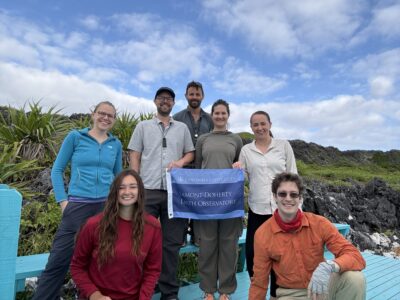
What Can Fossil Corals in the Cook Islands Teach Us About Global Sea Level Rise?
Scientists are studying fossil coral reefs in the Cook Islands to reconstruct sea levels during the Last Interglacial, and hoping to improve projections of future change.
-
Antarctica Undergoes ‘Greenlandification’ As Ice Melt Accelerates
Scientists have found that Antarctica’s ice loss is increasing rapidly, mirroring the melting of its northern counterpart, Greenland.
-
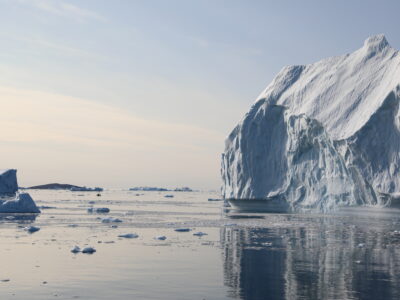
Sea Levels Are Rising—But in Greenland, They Will Fall
Even as global warming causes sea levels to rise worldwide, sea levels around Greenland will likely drop, according to a new paper.
-
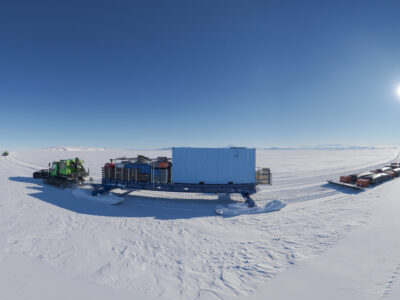
Scientists Search for Ancient Climate Clues Beneath Antarctic Ice
An international team, including researchers from Columbia’s Lamont-Doherty Earth Observatory, is attempting to drill for mud and rocks holding critical insights about the fate of the West Antarctic Ice Sheet in our warming world.
-

For Good Measure: Scientists Collaborate to Track Sea Level Rise From Glaciers in Greenland and Antarctica
Scientists who study both the ice sheets and nearby peripheral glaciers are working together to improve the accuracy of estimated sea level rise.
-

Sea Level Rise: A Crash Course for All
Lamont-Doherty Earth Observatory presents a public lecture on the driving forces and dynamics reshaping global coastlines.



COP31, the 2026 United Nations Climate Change Conference, aims to advance dialogue, strengthen consensus, and accelerate climate action on a global scale. From November 9–20, 2026 in Antalya, Türkiye, heads of state, ministers, scientists, business leaders, and civil society will gather to advance efforts in emission targets, climate finance, and adaptation and resilience. Once again, our experts, students, and global thought leaders from Columbia Climate School and across Columbia University are contributing to key events, sharing insights, and helping shape the dialogue toward ambitious, science-based solutions. Learn More
