Lamont-Doherty Earth Observatory140
-
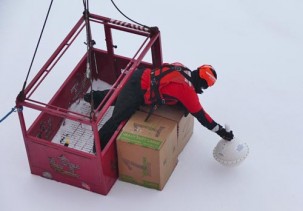
Arctic Magic: One Research Vessel Multiplies to Hundreds
The Arctic is magical, that we know, but when one ship multiplies to hundreds of small boats we really see the effect that Arctic magic can bring.
-

Translating Nature’s Historians: The Tree Ring Lab Turns 40
In its first 40 years, the Lamont Tree Ring Lab tracked changing climates around the world, building an international reputation as a global leader in research, training and technology.
-

Tips for Being an Outstanding Mentor
What are the qualities that make someone an outstanding mentor? We asked two award-winning mentors and the students whose lives they have changed. This is what they said.
-

A Simple Question, Unexpected Applications – and an Award
Even the simplest research questions can lead to far-reaching public benefits. Consider Chris Small and Joel Cohen’s study of global population by altitude, being honored this week at the Library of Congress.
-

A Week of Firsts for This Arctic Nation
We are closing in on a week of intense focus and excitement for GEOTRACES and for the United States around the Arctic. President Obama became the first sitting president to visit Alaska, the US Coast Guard Cutter Healy with US GEOTRACES scientists completed the first unaccompanied US surface vessel transit to the North Pole, and…
-

The Southern Ocean Is Breathing in Carbon Dioxide at a Healthy Rate
“In the last 10 years, we were afraid that the Southern Ocean was going to quit giving us a break from climate change. This study shows that it’s recovered its ability to take up carbon dioxide, and that’s good news.”
-

From the Field: Mapping Lava Flows in Iceland
Lamont’s Einat Lev and Elise Rumpf write about their expedition to the lava fields of Iceland, where the two volcanologists and a drone named Buzz studied how lava flows and what happens to rivers, rocks and old lava in its path.
-

It’s as Clear as Mud
For the sampling GEOTRACES is doing in the Arctic there is a specific goal of collecting just the top few dozen centimeters of sediment and the water just above it. Although the plan was good, things don’t always go perfectly.
-

Q&A: Park Williams on Drought, Climate and ‘Cracking the Code’
“Future extremes are going to occur more and more frequently. In planning, we don’t need to plan for the 2 degree warming that we are aiming for as a globe, we need to plan for the 10 degree increase in a day, or the year when there’s no water. We need to plan for worst-case…


October 28, 2026 is Columbia Giving Day! Your gift to Columbia Climate School helps advance interdisciplinary research, educate the next generation of leaders, and transform bold ideas into real-world solutions for climate, Earth, and society.
