Lamont-Doherty Earth Observatory39
-
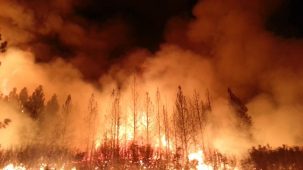
Forest Fires Increasingly Affecting Western Rivers and Streams, for Better and Worse
Fires may increase stream flow for years after sweeping the surface, and temporarily increase downstream water supplies. But they may also increase the risks of landslides and floods in affected areas.
-

Researchers Map New York State Methane Emissions With a Mobile Laboratory
Scientists are using mobile instruments to measure and hopefully help reduce emissions from landfills, cities, farms, waste treatment plants and other sources where mitigation measures could be put in place.
-

How Does a Major Subduction Zone Get Started? It May Begin Small.
A study of an emerging zone off New Zealand suggests that the process, vital for life on Earth, may at first be localized and then develop into something much larger.
-

Megadrought in Southwest Is Now the Worst in at Least 1,200 Years, Study Confirms
The continuation of dry conditions across a wide region has broken records going back to the year 800. Researchers believe climate change is largely to blame.
-

Celebrating the 2022 International Day of Women and Girls in Science
This U.N.-designated day aims to accelerate gender equity and improve access to and participation in science for women and girls.
-

Why Climate Science Needs More Women Scientists
Women scientists continue to face unequal access to resources and opportunities in climate science. This lack of gender diversity is concerning, since women around the world will bear the brunt of climate change impacts.
-

Return of the R/V Pelican to Ocho Rios, Jamaica
The expedition discovered stresses along an underwater plate boundary and a record of historic and pre-historic earthquakes, which will shed light on the geohazard risks for Jamaica and Haiti.
-

Offshore Wind Farms Could Capture Carbon From Air and Store It
When the wind can produce more power than is needed, that unused power could be used to remove carbon from the air and lock it away.
-

Professor Nicholas Christie-Blick Named 2021 AAAS Fellow
The professor of earth and environmental sciences is one of five Columbia faculty recently recognized by the American Association for the Advancement of Sciences.


The first Earth Day in 1970 ignited a movement to stop polluting our planet. Today, our scientists and experts are tackling the most pressing challenges to achieve real-world impact. This Earth Day, join us in our commitment to realizing a just and sustainable future for our planet. Visit our Earth Day website for ideas, resources, and inspiration.
