Lamont-Doherty Earth Observatory64
-
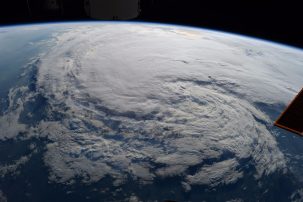
Future Hurricanes: Fast Like Ike or Slow Like Harvey?
Climate change will intensify winds that steer hurricanes north over Texas in the late 21st century, increasing the odds for fast-moving storms like 2008’s Ike, compared with slow-movers like 2017’s Harvey, says new research.
-

Reopening Mostly Erases Effects of Pandemic Reductions in CO2 Emissions
Although emissions temporarily dipped due to coronavirus, the numbers are bouncing back quickly as economies reopen.
-

It’s Time to Rethink the Practice of Whale Watching
A scientist reflects on the potential harms of chasing whales with boats to try to get that perfect snapshot.
-

Geologists Identify Deep-Earth Structures That May Signal Hidden Metal Lodes
Previously unrecognized structural lines deep in the earth appear to signal the locations of giant deposits of copper, lead, zinc and other vital metals near the surface.
-

The Amazon Continues to Burn
The environmental tragedy does not stop even in the face of the pandemic. From January to April, over 1200 square kilometers of forest were wiped out.
-

Sustainability Science Capstone Workshop Investigates Microplastics in the Hudson River
A student group examined the types of microplastics entering the river, and created a way for citizen scientists to help with the research.
-

Q&A With Kailani Acosta on Diversity in the Geosciences
Women and people of color are historically underrepresented in the geosciences. Through two different diversity initiatives, graduate student Kailani Acosta is working to change that.
-

Refining Projections of Antarctic Ice Loss and Global Sea Level Rise
Research by Center for Climate and Life Fellow Pierre Dutrieux will lead to greater understanding of the West Antarctic Ice Sheet’s future stability and associated sea level rise.
-

Glaciers Preserve Our History. We Must Defend Them.
In a century or two, future generations will be able to ‘read’ the pandemic chapter in ice cores — if glaciers still exist then.


The first Earth Day in 1970 ignited a movement to stop polluting our planet. Today, our scientists and experts are tackling the most pressing challenges to achieve real-world impact. This Earth Day, join us in our commitment to realizing a just and sustainable future for our planet. Visit our Earth Day website for ideas, resources, and inspiration.
