Laurentide Ice Sheet
-
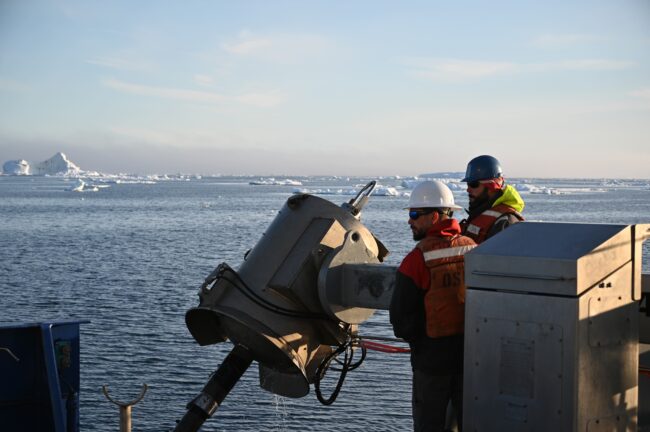
How a Massive Ancient Ice Shelf Stabilized Glaciers—and What It Means for Antarctica
New research could lead to more accurate predictions about how quickly Antarctic glaciers might retreat and raise sea levels.
-
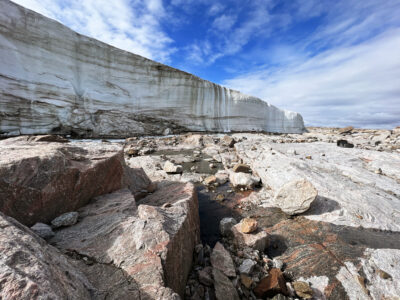
Climate Change Stopped the Next Ice Age
New research shows that 2,000 years ago, remnants of an Arctic ice sheet began growing again, marking the start of a new glacial period—what we commonly call an ice age. But by the 1960s, global warming had raised summer temperatures enough to reverse that growth.
-

Dredging up New York City’s Glacial Memory
Glaciologist Elizabeth Case spoke to New Yorkers about the role glaciers have played in designing the city’s landscape.
-

Follow Along on a Bicycle Tour That Teaches About Hudson Valley’s Glacial History
A student-led Cycle for Science trip will follow the footsteps of an ice sheet that buried the NYC area under a mile of ice during the last ice age.
-
Look At Glaciers Past Suggests Greenland Melting Could Rapidly Heighten Sea Level
North American Ice Sheet Dwindled Fast in Conditions Like Today’s



COP31, the 2026 United Nations Climate Change Conference, aims to advance dialogue, strengthen consensus, and accelerate climate action on a global scale. From November 9–20, 2026 in Antalya, Türkiye, heads of state, ministers, scientists, business leaders, and civil society will gather to advance efforts in emission targets, climate finance, and adaptation and resilience. Once again, our experts, students, and global thought leaders from Columbia Climate School and across Columbia University are contributing to key events, sharing insights, and helping shape the dialogue toward ambitious, science-based solutions. Learn More
