mining3
-

Deep Sea Mining: Out of Sight, Out of Mind?
Are we willing to compromise deep sea ecosystems and biodiversity for prodigious amounts of mineral materials? Will deep sea mining have the largest footprint of any single human activity on the planet? The race is on to create more progressive, environmental regulations concerning deep sea mining, but much more scientific research is still necessary to…
-

Rare Earth Metals: Will We Have Enough?
Cell phones, iPads, laptops, televisions, hybrid cars, wind turbines, solar cells and many more products depend on rare earth metals to function. Will there be enough for us to continue our high-tech lifestyle and transition to a renewable energy economy?
-

The Criminalization of Anti-Mining Social Protest in Peru
In Africa, Asia and Latin America, the development of the mining industry has often been accompanied by violence and community-led social protest. To halt these protests, young democratic institutions have, in various cases, turned to authoritarian dogmas. Researcher Dr. Triscritti illustrates how in Peru these practices are decreasing the chances of reaching durable and peaceful…
-

Remembering Resource Interdependence
Legislating revenue transparency injects fairness into resource equations, but it remains the map rather than the territory. The deeper dilemma is that we no longer have a language to describe the territory.
-

Reusing Dirty Water
Columbia Water Center guest lecturer Raymond Farinato talks about increasing water supply by reusing wastewater in industrial applications.
-
Climate News Roundup — Week of 6/14
Bill Gates funds cloud-whitening effort to reduce global warming. USA Today Bill Gates is funding research into whether or not it is effective and feasible to increase the albedo of atmospheric clouds by spray sea mist high into the atmosphere. The plan, spearheaded by Silicon Valley inventor Armand Neukermans, is a relatively benign method of…


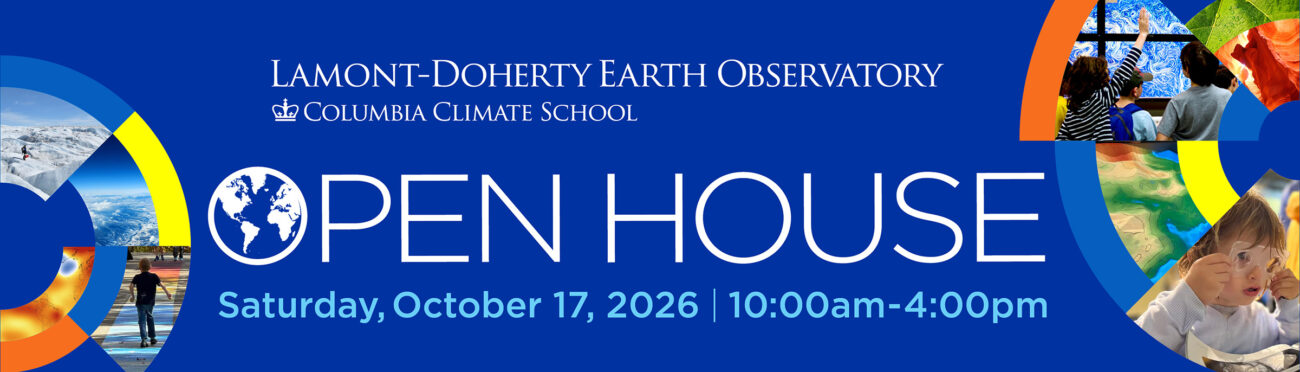
On Saturday, October 17, 2026 from 10am to 4pm, Lamont-Doherty Earth Observatory Open House—our biggest, best science fun and discovery event of the year—will take place on our beautiful campus in Palisades, NY. Mark your calendar and join us for this free, family-friendly celebration of science! RSVP Today!
