Norway
-
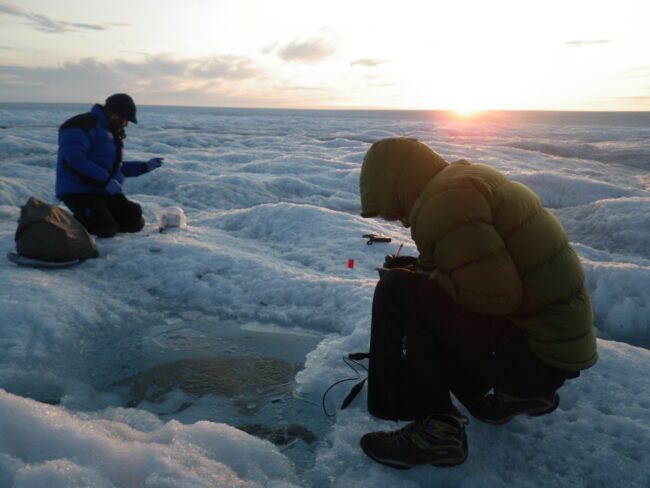
How Do Glacial Ecosystems Respond to Climate Change?
Microbiologist Arwyn Edwards discusses the complex role of microbial life in glacial ecosystems and the impact of climate change on his field.
-

Melting Glaciers Reveal Clues to Climate Adaptation in Norway’s Mountains
Glacial archaeologists are uncovering hundreds of artifacts in Norway, including the best preserved pair of prehistoric skis found to date.
-

Melting Ice and a High Altitude Dig Reveal Viking Secrets in Norway
A wealth of ancient artifacts stand to be discovered as high altitude ice melts, but the relationship between high altitude archaeology and climate change is a somber one.
-

Melting Glacier Floods Arctic Coal Mine, Highlighting Climate Change Paradox
Coal mining in Svalbard has long been criticized for the contradictions of allowing the fossil fuel industry to operate in a place where climate changes are felt more harshly than anywhere else on Earth.
-

Pesticides and Industrial Pollutants Found in Snow Atop Arctic Glaciers
The long journey of these compounds — likely originating in the United States and Eurasia — points to the near-global reach of industrial and agricultural pollution.
-

Melting Ice Reveals an Ancient Thriving Trade Route
Artifacts from a receding ice patch provide a glimpse of Iron Age and Viking activity along a mountain pass.
-

What the Vikings Can Teach Us About Adapting to Climate Change
The rise of the Vikings was not a sudden event, but part of a long continuum of human development in the harsh conditions of northern Scandinavia. How did the Vikings make a living over the long term, and what might have influenced their brief florescence? Today, their experiences may provide a kind of object lesson…
-

Coring Arctic Lakes to Study Vikings
Billy D’Andrea, a Lamont-Doherty Earth Observatory paleoclimatologist and Center for Climate and Life Fellow, is investigating the relationship between environmental change and characteristics of early settlements in Norway’s Lofoten Islands.



COP31, the 2026 United Nations Climate Change Conference, aims to advance dialogue, strengthen consensus, and accelerate climate action on a global scale. From November 9–20, 2026 in Antalya, Türkiye, heads of state, ministers, scientists, business leaders, and civil society will gather to advance efforts in emission targets, climate finance, and adaptation and resilience. Once again, our experts, students, and global thought leaders from Columbia Climate School and across Columbia University are contributing to key events, sharing insights, and helping shape the dialogue toward ambitious, science-based solutions. Learn More
