ocean carbon uptake
-
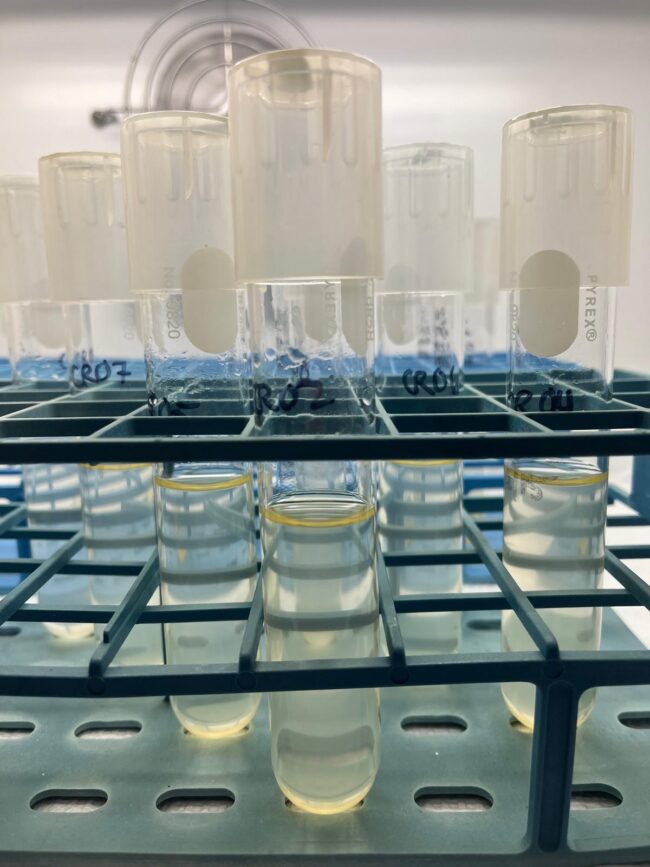
New Study Reveals Hidden “Chemical Currency” Fueling the Ocean’s Carbon Cycle
This research identifies a diverse set of molecules released by marine phytoplankton that fuel microbial life and help drive Earth’s carbon cycle.
-
Unexpected Climate Feedback Links Antarctic Ice Sheet With Reduced Carbon Uptake
New study reveals surprising link between West Antarctic Ice Sheet (WAIS) retreat and algae growth over the past 500,000 years.
-
Columbia Will Co-Lead Major Project To Study Global Carbon Cycle
Awarded by Schmidt Sciences, a new grant will provide up to $45 million to four interdisciplinary teams of researchers who will seek to improve climate modeling across land, air and sea.
-

Tiny Giants: Marine Microbes’ Pivotal Role in the Ocean’s Future
These “invisible” organisms are key to the question of how much carbon the ocean can hold.
-

How Much Carbon Can the Ocean Hold? Lamont Researchers Aim To Find Out
Galen McKinley and her research group are quantifying how much carbon the ocean removes from the atmosphere—and how much it fluctuates—to better understand climate change.
-

Yes, These Flesh-Eating Algae Are Real. And They Like Their Prey Alive.
New research suggests that photosynthetic green algae also eat bacteria on a previously unsuspected scale.
-

How Will the Ocean Carbon Cycle Evolve in the Future? New Project Aims to Find Out
A new effort to analyze the ocean’s ability to take up CO2 will be important for predicting the effectiveness of climate change mitigation efforts.
-

Ocean Uptake of CO2 Could Drop as We Cut Carbon Emissions
A new study finds that ocean absorption of CO2 rises and falls along with human activity and natural phenomena. The findings are important for understanding how much the oceans will offset future climate change.
-
Oceans’ Uptake of Manmade Carbon May Be Slowing
First Year-by-Year Study, 1765-2008, Shows Proportion Declining


By studying thousands of buildings and analyzing their electricity use, Columbia Climate School Dean Alexis Abramson has been able to uncover ways to significantly cut energy consumption and emissions. Watch the Video: “Engineering a Cooler Future Through Smarter Buildings“
