paleoceanography
-
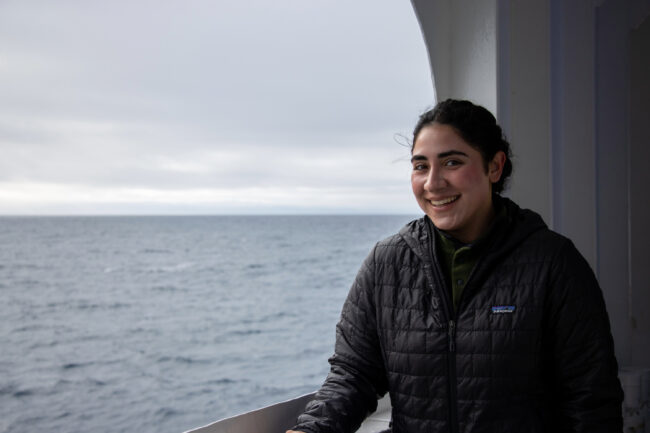
Women in Science: Paleoceanographer Apollonia Arellano
Arellano uses geochemical analyses to reconstruct deep ocean circulation in the North Atlantic Ocean.
-

Drilling the Seabed Below Earth’s Most Powerful Ocean Current
Starting this month, scientists aim to study the Antarctic Circumpolar Current’s past dynamics by drilling into the seabed in some of the planet’s remotest marine regions.
-

Wallace Broecker, Prophet of Climate Change
Wallace Broecker, a geochemist who initiated key research into the history of earth’s climate and humans’ influence upon it, died Feb. 18 in New York. He was 87.
-

Meltwater Lakes Existed Under Antarctic Ice in Ancient Times
In recent years, scientists have discovered hundreds of lakes lying hidden deep beneath the Antarctic ice sheet. Now a team of researchers has found the remains of at least one sub-ice lake that existed when the ice was far more extensive, in sediments on the Antarctic continental shelf.
-

Indonesian Corals Shed Light on Climate System
A new coral salinity record shows that the location of the most significant hydroclimatic feature in the Southern Hemisphere, the South Pacific Convergence Zone, influences a major Pacific Ocean current.
-

John Imbrie, a Pioneer of Paleoceanography
Imbrie, a former head of the Department of Geological Sciences, helped confirmed connections between changes in Earth’s orbit and the timing of the ice ages and was a co-founder of CLIMAP, an international effort to use sediment cores to map Earth’s climate at the height of the last ice age.
-

Iron Fertilization Won’t Work in Equatorial Pacific, Study Suggests
Over the past half-million years, the equatorial Pacific Ocean has seen five spikes in the amount of iron-laden dust blown in from the continents. In theory, those bursts should have turbo-charged the growth of carbon-capturing algae, but a new study shows that the excess iron had little to no effect.
-

Maureen Raymo Elected to National Academy of Sciences
Maureen Raymo, a marine geologist at Lamont-Doherty Earth Observatory whose name is connected with key theories about how ice ages wax and wane and how sea levels change, has been elected to the National Academy of Sciences, one of the highest honors awarded to scientists in the United States.
-

Tapping into Earth’s Secret History
In a study published last week, Lamont post-doctoral scholar Heather Ford and coauthors used 4 million-year-old fossils from the Pliocene to reconstruct the physical features of the Pacific Ocean that would have shaped the environment during a critical juncture in Earth history.


The first Earth Day in 1970 ignited a movement to stop polluting our planet. Today, our scientists and experts are tackling the most pressing challenges to achieve real-world impact. This Earth Day, join us in our commitment to realizing a just and sustainable future for our planet. Visit our Earth Day website for ideas, resources, and inspiration.
