State of the Planet

News from the Columbia Climate School

plant evolution

  • In an Alpine Plant Species, Ancient Alleles May Help Drive Climate Change Adaptation

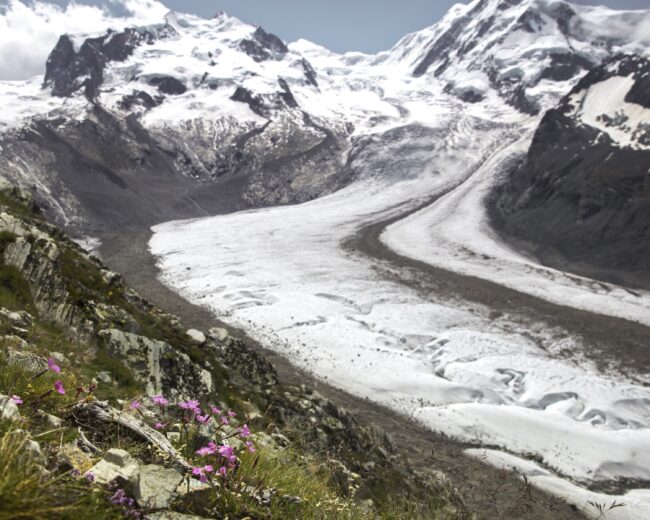
    In an Alpine Plant Species, Ancient Alleles May Help Drive Climate Change Adaptation

    Researchers found that two alleles in the wood pink plant species may allow the perennials to adapt to warming temperatures.

  • How Did Africa’s Grasslands Get Started?

    How Did Africa’s Grasslands Get Started?

    Millions of years ago, vegetation across much of the world underwent a transformation as grasses with a new way of doing photosynthesis displaced previously dominant plants, shrubs and trees. A new study examines what got these plants started, and why they spread so far and wide.

  • How Australia Got Planted

    How Australia Got Planted

    A new study has uncovered when and why the native vegetation that today dominates much of Australia first expanded across the continent.

  • Study Finds Genetic Clues to How Plants Adapt to Climate

    Study Finds Genetic Clues to How Plants Adapt to Climate

    Using supercomputers to analyze hundreds of thousands of genetic markers, scientists say they have found how a common weed uses its genetic code to adapt to changes in its environment such as cold and drought. The findings could help develop crops that are more adaptable to climate change.

Collage of Turkiye beach scene and Columbia University Campus with text: UN Climate Change Conference COP31, Antalya, Turkiye, Nov 9-20, 2026

COP31, the 2026 United Nations Climate Change Conference, aims to advance dialogue, strengthen consensus, and accelerate climate action on a global scale. From November 9–20, 2026 in Antalya, Türkiye, heads of state, ministers, scientists, business leaders, and civil society will gather to advance efforts in emission targets, climate finance, and adaptation and resilience. Once again, our experts, students, and global thought leaders from Columbia Climate School and across Columbia University are contributing to key events, sharing insights, and helping shape the dialogue toward ambitious, science-based solutions. Learn More

  • In an Alpine Plant Species, Ancient Alleles May Help Drive Climate Change Adaptation

    In an Alpine Plant Species, Ancient Alleles May Help Drive Climate Change Adaptation

    Researchers found that two alleles in the wood pink plant species may allow the perennials to adapt to warming temperatures.

  • How Did Africa’s Grasslands Get Started?

    How Did Africa’s Grasslands Get Started?

    Millions of years ago, vegetation across much of the world underwent a transformation as grasses with a new way of doing photosynthesis displaced previously dominant plants, shrubs and trees. A new study examines what got these plants started, and why they spread so far and wide.

  • How Australia Got Planted

    How Australia Got Planted

    A new study has uncovered when and why the native vegetation that today dominates much of Australia first expanded across the continent.

  • Study Finds Genetic Clues to How Plants Adapt to Climate

    Study Finds Genetic Clues to How Plants Adapt to Climate

    Using supercomputers to analyze hundreds of thousands of genetic markers, scientists say they have found how a common weed uses its genetic code to adapt to changes in its environment such as cold and drought. The findings could help develop crops that are more adaptable to climate change.