State of the Planet

News from the Columbia Climate School

Red Cross

  • Better Data, Better Maps: Supporting Ebola Response in Eastern Congo

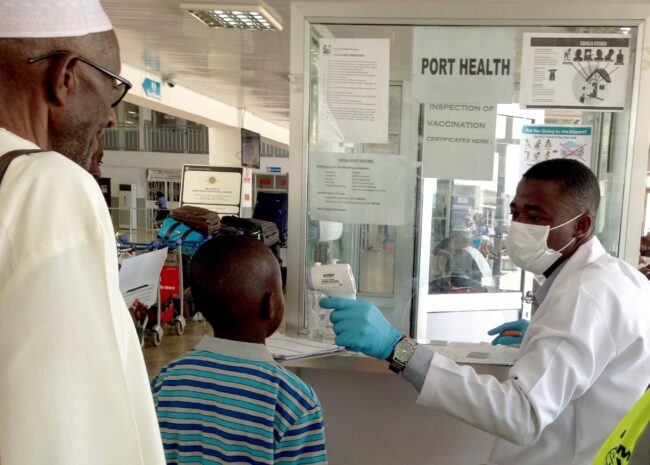
    Better Data, Better Maps: Supporting Ebola Response in Eastern Congo

    An effective Ebola response depends on knowing not only where cases are being reported, but also where people live, where health facilities are located and which health areas are responsible for reaching them.

  • Climate Models Show El Niño Is Rapidly Strengthening

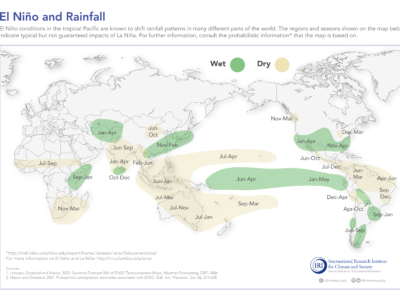
    Climate Models Show El Niño Is Rapidly Strengthening

    The World Meteorological Organization says a strong El Niño could drive extreme weather in many regions.

  • Maps Made for Disaster Management

    Maps Made for Disaster Management

    Newly redesigned interactive mapping tools are helping the Red Cross make planning and operational decisions ahead of droughts and extreme weather.

  • Climate Services: No need to wait for disasters to happen

    Climate Services: No need to wait for disasters to happen

    “We need climate information to be able to see disasters coming ahead of time, not just hours, but also weeks, months, and even decades in terms of trends.” — Maarten Van Aalst, the Director of the Red Cross/Red Crescent Climate Centre talks about the importance of climate services for humanitarian operations planning and preparedness, for…

  • Climate Information Crucial to Help Reduce Disaster Risk

    Climate Information Crucial to Help Reduce Disaster Risk

    Forecasts can play an invaluable role in helping humanitarian agencies and governments plan for and prevent disasters, according to a new report published by Earth Institute’s IRI and its international partners.

  • The Pearl of Africa

    My cell phone rang in the middle of the night. “Are you in Kampala?” On the other line was my husband informing me that two bombs went off in Uganda’s capital city just several hours before, killing scores of people gathered at public spots to watch the final game of the World Cup. I was…

  • Red Cross/Red Crescent Join With Climate Institute to Forecast Disasters

    For more information: IRI – Clare Oh at clare.oh@columbia.edu or (212) 854-5479 IFRC – Matthew Cochrane at matthew.cochrane@ifrc.org or +41 22 730 4426 GENEVA and NEW YORK — The International Federation of Red Cross and Red Crescent Societies (IFRC) is joining with a unit of Columbia University’s Earth Institute to develop forecasting and monitoring mechanisms…

Collage of Turkiye beach scene and Columbia University Campus with text: UN Climate Change Conference COP31, Antalya, Turkiye, Nov 9-20, 2026

COP31, the 2026 United Nations Climate Change Conference, aims to advance dialogue, strengthen consensus, and accelerate climate action on a global scale. From November 9–20, 2026 in Antalya, Türkiye, heads of state, ministers, scientists, business leaders, and civil society will gather to advance efforts in emission targets, climate finance, and adaptation and resilience. Once again, our experts, students, and global thought leaders from Columbia Climate School and across Columbia University are contributing to key events, sharing insights, and helping shape the dialogue toward ambitious, science-based solutions. Learn More

  • Better Data, Better Maps: Supporting Ebola Response in Eastern Congo

    Better Data, Better Maps: Supporting Ebola Response in Eastern Congo

    An effective Ebola response depends on knowing not only where cases are being reported, but also where people live, where health facilities are located and which health areas are responsible for reaching them.

  • Climate Models Show El Niño Is Rapidly Strengthening

    Climate Models Show El Niño Is Rapidly Strengthening

    The World Meteorological Organization says a strong El Niño could drive extreme weather in many regions.

  • Maps Made for Disaster Management

    Maps Made for Disaster Management

    Newly redesigned interactive mapping tools are helping the Red Cross make planning and operational decisions ahead of droughts and extreme weather.

  • Climate Services: No need to wait for disasters to happen

    Climate Services: No need to wait for disasters to happen

    “We need climate information to be able to see disasters coming ahead of time, not just hours, but also weeks, months, and even decades in terms of trends.” — Maarten Van Aalst, the Director of the Red Cross/Red Crescent Climate Centre talks about the importance of climate services for humanitarian operations planning and preparedness, for…

  • Climate Information Crucial to Help Reduce Disaster Risk

    Climate Information Crucial to Help Reduce Disaster Risk

    Forecasts can play an invaluable role in helping humanitarian agencies and governments plan for and prevent disasters, according to a new report published by Earth Institute’s IRI and its international partners.

  • The Pearl of Africa

    My cell phone rang in the middle of the night. “Are you in Kampala?” On the other line was my husband informing me that two bombs went off in Uganda’s capital city just several hours before, killing scores of people gathered at public spots to watch the final game of the World Cup. I was…

  • Red Cross/Red Crescent Join With Climate Institute to Forecast Disasters

    For more information: IRI – Clare Oh at clare.oh@columbia.edu or (212) 854-5479 IFRC – Matthew Cochrane at matthew.cochrane@ifrc.org or +41 22 730 4426 GENEVA and NEW YORK — The International Federation of Red Cross and Red Crescent Societies (IFRC) is joining with a unit of Columbia University’s Earth Institute to develop forecasting and monitoring mechanisms…